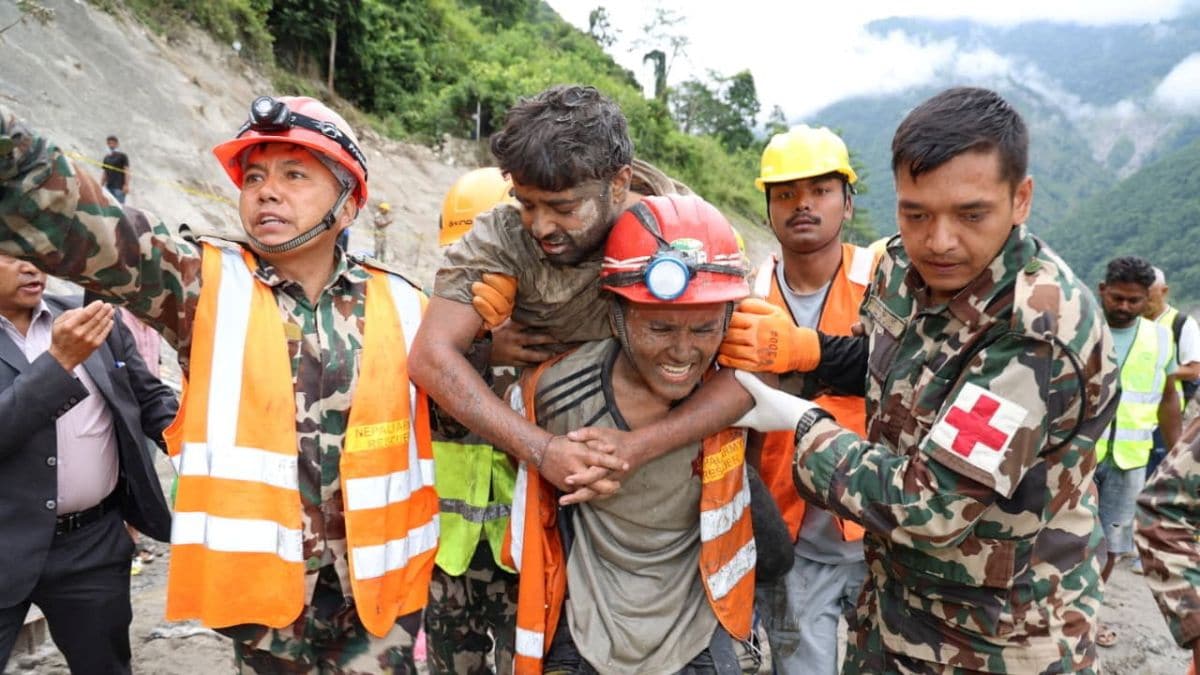
Nine days in pitch-black water and mud changes a person. You either give up or you fight for every single breath.
Two men managed to beat impossible odds inside the Trishuli 3A hydropower tunnel in Nuwakot, Nepal. They spent over a week trapped underground after devastating floods and mudslides tore through the region. Rescuers finally pulled them out alive, but their ordeal exposes a much grimmer reality beneath the surface. More workers are still missing in these massive subterranean energy systems, and time is running out fast.
What Happened Inside the Trishuli 3A Tunnel
The disaster struck when sudden, fierce floodwaters from the Bhotekoshi River basin overwhelmed local energy sites. Heavy mud and concrete choked the exits. Sanjay Sah, a 30-year-old mechanical foreman, found himself trapped in the control room. He knew the risks instantly.
Instead of fleeing immediately, Sah tried to save his colleagues.
"I told everyone to run. In doing that, my time was lost. In the end, I could not get out," Sah explained to military medical teams after his rescue.
He spent nine days chanting mantras in the dark. He wasn't entirely alone at first. He recalled hearing faint taps and voices from three or four other workers nearby. They communicated through noises in the dark, bouncing sound off concrete walls to confirm someone else was still breathing.
Another worker, Kabir Maharjan, was also pulled from the debris. While Sah is in stable condition, Maharjan remains in critical care.
The Scale of the Crisis
People forget how massive these underground infrastructure projects actually are. A modern hydropower tunnel isn't a simple pipe. It is an extensive labyrinth of shafts, surge tanks, and vast machine halls carved deep into unstable mountain rock.
When a flash flood hits, the water doesn't just fill a space. It acts like a hydraulic battering ram, pushing debris, sediment, and trapped humans deep into narrow feeder tunnels.
Rescue teams face an absolute nightmare. Heavy excavators and rock drills have to tear through massive blocks of concrete and hardened mud without triggering secondary cave-ins.
Government lists indicate that hundreds of workers remain unaccounted for across multiple project sites in the region. Around 557 people are still missing at Upper Trishuli-1 alone. The Nepal Army, joined by specialized teams from neighboring countries, is racing against the clock. Heavy machinery can only do so much when massive volumes of sludge block every entry point.
Why Underground Tunnel Rescues Fail So Often
Engineering teams design hydropower tunnels to withstand enormous water pressure from the outside, but they are completely vulnerable to sudden sediment choking from major climate events.
When a tunnel floods:
- Air pockets shrink rapidly as water levels fluctuate.
- Toxic gases like methane or carbon dioxide can pool in dead ends.
- Thick mud acts like quicksand, preventing self-rescue even if a person survives the initial impact.
Most people assume trapped miners or tunnel workers have access to emergency shelter chambers with food and oxygen. The reality on the ground is much harsher. Standard hydro construction sites rarely feature fully stocked, pressurized underground bunkers capable of withstanding catastrophic mud blockages. Workers rely on instinct, high ground, and sheer luck.
What Needs to Happen Now
Emergency protocols for mountain infrastructure projects require a complete overhaul. Relying on manual warning systems and delayed evacuation routes costs lives. Companies operating in fragile Himalayan zones must install automated early-warning flood sensors linked directly to automated acoustic alarm grids deep inside tunnels.
For the families waiting near the Trishuli project sites, statistics matter less than a shovel hitting rock. Search operations continue around the clock, with rescue workers listening closely for any sound echoing through the wet stone.
If you are following infrastructure development or disaster response in South Asia, keep a close eye on the official updates from the Nepal Army and regional disaster management boards. Support local relief funds if you want to help the families of the missing workers navigate this ongoing crisis.


