Another key figure tied to Jeffrey Epstein's international network is dead before ever answering for his actions in a courtroom.
French officials confirmed that 69-year-old modeling scout Daniel Siad was found dead inside his home in Colombes, a suburb just outside Paris. His body was discovered on a Monday evening in his kitchen by a 28-year-old woman living at the residence, while a neighbor unsuccessfully tried performing CPR before paramedics arrived.
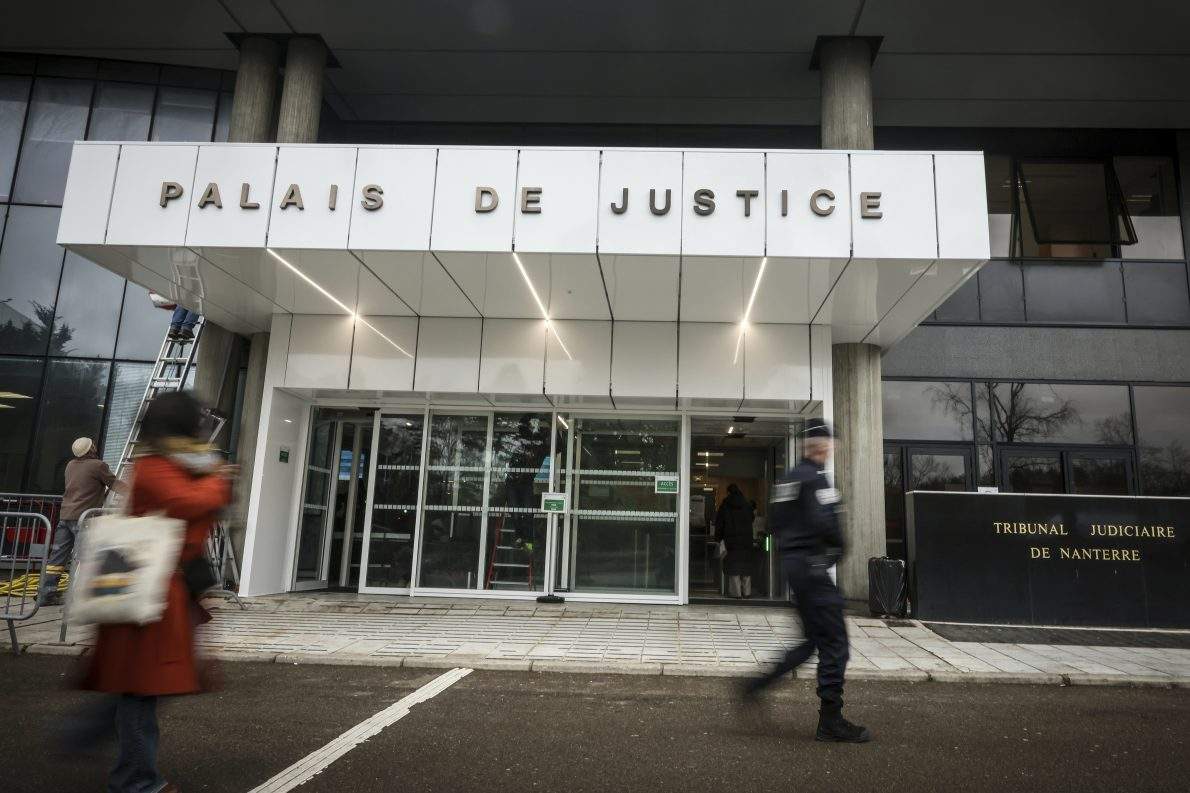
While early reports from French news outlet Le Parisien and Siad's defense attorney point to a cardiac arrest, local prosecutors at the Nanterre Judicial Court immediately opened an inquiry and ordered a formal autopsy.
The timing couldn't be worse for investigators or the women seeking answers.
Siad’s name appeared nearly 2,000 times in the massive batch of U.S. Department of Justice documents released earlier this year. French authorities were actively investigating him for allegations of rape and human trafficking. Yet, he died before police ever formally questioned him in person.
His death deprives prosecutors of a crucial witness and deprives victims of the trial they spent decades waiting for.
The Circumstances Surrounding the Death in Colombes
Daniel Siad lived relatively quietly in the northwestern suburbs of Paris. That quiet existence shattered when emergency services were called to his home on July 20.
According to initial reports, a 28-year-old woman residing with Siad found him unresponsive in the kitchen. Neighbors rushed in to assist, attempting CPR until emergency workers took over. They couldn't revive him.
His lawyer, Ménya Arab-Tigrine, publicly insisted that Siad suffered a fatal heart attack driven by intense anxiety. She claimed the overwhelming media attention and impending legal scrutiny took a severe physical toll on him.
"He is dead and he was innocent," Arab-Tigrine told reporters, asserting that Siad wanted to cooperate and present his side of the story to French judges.
French prosecutors aren't taking statements at face value. The prosecutor's office in Nanterre launched a official probe into the cause of death—standard procedure when someone under major criminal scrutiny dies suddenly.
How Deep Was Siad in the Epstein Network
Daniel Siad wasn't just a minor acquaintance. He was one of Jeffrey Epstein's most frequent correspondents in Europe.
For over a decade, Siad emailed Epstein regularly, offering access to young women and teenage girls from across Europe. Siad traveled extensively, visiting small villages in Eastern Europe, Barcelona, and Stockholm under the guise of finding fresh faces for fashion agencies.
In a 2014 email uncovered in the Department of Justice files, Siad casually described his recruiting efforts like a fishing trip.
"In This busyness I feel like fisherman some time I cache quick, some time no fish," Siad wrote to Epstein.
The email archives paint a damning picture of routine, transaction-style introductions:
- 2009: Siad emailed Epstein about a 20-year-old woman from Latvia, making a point to note that "she looks younger."
- 2014: Messages show Siad discussing a 15-year-old French girl whose parents were eager for her to model, alongside mentions of 16- and 17-year-olds.
- 2016: Siad messaged Epstein from Barcelona, telling him to call if he had time because he was with an "amazing Beauty."
- 2018: Siad offered to find a "good looking young assistant" for Epstein. When he sent a photo of one potential candidate, Epstein coldly replied, "Too old."
In interviews prior to his death, Siad tried downplaying his role. He claimed he thought Epstein was simply arranging legitimate casting sessions for Victoria's Secret or the agency MC2. He insisted he never knew Epstein was abusing women and claimed he always left the apartment immediately after introductions.
Nobody buys that excuse. Even after Epstein's 2008 conviction in Florida, Siad kept sending him photos and profiles. He wasn't naive. He was active in keeping the pipeline open.
The Victims Left Without Answers or Closure
When a suspect dies before trial, criminal proceedings against them end. That reality is painful for the survivors who spent years building the courage to come forward.
Former Swedish model Ebba Karlsson filed criminal charges against Siad in early 2026. She alleged that Siad scouted her in Stockholm in 1990 when she was 20, brought her to France, and raped her. She spent decades trying to identify him, only recognizing his face when news outlets published photos from the DOJ files.
Karlsson's reaction to Siad’s death was raw and honest.
"It's very frustrating," Karlsson told reporters. "He was very close to being arrested. We worked so hard for this, trying to have justice."
Another accuser, Juliette G., expressed similar heartbreak. She alleged Siad recruited her in 2004 before handing her off to Epstein.
"Another link in the chain has disappeared that could have helped uncover the truth and identify those responsible," she said.
Their frustration highlights a systematic flaw in how high-profile trafficking cases play out. When primary targets die, the entire network's secrets risk staying buried forever.
A Troubling Pattern in the French Judicial System
Siad isn't the first Epstein-connected figure to die in France before facing justice.
In February 2022, prominent French modeling agent Jean-Luc Brunel was found dead in his cell at La Santé prison in Paris. Brunel was awaiting trial on severe charges, including the rape of minors and trafficking young girls for Epstein. His official cause of death was ruled suicide by hanging.
Brunel's death effectively halted a major branch of the French criminal investigation. Siad, who worked closely with Brunel on commission, was one of the last living ties in France who could detail how European scouts operated alongside American financiers.
Now both key figures are gone.
This isn't just bad luck. It shows how slow-moving legal systems fail survivors. French prosecutors formed a specialized team of magistrates to parse the DOJ files in early 2026. Yet, months went by without Siad being called in for formal questioning, even as public pressure mounted.
Speed matters in complex criminal investigations. When prosecutors move too slowly on aging suspects, time runs out.
Why the Death of a Scout Doesn't End the Investigation
Siad's death is a major setback, but it can't be an excuse to close the books.
The DOJ files released in 2026 contain thousands of pages of flight logs, email chains, financial records, and bank transfers. Those records don't vanish because one man died.
Here is what needs to happen right now:
- Unseal the full financial trail: Financial records show Epstein paid tens of thousands of dollars directly to Siad. Authorities must trace where that money went, which sub-agencies were involved, and who else profited.
- Expose the modeling agency loopholes: Scouting networks operated for decades without independent oversight. Agencies in Paris, London, and New York regularly relied on freelance recruiters who targeted vulnerable young women in small towns. Independent audits of fashion scouting practices are long overdue.
- Cross-reference survivor testimony: Prosecutors shouldn't wait for confession statements. Dozens of women have given detailed depositions in France and Sweden. That testimony, paired with digital correspondence, provides enough ground to pursue remaining accomplices and facilitators.
Daniel Siad took his personal secrets to the grave, but his digital footprint remains entirely intact. Law enforcement agency officials owe it to the victims to follow every remaining line of code and payment stub until every facilitator in this network is brought into the light.