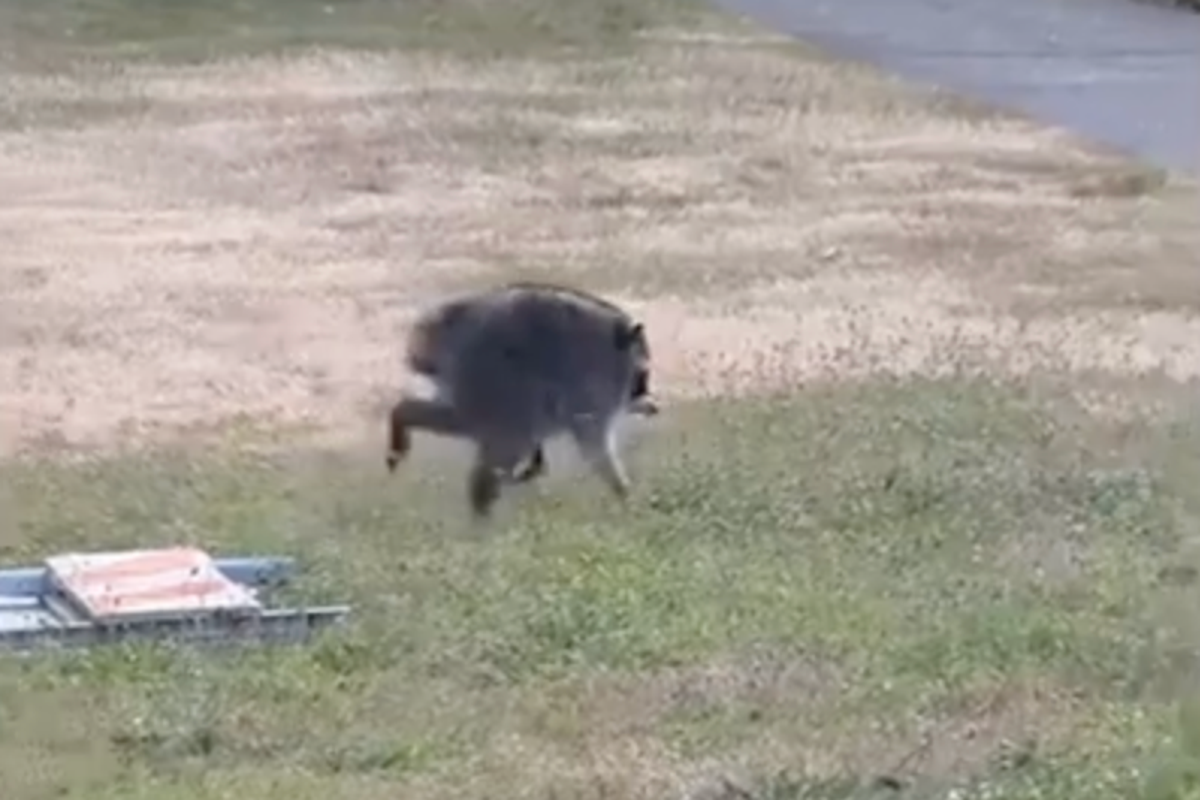
You have probably seen the video by now. A gray, oddly spherical furry ball with legs scampers across a green lawn in Seattle, looking less like a normal animal and more like a cartoon character that got squished. It has the classic black mask of a raccoon, but its body looks almost perfectly round. No neck. Front and back legs positioned incredibly close together. A tiny bobbed tail.
That little creature is Jimothy. Within days, he became an overnight internet icon, a local celebrity in the Ballard neighborhood of Seattle, and the face of what locals are calling Hot Jimothy Summer. Meanwhile, you can find similar events here: Inside The Metro Manila Training Center Where Catholic Exorcism Meets Modern Psychiatry.
But behind the cute viral clips and the flood of fan art lies a fascinating biological reality. Jimothy isn't a mythical cryptid or a supernatural anomaly. He is a wild animal living with an exceptionally rare congenital condition known as short spine syndrome. The sudden explosion of his fame tells us a lot about how we interact with urban wildlife, the unique culture of the Pacific Northwest, and what it actually takes for an animal with severe physical differences to survive in a major city.
The Viral Moment that Swallowed Seattle
Kiana Hall was celebrating a 13th anniversary with their partner in a Ballard backyard when the strange creature trotted into view. Speaking to local journalists, Hall admitted to being completely confused by what they were seeing. It did not move like a standard raccoon. Instead of the typical elongated, low-slung prowl of a regular trash panda, this animal moved with a hurried, bouncy waddle. To explore the bigger picture, we recommend the excellent analysis by USA Today.
Hall filmed a quick video, named the animal Jimothy because he simply looked like a Jimothy, and posted it to Instagram under the handle @c1vrgr1. The internet took it from there.
The video quickly racked up more than six million views. Soon after, other neighbors started checking their security cameras and sharing their own encounters. One video showed Jimothy as a baby alongside his normal-sized family, learning how to navigate the neighborhood. Another clip showed him carefully balancing on a balcony railing before squeezing his compressed body through the metal bars. A third video, which crossed eight million views in a matter of hours, showed him playfully navigating a flight of outdoor stone steps with surprising agility.
The reaction from the city was swift and massive. The Seattle Mariners changed their official Instagram profile picture to an illustration of Jimothy wearing a team cap. The University of Washington joined in on social media by mock-awarding "Dr. Jimothy" an honorary degree. Tattoo artist Laura Exley of Electric Kitten Tattoo designed custom Jimothy tattoo flash, noting that the local Ballard cryptid had captured the hearts of even the most cynical Seattle residents.
Local government even stepped into the mix. Seattle City Councilmember Alexis Mercedes Rinck announced an official community celebration to present a proclamation commemorating Jimothy Summer. The event features a friendly art competition for local creators to showcase their best interpretations of the round raccoon. According to Mercedes Rinck, Jimothy resonated deeply with the community because he serves as a reminder that you don't have to be perfect to be loved.
What Is Short Spine Syndrome anyway
The internet spent the first few days arguing about whether Jimothy was a hoax, a CGI creation, or a brand new species. Local veterinarians quickly stepped in to provide a realistic diagnosis based on the video evidence.
Jimothy almost certainly has short spine syndrome. This is an incredibly rare genetic abnormality that affects the development of the vertebral column during embryonic growth. Instead of hardening into long, distinct bones, the vertebrae remain compressed and sometimes fuse together entirely.
This compression drastically shortens the animal's torso, creating the illusion that the creature has no neck. The head remains normal in size, but it appears to be pushed directly into the shoulders. The spine is rigid, meaning the animal cannot turn its head side to side to look around. To see what is behind them, they have to turn their entire body. The internal organs are also packed into a much smaller thoracic cavity, which can sometimes lead to secondary health issues affecting the heart, lungs, or digestive tract.
While the condition is widely known among dog lovers due to a few famous viral hounds like Quasi Modo or Tilly, it is almost never documented in wild animals. Dr. Brian Collins of the Cornell University College of Veterinary Medicine emphasized that the condition is exceptionally uncommon. Most wild animals born with severe skeletal deformities do not survive past infancy. The fact that Jimothy has grown into an active, independent juvenile or young adult is a massive biological anomaly.
The Harsh Reality of Being a Compressed Wild Animal
It is easy to laugh at the memes and celebrate Jimothy as a heroic little warrior, but living in a concrete jungle with a fused spine is a massive uphill battle. Urban ecosystems are unforgiving.
Dr. Collins pointed out that a normal raccoon relies heavily on its fluid flexibility to survive. Raccoons are built to climb vertical brick walls, squeeze into tight drainage pipes, and outmaneuver predators. Because Jimothy lacks a flexible spine, his agility is heavily compromised. He cannot run with the same explosive speed as his peers, nor can he twist his body to defend himself if cornered.
According to veterinary experts, Jimothy faces two primary threats in the streets of Seattle.
- Domestic Dogs: Unleashed pets in suburban backyards present a massive danger to a raccoon that cannot quickly scale a fence or fight back effectively.
- Vehicular Traffic: Raccoons frequently cross busy city streets at night. A standard raccoon might dodge an oncoming car with a sudden leap, but Jimothy's rigid structure makes quick, erratic movements much harder.
There is also the question of his internal anatomy. Because his torso is so short, his lungs and stomach are crowded together. This compression can make it difficult to digest large amounts of food or maintain stamina during a long climb.
Thankfully, the outlook is not entirely bleak. Dr. Marcie Logsdon, an associate professor at the Washington State University Veterinary Teaching Hospital, offered a highly encouraging assessment of Jimothy's current state. She noted that the ultimate test for any wild animal is simple: Can they find food, and can they move effectively?
Watching the videos of Jimothy roaming Ballard answers both questions. He scales stone stairs, navigates backyard decks, climbs trees, and drinks comfortably from outdoor water sources. He is active, energetic, and clearly knows how to forage in an urban landscape. His body has adapted to his unique biomechanics, and he is utilizing his short legs to find food just fine.
Why Seattle Fell for a Scurrying Trash Panda
Every city has its local icons, but Seattle has a particularly deep historical obsession with the weird, the hidden, and the slightly supernatural. This is the heart of the Pacific Northwest, a region built on Bigfoot folklore, twin peaks energy, and stories of mysterious creatures hiding in the dense pine forests.
When an animal like Jimothy appears, he fits perfectly into that cultural framework. Neighbors frequently use the word cryptid when describing him. He offers a tangible, real-world taste of that folklore right in a residential neighborhood like Ballard.
But there is a deeper emotional layer to the phenomenon. Urban life can feel increasingly disconnected and stressful. A bizarrely shaped, completely unfazed raccoon wandering through suburban yards provides a moment of shared joy. People across different neighborhoods, political backgrounds, and age groups are suddenly united in their desire to see this little guy make it. He represents absolute resilience. He did not ask to be born with a fused backbone, but he is out there every single night climbing balconies and living his best life anyway.
How to Actually Protect Jimothy and Other Urban Wildlife
The biggest risk to Jimothy right now might actually be his own fan base. When a wild animal goes viral, people naturally want to see it in person. This leads to crowds hunting for sightings around Northwest 50th Street, flash photography at night, and attempts to feed the animal to lure it closer.
The Washington Department of Fish and Wildlife has made its stance incredibly clear: Leave the raccoon alone. A spokesperson noted that the agency has not stepped in because Jimothy is fully capable of feeding and moving himself. Human intervention would do far more harm than good.
If you live in Seattle or any other major city with a thriving urban wildlife population, you can take concrete actions to keep these animals safe without turning them into domestic dependents.
Secure Your Trash Cans Properly
Raccoons are notoriously intelligent foragers. While a buffet of leftover restaurant food seems like an easy win for Jimothy, relying on human garbage alters their natural foraging instincts and brings them into closer contact with dangerous human environments. Use locking lids or keep your bins inside a garage until the morning of pickup.
Keep Dogs on Leashes
Because Jimothy cannot move with the standard agility of a normal raccoon, an aggressive off-leash dog could end his life in seconds. Keep your pets secured when walking through local parks like Discovery Park, and turn on backyard lights before letting your dogs out at night to give wild animals a chance to clear the area.
Stop Trying to Feed Him
Leaving out pet food or intentional treats might seem kind, but it creates a localized crowd of raccoons. This increases the spread of diseases like distemper or roundworm, which could be catastrophic for an animal that already has a compromised physical structure. Jimothy is surviving on his own merits. Let him keep doing it.
Drive Cautiously Through Residential Zones
The Ballard neighborhood features plenty of tree-lined streets where urban wildlife roams freely after dark. Slowing down by just five miles per hour gives you a significantly better reaction time if an oddly shaped, round furry ball decides to waddle across the asphalt in front of your headlights.
Jimothy does not need to be rescued, captured, or put in a zoo. He is doing exactly what wild animals have done for thousands of years: adapting, surviving, and making the absolute most of the hand he was dealt. The best way to celebrate Hot Jimothy Summer is to give him his space, admire his resilience from a distance, and let him rule the backyards of Seattle in peace.