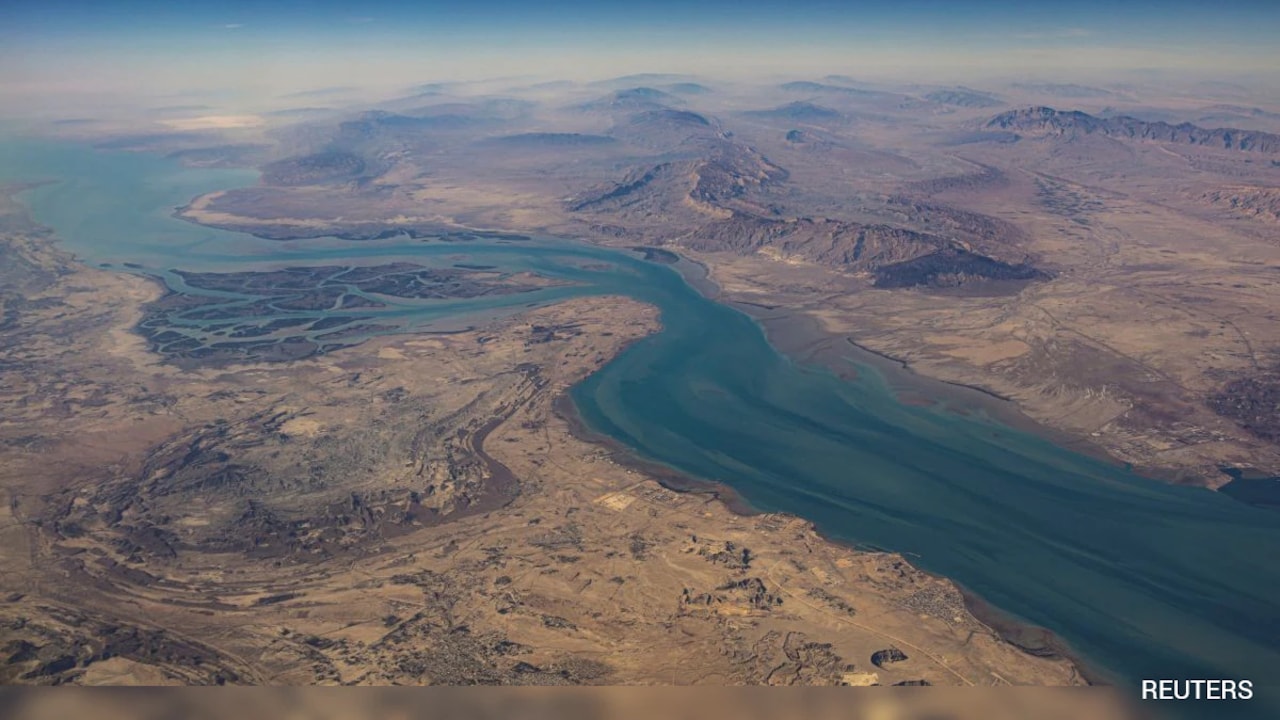
When a single chokepoint handles roughly one-fifth of the world's petroleum supply, any disruption sends immediate shockwaves through global markets. Rumors and competing military claims are currently swirling around the Persian Gulf after Iran's Revolutionary Guards reported that a supertanker carrying two million barrels of crude oil sank following a naval mine strike. Yet, verifying what actually happens in these contested waters remains exceptionally difficult.
Let's look past the press releases and break down what this event means for international shipping, energy prices, and geopolitical stability.
The Anatomy of the Strait of Hormuz Conflict
The strategic waterway separating the Persian Gulf from the Gulf of Oman has been a flashpoint for decades. Since the outbreak of regional hostilities, Tehran has heavily restricted vessel movement, insisting that all commercial traffic use specific routes authorized by the Iranian government. Ships that ignore these corridors often find themselves targeted or intercepted.
The United States responded by establishing a naval blockade on Iranian ports while actively escorting friendly commercial vessels through the strait. The US military recently claimed it had successfully cleared naval mines from the primary shipping paths. But Sunday's announcement by the Islamic Revolutionary Guard Corps complicates that narrative entirely.
According to state TV reports, two oil tankers traveling along an unauthorized southern route struck naval mines, triggering massive explosions and fires. One of those vessels was identified as a supertanker loaded with over two million barrels of crude. Iranian authorities have not released the names or origins of the impacted ships, leaving maritime monitors scrambling to piece together the truth.
Sorting Fact from Verification Fiction
Whenever maritime incidents occur in active conflict zones, the information war moves just as fast as the kinetic one. Independent confirmation is the gold standard of reporting, but it's notoriously scarce in the Persian Gulf right now.
Consider the conflicting data points currently on the table:
- The Iranian Claim: The Revolutionary Guards insist a supertanker sank in the southern Persian Gulf after hitting a naval mine.
- The US Military Stance: Central Command has maintained a heavy security presence, previously reporting that escorts helped Gulf countries export billions of barrels safely over the summer.
- Third-Party Monitors: The United Kingdom Maritime Trade Operations (UKMTO) center acknowledged receiving a report from Indian shipping authorities regarding an attack on a tanker in the region. However, British monitors noted that the exact environmental impact remains unknown and the crew is safe, while questioning whether it matches the exact incident described by Tehran.
When state actors and military commands issue contradictory statements, energy traders are left reacting to worst-case scenarios.
What This Means for Global Energy Security
Oil markets hate uncertainty more than almost anything else. Even without immediate, verified proof of a massive two-million-barrel crude spill, the psychological impact on shipping insurance rates and tanker availability is immediate.
When operators believe naval mines are actively drifting in narrow shipping lanes, crew safety requirements change overnight. Companies pause transits, reroute around the Cape of Good Hope if necessary, or demand massive risk premiums. These operational delays ripple straight down to retail fuel prices and industrial manufacturing costs worldwide.
The US Navy and allied coalitions face an uphill battle keeping these narrow waters open for international trade. Sweeping mines in a contested zone while managing hostile deterrence is risky work. Every report of a blast—whether confirmed as a direct mine strike or a localized missile attack—raises the stakes for every nation dependent on Middle Eastern crude.
Keep a close eye on independent maritime verification groups rather than taking official state declarations at face value. Watch shipping insurance underwriters; their rate adjustments tell the real story of how dangerous the Strait of Hormuz is right now.