Don't assume your holiday cross-border road trip is perfectly safe just because the local markets look inviting. A sudden, violent reminder shattered that illusion in the Tak Bai district of Narathiwat. Two Malaysian men, simply driving through southern Thailand, ended up in the hospital. Their car took the full force of a massive roadside bomb. It wasn't meant for them. They were just in the wrong place at the wrong time.
This latest blast brings the conflict right to Malaysia's doorstep. Literally. The attack happened a mere 15 kilometers from the border. Kelantan police chief Datuk Mohd Yusoff Mamat immediately issued a warning telling citizens to stay away unless they have urgent business.
When an insurgency that usually plays out deeper inside Thailand moves this close to the frontier, everything changes. Border security isn't just a political talking point anymore. It's a matter of life and death for thousands of everyday travelers, traders, and tourists who cross back and forth every single week.
The Anatomy of the Tak Bai Blast
The details coming out of Narathiwat are chilling. We aren't talking about a small, amateur firecracker. Thai police confirmed the weapon was a sophisticated improvised explosive device weighing roughly 70 kilograms. Think about that size. That's heavy enough to obliterate armored military vehicles. The attackers packed it into a hidden spot along the road and detonated it using a mobile phone signal.
The targets were members of the Sungai Golok volunteer force traveling in a security vehicle. The two Malaysians, a 38-year-old from Kelantan and a 45-year-old from Sabah, happened to overtake the security truck at the exact moment the bomb went off. Their vehicle absorbed the entire impact. One of them is now fighting serious injuries at Narathiwat Ratchanakarin Hospital.
This shows how unpredictable the Deep South conflict remains. Insurgents don't care about collateral damage. If you're on the road next to a military or paramilitary convoy, you're a target.
Why the Proximity Changes the Game
For years, security officials comforted themselves with geography. Most major insurgent operations happened deeper within the provinces of Yala, Pattani, and the upper parts of Narathiwat. The border towns themselves like Sungai Kolok and Tak Bai felt relatively insulated because both sides relied on cross-border economic flows.
A distance of 15 kilometers changes the calculus entirely.
- Shrapnel flies across borders.
- Detonation waves echo in Malaysian villages.
- Spillover risks become immediate realities.
The proximity forces the Malaysian side to react instantly. You can't just watch from afar when the smoke from a 70-kilogram bomb can almost be seen from your own police outposts. The General Operations Force and border intelligence units have scrambled to tighten checks at both legal checkpoints and known smuggling routes along the Golok River.
The Economic Dilemma of Open Borders
This situation presents a massive headache for both governments. Last year alone, over 4.4 million Malaysians crossed over into Thailand. They represent the largest single source of inbound tourists for the Thai economy. They spend money on food, hotels, shopping, and entertainment.
The local economies in Kelantan and Narathiwat are deeply intertwined. People have relatives on both sides of the river. They hold dual connections if not formal dual citizenships. They cross the border to buy cheaper groceries, visit family, or run small trading businesses.
Shutting down the border or choking it with aggressive security checks inflicts immediate economic pain. Traders lose their daily income. Tourism numbers plummet. Yet, leaving the border loose allows insurgent elements to potentially slip through, hide out, or move supplies. It's a delicate balancing act that requires high-level coordination between Bangkok and Kuala Lumpur.
What Drives the Deep South Insurgency
You can't understand why border security is being stepped up without looking at the root of the conflict. This isn't a new issue. The violence in Thailand's Muslim-majority southernmost provinces re-ignited in 2004. Since then, more than 7,300 people have lost their lives.
The conflict stems from long-standing grievances regarding cultural, linguistic, and political marginalization. The local population is predominantly ethnic Malay Muslim, while the rest of Thailand is overwhelmingly Buddhist. Groups like the Barisan Revolusi Nasional have fought a low-intensity guerrilla war against Thai state authorities for decades.
Their tactics rely heavily on hit-and-run ambushes, arson, and roadside IEDs. They target security forces, government teachers, and state infrastructure. While peace talks have dragged on for years with Malaysia acting as a facilitator, factions on the ground clearly still possess the intent and capability to execute high-impact strikes.
The Immediate Security Response on the Frontier
Following the Tak Bai incident, the Malaysian side didn't waste any time. Border patrols have entered a state of high alert.
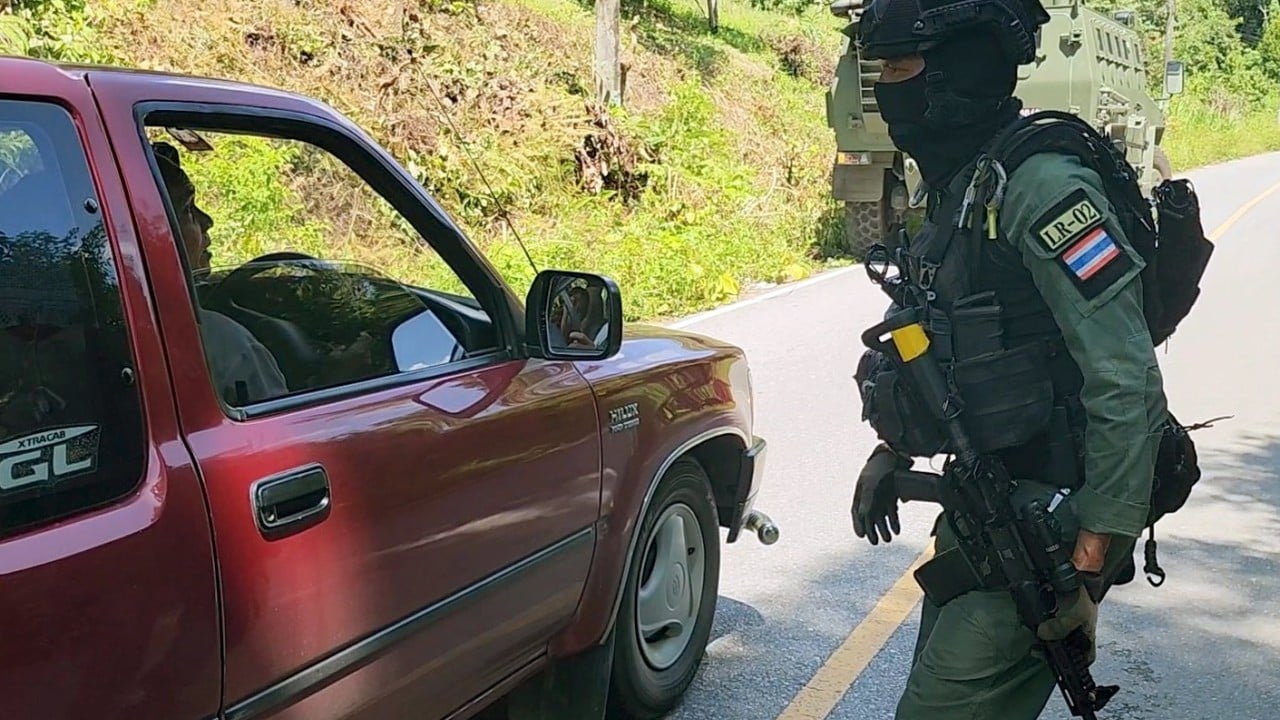
Security forces have deployed extra personnel to the "hotspots" along the border. They're focusing on illegal crossing points used by smugglers. The Golok River is narrow in many places. During the dry season, it's incredibly easy to just wade across or take a short boat ride without passing through immigration.
- Increased Patrol Frequency: Round-the-clock surveillance by strike force companies along the riverbanks.
- Stringent Checkpoint Screening: Vehicles entering Malaysia face deeper searches to prevent weapons or explosives from crossing over.
- Intelligence Sharing: Enhanced direct hotlines between Malaysian state police and Thai provincial commanders to track suspect movements.
This isn't just about stopping threats from coming in. It's also about ensuring that individuals involved in the planning or execution of these attacks don't use Malaysia as a safe haven to escape Thai authorities.
How to Handle Travel to Southern Thailand Safely
If you absolutely must travel to the southern provinces of Thailand right now, don't rely on luck. You need to adjust how you move through the region. The security landscape changes fast. Here are the practical steps you should take immediately.
Avoid Following Military Convoys
This is the single most important rule on southern Thai roads. If you see a green military truck, a police vehicle, or a local volunteer force pickup, do not tailgate them. Do not stay parallel to them in traffic. Drop back or overtake quickly and safely if the road is entirely clear. As the two injured Malaysians found out, being near a security target makes you an accidental victim.
Stick to Major Transit Routes
Do not take rural shortcuts through plantations or back roads, especially in Narathiwat, Yala, and Pattani. Stick to the main highways where security checkpoints are frequent. These checkpoints might be annoying, but they offer a layer of deterrence against insurgent activity.
Monitor Local Emergency Channels
Before you cross, check with the Consulate General of Malaysia in Songkhla. Register your presence if you plan to stay for an extended period. Watch local news updates. If a bomb occurs, understand that secondary devices are a common tactic designed to hit first responders. Stay away from the scene.
Travel During Daylight Hours
Most insurgent ambushes and bomb placements happen under the cover of darkness or during the late evening hours. Plan your trip so that you cross the border and reach your destination well before sunset. Avoid driving at night entirely.
The Realities Ahead
The blast in Tak Bai proves that the conflict remains highly volatile. Border security can't just be scaled back the moment the news cycle moves on. The underlying political tensions haven't vanished. The capability to manufacture 70-kilogram cellular-detonated explosives still exists on the ground.
Expect tighter checks, longer queues at the border crossings, and a heavier military presence on both sides of the frontier for the foreseeable future. If you value your safety, take the warnings seriously. Don't take unnecessary risks in areas where the dividing line between a peaceful holiday and a war zone is only 15 kilometers wide. Stay alert, stay informed, and put non-essential trips on hold until the security situation stabilizes.