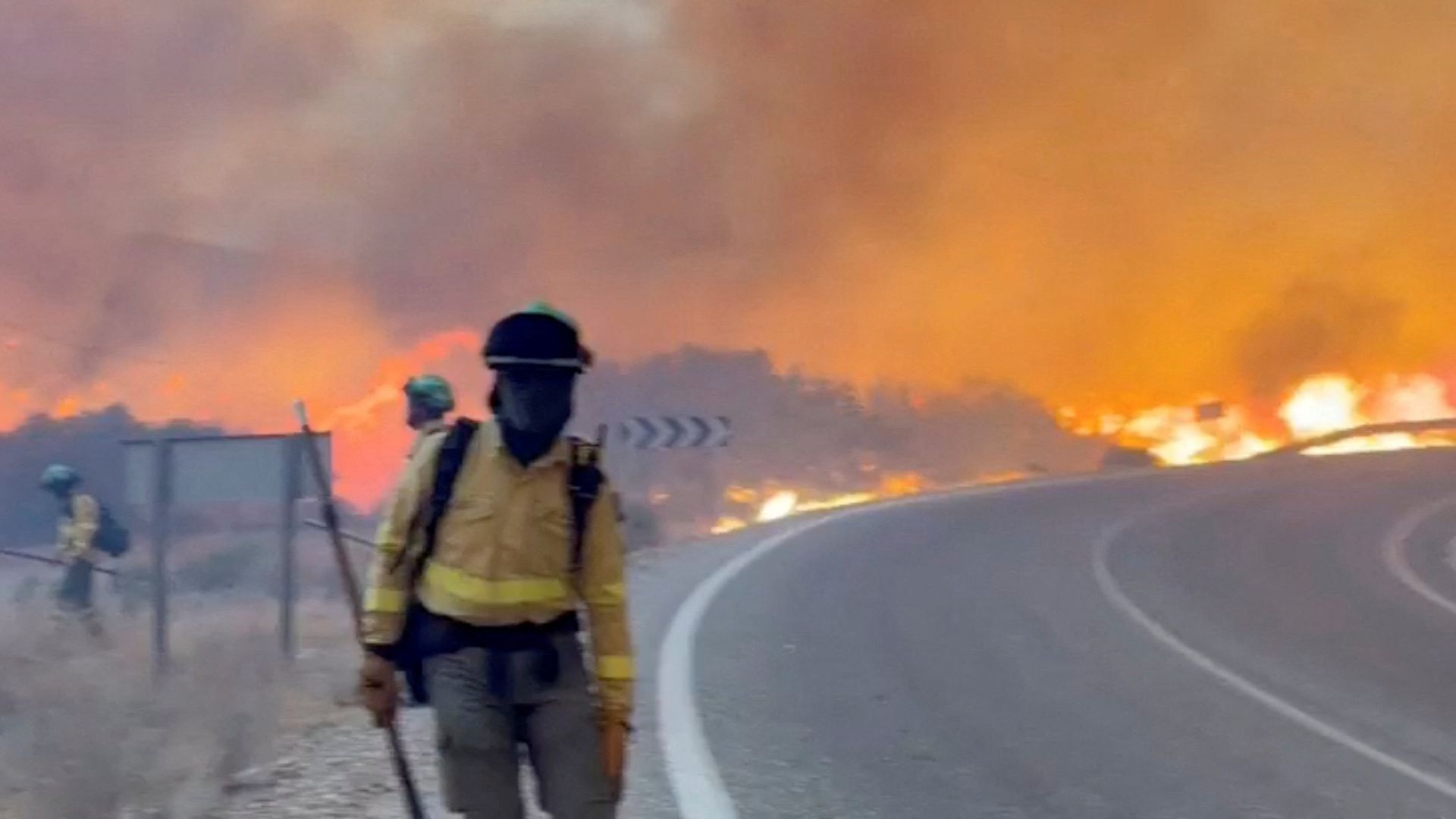
A fast-moving wildfire in southern Spain has claimed the lives of at least 12 people in Almería province, marking one of the country's most severe wildfire disasters in recent memory. The blaze erupted near the municipality of Los Gallardos on Thursday afternoon and aggressively swept through nearby rural communities, including the hamlet of Bédar, catching residents and emergency services off-guard.
Fanned by strong winds reaching 50 km/h and temperatures hovering near 40°C, the fire advanced with terrifying speed. Emergency officials confirmed a heartbreaking detail: several victims were discovered inside vehicles, killed while trying to escape the encroaching flames. The tragic incident underscores how quickly a climate-driven blaze can turn a routine evacuation route into a deadly trap.
The Perfect Storm in Andalusia
Southern Spain has always dealt with hot summers, but the conditions that fueled the Los Gallardos inferno were exceptionally volatile. A severe, early-summer heatwave had already parched the local vegetation for weeks, essentially turning the dry shrubland and pine forests into a tinderbox. When the fire broke out, it didn't just crawl through the underbrush; it exploded.
Antonio Sanz, the regional Minister of the Presidency, Health, and Emergencies, described the event as an unprecedented tragedy and the most devastating fire to date in the region.
More than 150 regional firefighters and five fire engines rushed to the scene to protect vulnerable neighborhoods like Pinar de Bédar. However, the sheer intensity of the wind and heat severely limited early containment efforts. Spain's specialized Military Emergency Unit (UME) was quickly mobilized to bolster the overwhelmed local crews.
When Infrastructure Becomes a Hazard
While an official investigation into the exact origin of the blaze remains underway, local emergency services received multiple eyewitness reports indicating that a collapsed power line may have sparked the dry vegetation.
This detail highlights an ongoing issue across Mediterranean Europe: aging or vulnerable utility infrastructure operating under extreme thermal stress. When temperatures remain consistently high, power lines sag, transformers overheat, and the risk of mechanical failure increases dramatically. Combined with surrounding fuel loads that haven't seen rain in months, a single spark from a falling wire can trigger a massive disaster within minutes.
The Problem With Escaping by Car
The discovery of victims inside their cars points to a dangerous phenomenon seen in rapid-onset wildfires worldwide. When smoke blanks out visibility and panic sets in, roads quickly become congested. A single stalled vehicle, a fallen tree, or thick smoke cutting off sight lines can gridlock a small rural road.
Wildfire experts constantly warn that cars offer very little protection against extreme radiant heat. The air intake systems can swallow smoke and stall the engine, while the intense heat can easily shatter windows or ignite the vehicle's interior components.
The Broader European Crisis
Spain's tragedy isn't happening in isolation. Just days prior to the Almería fire, a massive blaze in southern France forced the evacuation of over 10,000 people from small towns near the Spanish border. Western Europe has faced intense heat spikes early this year, extending a multi-year trend of prolonged drought and rising baseline temperatures.
According to data from the World Meteorological Organisation, Europe is warming at more than twice the global average. This shift shifts the wildfire season earlier into the calendar and extends it later into the autumn, shrinking the safe window that forestry teams rely on to conduct controlled burns and clear overgrown undergrowth.
Spain actually anticipated a brutal summer. Back in May, Prime Minister Pedro Sánchez announced that the country would deploy its largest-ever summer wildfire response package. Yet, despite massive investments in aircraft, heavy machinery, and seasonal personnel, the Los Gallardos disaster shows that extreme weather conditions can still outmatch state-of-the-art suppression resources.
What to Do if You are Caught in a Fast Moving Fire
If you live in or travel through fire-prone areas, relying entirely on an official evacuation order might not leave you enough time. When a fire moves as fast as the one in Almería, you have to make decisions in minutes.
Act Before the Smoke Blinds You
- Evacuate early if you see columns of smoke or feel strong winds pushing a fire in your direction. Don't wait for emergency text alerts or a knock on the door.
- Pack a basic emergency kit in your vehicle at the start of the summer season, including wool blankets, heavy leather gloves, masks, and plenty of bottled water.
- Know multiple exit routes out of your neighborhood. If the primary road gets blocked by emergency vehicles or smoke, you need a pre-planned alternative.
If You Get Trapped in a Vehicle
- Pull over to an area clear of thick vegetation, such as a wide dirt clearing or a paved parking lot.
- Turn on your vehicle's headlights and hazard lights so emergency crews can spot you through the heavy smoke.
- Close all windows and shut off the ventilation system to prevent smoke and toxic gases from filling the cabin.
- Get down on the floorboard and cover yourself completely with a wool or cotton blanket to protect against the extreme radiant heat coming through the windows. Avoid synthetic fabrics, which melt easily under high temperatures.
Beyond Suppression
For decades, the standard response to wildfires has been suppression—putting more trucks on the road and more water bombers in the sky. But fires like the one in Los Gallardos prove that purely defensive strategies have hit their structural limit.
Governments and communities must shift resources toward aggressive land management, creating wider fuel breaks around rural hamlets, and upgrading utility grids to withstand severe heatwaves without throwing sparks into dry brush. Until those preventative changes become standard practice, rural communities will remain highly vulnerable to these fast-moving summer infernos.