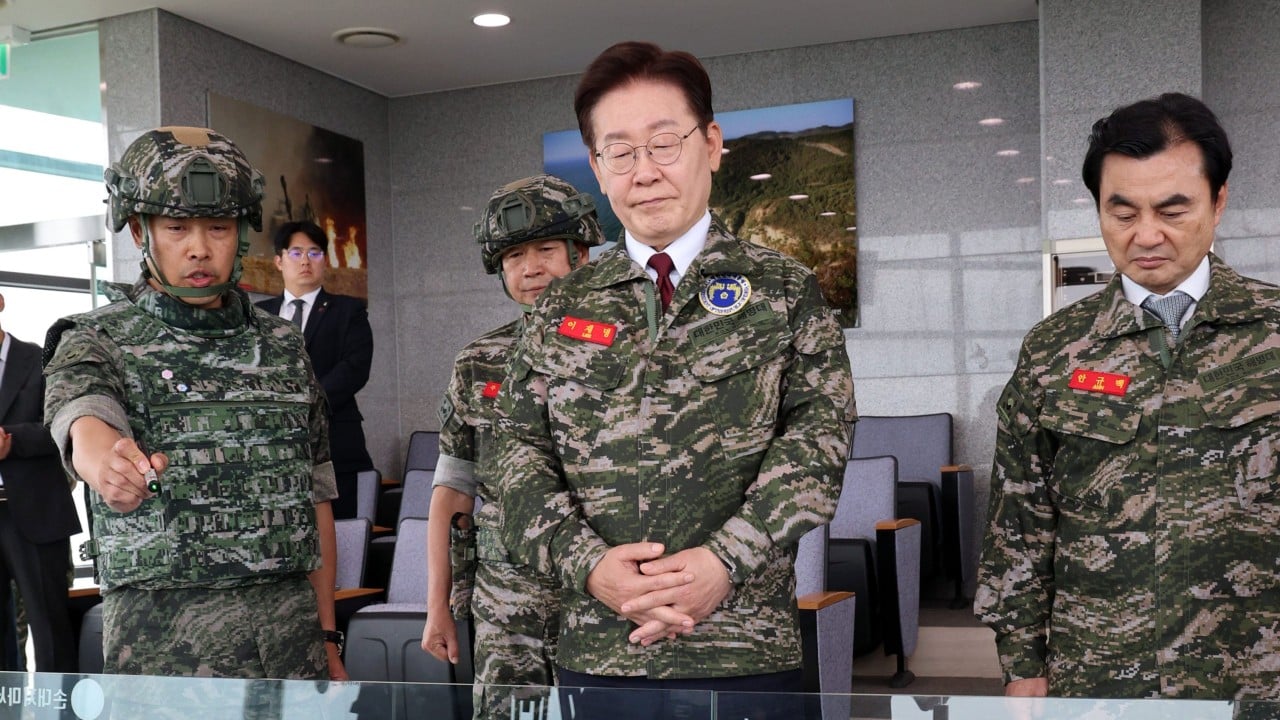
The Korean War has technically never ended. For over seven decades, an unstable armistice has kept North and South Korea in a legal state of suspended animation. South Korean President Lee Jae Myung is trying to change that reality. During his address marking the 81st Liberation Day in Seoul, Lee formally proposed direct talks with Pyongyang to replace the 1953 ceasefire with a permanent peace treaty.
It sounds ambitious. It also sounds entirely detached from the current geopolitical climate. Pyongyang has spent years hardening its stance, deepening military ties with Moscow, and doubling down on its identity as an irreversible nuclear power.
So why push for peace talks now? The answer comes down to breaking a frozen cycle of hostility that benefits no one.
Moving Beyond the Armistice Trap
The 1950-53 conflict ended because guns fell silent, not because a lasting diplomatic agreement was signed. That distinction matters. An armistice is just a temporary suspension of hostilities. Without a formal peace regime, every routine military exercise or border flare-up carries the existential risk of total escalation.
President Lee’s proposal is straightforward. He wants the directly involved parties to sit down, drop mutual threats, and officially close the book on the war. Crucially, the plan links this diplomatic normalization directly to security concerns. Lee noted that negotiations to end the war could open the door to practical measures for halting North Korea's nuclear advancements.
You cannot solve the nuclear issue by pretending the peninsula is permanently trapped in 1953. Seoul is betting that shifting the framework from perpetual confrontation to peaceful coexistence might alter Pyongyang's calculus.
The Reality Check on Pyongyang
North Korea has not exactly rolled out the welcome mat. Since President Lee took office, Pyongyang has largely ignored Seoul's reconciliatory gestures. North Korean leader Kim Jong-un officially abandoned long-term reunification goals, redefined the South as his country's principal enemy, and bolstered frontline defenses instead.
Pyongyang routinely denounces joint military drills between Seoul and Washington as invasion rehearsals. Given this background, skepticism from foreign policy analysts is completely justified. Expecting North Korea to suddenly jump at a peace overture ignores how much the Kim regime relies on external threats to maintain internal control.
Yet, diplomacy is rarely about immediate breakthroughs. It is about setting a baseline. By publicly stating that South Korea wants a permanent peace system rather than absorption or conflict, Seoul shifts the narrative. It signals to regional players like the United States and China that South Korea intends to drive regional stability rather than react to crises.
Building a Multilayered Security Architecture
A piece of paper won't instantly disarm the border. President Lee acknowledged this by calling for a multilayered security system to control tensions and prevent accidental clashes.
This security framework relies on a few core principles:
- Preemptive diplomatic and confidence-building measures initiated by Seoul.
- Incremental reduction of hostility embedded in institutional norms and perceptions.
- Broader multilateral engagement involving key stakeholders to guarantee stability across Northeast Asia.
Seoul wants to transform the energy of confrontation into a structured dialogue. Whether North Korea chooses to accept that invitation remains entirely up to them.
The ball is now in Pyongyang's court. They can continue down the path of deepening isolation, or they can test whether Seoul's offer of peaceful coexistence is genuine. Until then, the armistice holds, and the peninsula waits.