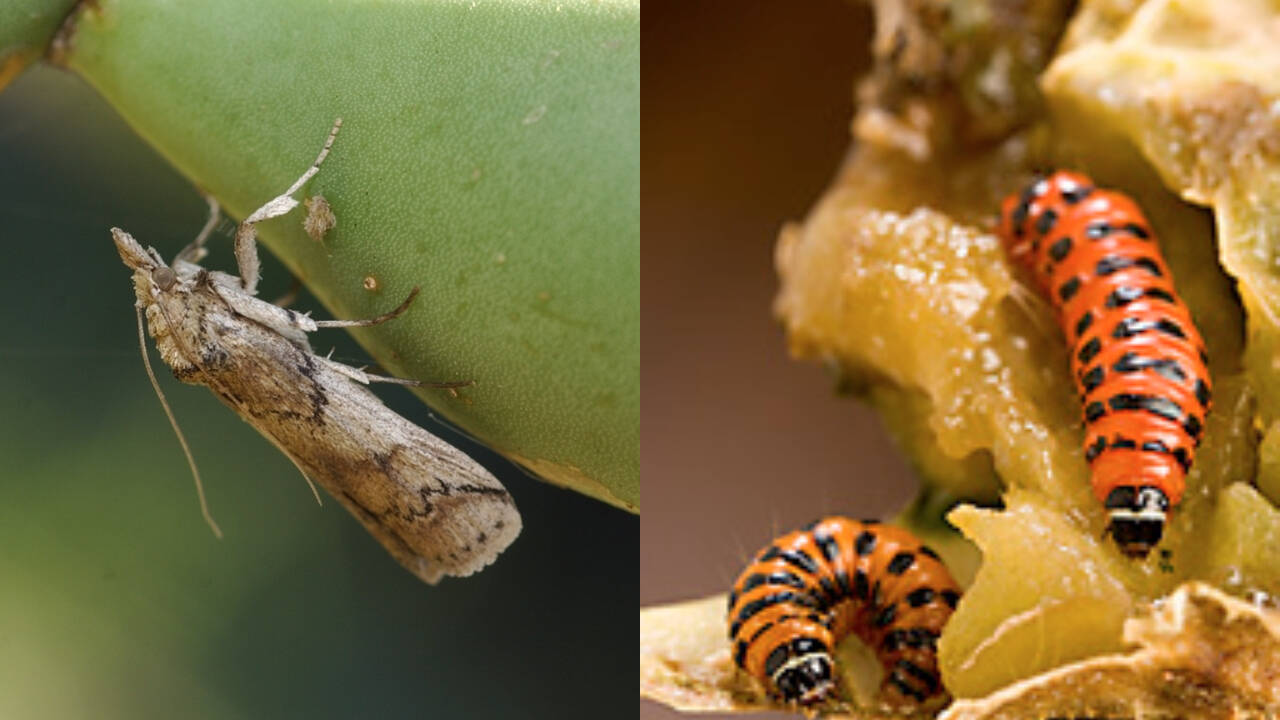
You trust biological control to fix nature. Then nature bites back.
Back in 1957, officials thought they had a neat trick on their hands. They shipped a South American cactus moth to the Caribbean island of Nevis to wipe out invasive prickly pear. It worked. The moths chewed through the unwanted plants with ruthless efficiency. Governments loved the idea. They figured they could use these insects anywhere an unwanted succulent popped up.
Fast forward to 1989. The South American cactus moth didn't stay where people put it. It crossed the water, landed in the Florida Keys, and started expanding along the Atlantic and Gulf coasts. Only this time, it stopped eating the pests and started devouring native and endangered cacti.
The Damage Inside the Cactus Pads
You might look at a prickly pear and think it's indestructible. It survives baking heat, poor soil, and brutal droughts. But it's completely defenseless against Cactoblastis cactorum.
Female moths lay distinctive egg sticks that look like tiny pine needles right on the cactus pads. When those eggs hatch, the larvae don't just graze on the surface. They burrow straight inside.
Dozens of caterpillars tunnel through the interior of a single pad. They feed together, hollowing out the structure from the inside out until the fleshy green pad turns into a rotting shell. Secondary infections take over. The whole plant collapses.
Entomologists note that these moths target multiple species beyond standard prickly pear, including plants from the Nopalea, Cylindropuntia, and Consolea genera. Many of these are rare native species found only in fragile coastal ecosystems.
Why This Ecological Crisis Matters
Cacti aren't just weeds growing in empty sand lots. They anchor entire ecosystems.
When native cacti die off, the local wildlife loses a critical lifeline. Desert tortoises, iguanas, and various bird species rely on these plants for moisture, shade, and nesting grounds. The deep root networks hold fragile coastal dunes together, stopping erosion before it starts.
When the moth tears through a region, the physical landscape changes. Dunes wash away. Animal populations drop. What started as a targeted agricultural fix in Australia and the Caribbean turned into a slow-moving environmental disaster across the southern United States and Mexico.
Turning Sterility Against the Invader
So, how do researchers fight back without spraying toxic chemicals that harm everything else?
Scientists with the United States Department of Agriculture's Agricultural Research Service turned to the sterile insect technique. Instead of killing the moths with sprays, they are weaponizing reproduction.
Researchers mass-produce the moths on a specialized artificial diet in labs. Then, they expose male moths to precise doses of radiation. This process makes the males sterile. When researchers release these sterile males into the wild, they still seek out wild females and mate with them. But no offspring hatch. Over time, the wild population crashes because fewer and fewer fertile eggs get laid.
Teams from ARS facilities in Georgia and Florida, alongside partners like Florida A&M University, have been testing this method in real-world conditions.
What Field Tests Show
Running lab experiments is easy. Stopping an invasive insect on a barrier island is entirely different.
Researchers evaluated the sterile insect strategy across three distinct test sites:
- Dauphin Island in Alabama
- Okaloosa Island in Florida
- St. George Island in Florida
Each location received a different treatment plan to measure effectiveness. St. George Island served as an untreated control group. Okaloosa Island relied strictly on manual sanitation. Dauphin Island combined manual sanitation with the release of sterile male moths.
Sanitation sounds simple, but it's hard manual labor. Field crews have to physically search out every single cactus pad, cut away sections infested with moth larvae or pupae, and strip off the egg sticks by hand.
The results speak for themselves. On Dauphin Island, combining physical removal with sterile insect releases drove the local cactus moth population down to nearly undetectable levels.
The threat hasn't vanished entirely. The moths still sit on the doorstep of Mexico's massive native cactus ecosystems and multi-billion-dollar agricultural industries. Protecting those plants means staying aggressive with biological interventions before the next wave arrives.