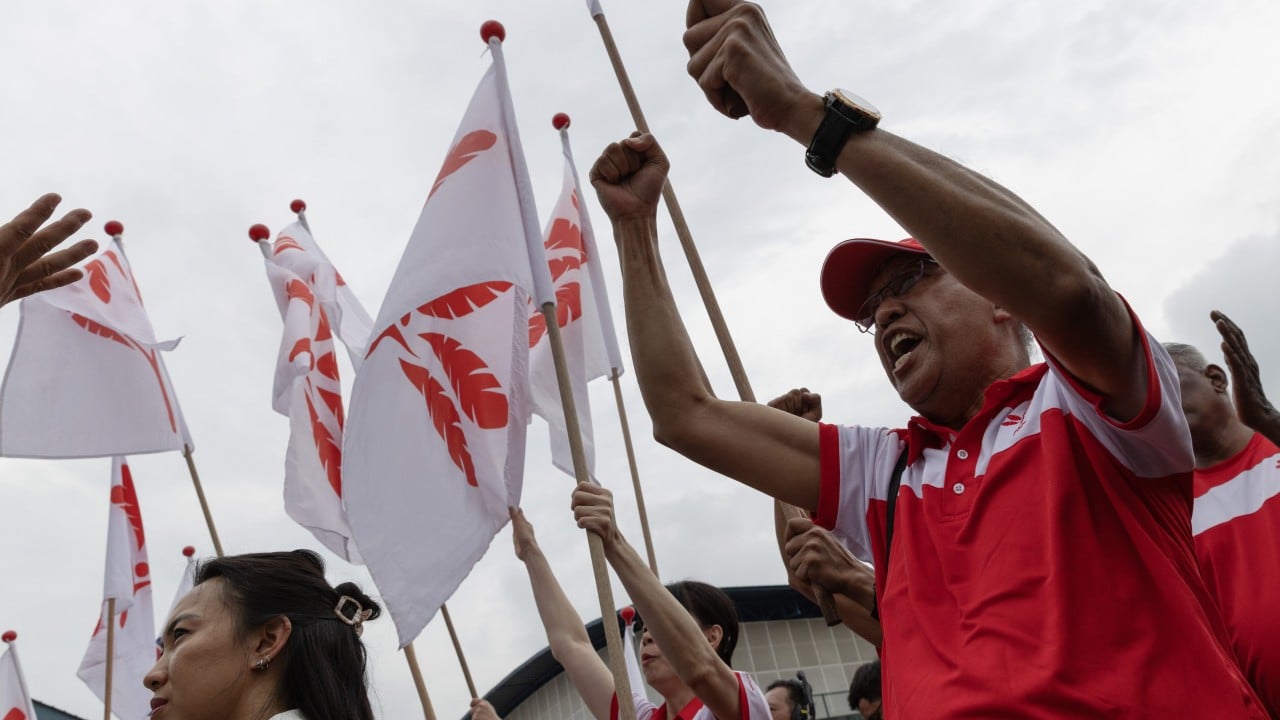
Singaporean voters aren't buying the old political playbook anymore. If you look at the aftermath of the May 2025 General Election, the message from the ground is loud and clear: structural competence wins, and loud protest politics is dead.
The latest proof comes from a double-whammy of high-profile departures. Goh Meng Seng, the firebrand founder who led the People's Power Party (PPP) since 2015, stepped down as secretary-general. On the exact same day, Stephanie Tan—the bright young face and top single-constituency performer for the Progress Singapore Party (PSP)—walked out the door due to a "difference in opinion" regarding the party's direction.
This isn't just a routine leadership shuffle. It's the beginning of a major shakeup for Singapore’s minor political parties. The 2025 election didn't just hand Prime Minister Lawrence Wong a strong mandate; it effectively starved the smaller alternative parties of political oxygen. If these micro-parties don't change how they operate, they face total irrelevance.
The Brutal Math of the 2025 Election
To understand why these leaders are quitting, look at the brutal numbers from the last election. The ruling People's Action Party (PAP) secured a commanding 65.57% of the popular vote. The Workers’ Party (WP) solidified its status as the de facto mainstream opposition, capturing 12 seats and proving that its professional, institutional approach resonates with the middle ground.
Everyone else got crushed.
The PPP ran a campaign in Tampines GRC that ended in disaster, pulling in an abysmal 0.43% of the vote. They lost their election deposits. When a political party can't even secure the 12.5% vote threshold required to keep its deposit, it's a sign that the brand is broken. Goh Meng Seng admitted as much when he stepped down, stating he was "no longer suitable to lead a political party in this new era" where voters prioritize things other than raw grievance.
The PSP didn't fare much better overall, suffering a painful drop in vote share compared to their 2020 debut. Stephanie Tan was their sole bright spot, winning a highly respectable 34.55% of the vote in Pioneer SMC. Yet, just a year after being brought into the central executive committee to modernize the party's image, she resigned.
When your best young talent walks away because of internal disagreements, the structural rot is deep.
The Death of the One Man Show
For decades, smaller Singaporean opposition parties relied heavily on the personal brands of charismatic, vocal leaders. Think of Dr. Chee Soon Juan with the Singapore Democratic Party (SDP), or Dr. Tan Cheng Bock with the PSP.
But relying on a singular personality is a trap. The 2025 election proved that voters now look at parties as institutions. They look at the team, the policy proposals, and the capability to run a Town Council.
The Workers' Party figured this out years ago. They transitioned smoothly from Low Thia Khiang to Pritam Singh, showing voters that the party is bigger than any single individual. Meanwhile, the smaller parties remain trapped in the shadow of their aging founders. When those founders step back or fail to evolve, the entire structure wobbles.
Voters see right through it. They want policy solutions for the cost of living, housing, and job security. They don't want theatrical protests or grievance-driven politics. The micro-parties haven't offered anything beyond "we aren't the PAP," and in modern Singapore, that's a losing strategy.
What Happens Next for the Alternative Voice
The smaller parties are trying to adapt, but it looks like too little, too late. The PPP has appointed William Lim Lian Chin as its new chief. The party claims it wants to give Singaporeans a "voice of truthful concerns," but without a massive ideological and organizational pivot, they'll remain on the fringes.
For the broader opposition ecosystem, the writing is on the wall. We are moving toward a two-party reality. On one side is the PAP's managed pluralism under Lawrence Wong. On the other is the Workers' Party, operating as a rational, institutional check on power.
The smaller players have two real options. They can either merge to combine resources and talent, or they can continue to fracture, split the alternative vote, and lose their deposits in successive elections.
If you're watching Singaporean politics, stop looking at the fringe parties for the next big disruption. The real battleground is now firmly set between the two giants in Parliament, and the smaller parties are simply running out of time to prove they belong in the room.
CNA's analysis on the post-election opposition strategy provides excellent context on why independent candidates and institutional shifts have completely changed the game for alternative parties in Singapore.