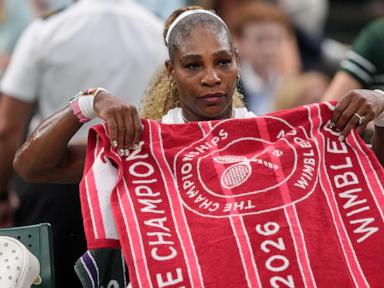
Father Time remains completely undefeated. You can have 23 Grand Slam singles titles, 14 major doubles trophies, and the kind of cultural aura that stretches far beyond the baseline, but the human body doesn’t care about scripts. Serena Williams pulling out of the Wimbledon doubles draw alongside her sister Venus isn't just a bummer for the fans on Centre Court. It's a stark reminder that elite tennis at 44 is an entirely different beast than it was a decade ago.
The news broke via an emotional Instagram post from Serena on Saturday afternoon. It came just days after she tweaked her right knee during a grueling, three-set singles loss to 20-year-old Australian Maya Joint. The imagery Serena shared wasn't your standard PR apology. She posted photos of four massive syringes filled with yellow fluid drained from her knee, alongside clips of her walking with heavy medical strapping while one of her daughters carried her cane. Don't miss our recent coverage on this related article.
"I'm heartbroken to have to withdraw from doubles," Serena wrote. "Coming back to compete again has been a gift, and the opportunity to play alongside Venus once more meant the world to me. I did everything I could to be ready, but unfortunately my knee just isn't ready to compete."
It's a brutal end to a highly anticipated reunion. The Williams sisters, who accepted a wildcard into the tournament, were scheduled to face Camila Osorio and Solana Sierra in the opening round. Instead, tournament organizers—who stretched scheduling rules to the absolute limit by holding the match until late Saturday afternoon to give Serena extra recovery time—had to replace them with alternates Samantha Murray Sharan and Lanlana Tararudee. To read more about the background here, CBS Sports provides an in-depth breakdown.
The Physical Toll of a Modern Comeback
Let's look past the emotion and focus on the cold reality of professional sports. Serena hadn't played top-flight singles in nearly four years following her emotional farewell at the 2022 US Open. While she dipped her toes back into competitive waters by playing warm-up doubles at Queen's Club and Berlin earlier in June, throwing a 44-year-old body onto the slick grass of Wimbledon for a high-intensity singles match carries immense risk.
When you twist a knee on grass, the joint swells almost instantly. The fluid Serena had drained is the body's natural defense mechanism, but it severely limits mobility and strength. Trying to pivot, serve, and protect half a doubles court under those conditions isn't just difficult—it's dangerous.
The tournament organizers knew how badly the public wanted this match. Every single women’s first-round doubles match was finished by Friday night except for this one. Venus Williams even tried to keep her own competitive juices flowing by playing mixed doubles on Friday with Kevin Krawietz, though they went down in straight sets to Tereza Mihalikova and Lloyd Glasspool. Ultimately, the waiting game ran out of time. Serena didn't log a single on-site practice session in the five days following her singles loss, making the Saturday withdrawal inevitable.
The Narrative Versus the Reality of Ageless Greatness
We love the story of the ageless veteran returning to conquer the young guns. It's why wildcard entries for legends like the Williams sisters generate tenfold more buzz than matches featuring top-10 seeds. Venus is 46, Serena is 44. Together, they have captured six Wimbledon doubles crowns. The desire to see them step onto the grass as a duo one last time was palpable.
But modern tennis relies on explosive lateral movement and punishing baseline rallies. Maya Joint, the player who defeated Serena on Tuesday, wasn't even alive when Serena won her first few Grand Slam titles. The physical gap between a hungry 20-year-old playing week-in and week-out and a legend stepping off a multi-year hiatus is a chasm that nostalgia simply cannot bridge.
Many fans are wondering if this is the final curtain call for Serena at SW19. Her emotional wave to the crowd after the singles defeat felt heavy, like a final goodbye to the tournament that defined so much of her legacy.
What Lies Ahead for the Williams Sisters
If you read between the lines of Serena's announcement, she isn't quite ready to pack up her rackets for good. Her post dropped a massive hint about the near future, telling fans to "stay tuned to a city near you."
With the US Open right around the corner, it's highly likely she is eyeing the hard-court season in North America. Hard courts are notoriously brutal on joints, but they offer far more predictable footing than the slick, slippery surface of grass.
For tennis fans and analysts, the next logical steps don't involve booking tickets for another nostalgic run. Instead, focus on these realities moving forward:
- Expect highly selective scheduling. If Serena plays the US Open, it will likely involve a heavily managed training block with zero multi-tournament obligations beforehand.
- The doubles dream isn't completely dead, but it requires both sisters to be healthy simultaneously—a rare alignment of the stars given Venus's own physical hurdles and current doubles ranking of No. 119.
- Appreciate the appearances for what they are: celebratory victory laps rather than campaigns for trophies.
The era of Williams dominance is firmly in the history books, but their ability to stop the sporting world on its axis remains intact. Even a withdrawal accompanied by a graphic photo of knee fluid proves that, win or lose, Serena Williams still commands the entire room.