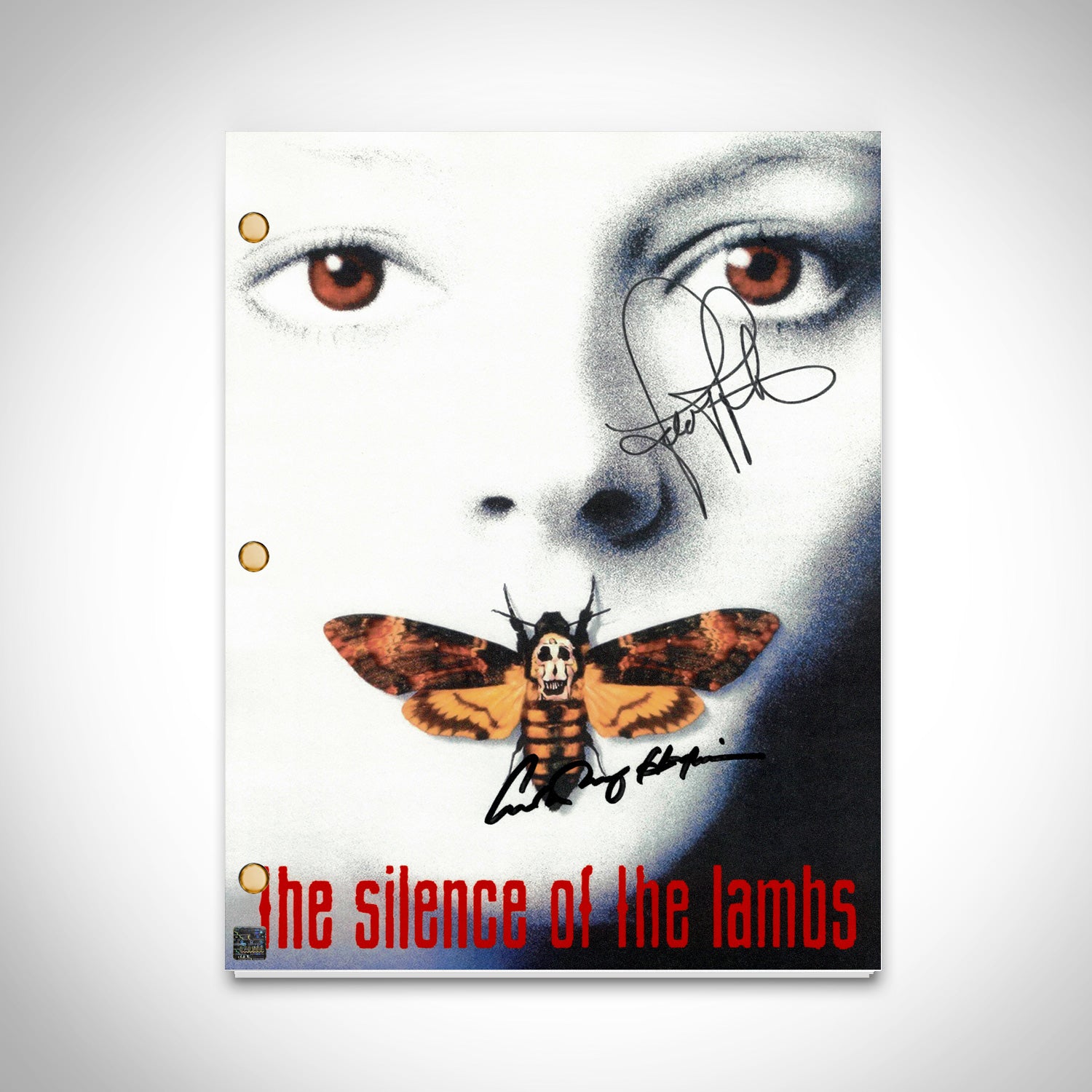
We like to think of Hannibal Lecter as a force of nature, a creature born from the darkness of a cell who emerged fully formed to haunt our collective nightmares. The common wisdom suggests that Anthony Hopkins simply showed up, blinked less than the average human, and chewed the scenery until he won an Oscar. This narrative is comfortable because it credits raw acting genius for the film's success, but it ignores the surgical precision of the writing that actually built the trap. If you look closely at the Script Silence Of The Lambs, you'll realize that the true horror isn't the man behind the glass; it's the bureaucratic machinery that weaponized a monster to catch a smaller, less interesting predator. Most fans focus on the fava beans and the chianti, yet they miss the fact that the story is actually a scathing indictment of the FBI’s institutional coldness. The screenplay didn't just adapt a best-selling novel; it stripped away the gothic excess of Thomas Harris's prose to create a lean, clinical roadmap for psychological manipulation.
Ted Tally, the screenwriter tasked with this adaptation, faced a problem that would've sunk a lesser writer. He had to take a dense, internal book and turn it into a visual experience without losing the intellectual chess match at its core. People often assume that the tension comes from the threat of physical violence, but that’s a fundamental misunderstanding of how the narrative functions. The real stakes are Clarice Starling's soul. Every exchange in that dungeon is a transaction where she trades pieces of her childhood trauma for clues that might save a senator's daughter. It’s a Faustian bargain dressed up as a federal investigation. This isn't just a horror movie; it's a procedural about the cost of entry into a man’s world. When we talk about the legendary status of this project, we’re really talking about a masterclass in economy. Tally understood that if Lecter spoke too much, he became a caricature. By keeping him confined and making his dialogue a series of sharp, analytical strikes, the writer ensured the character remained an enigma rather than a common criminal.
The Architecture of the Script Silence Of The Lambs
The structural integrity of the work relies on a specific kind of mirror imaging that most viewers feel but can't quite name. While Jame Gumb, the elusive Buffalo Bill, is busy literalizing the idea of transformation by sewing a suit of human skin, Clarice is undergoing a metaphorical transformation. She’s shedding her West Virginia skin to fit into the sterile, blue-suited world of Quantico. The Script Silence Of The Lambs succeeds because it recognizes that these two arcs are actually the same journey viewed through different lenses. Clarice and Gumb are both outsiders trying to reinvent themselves to escape a past that haunts them. The genius of the writing lies in how it forces the audience to align with Starling while she aligns herself with a cannibal to understand a skinner. It’s a messy, uncomfortable triangle that defies the standard good-versus-evil tropes of the early nineties.
Critics of the film’s legacy sometimes argue that it relies too heavily on the "refined serial killer" trope, a cliché that has since been beaten to death by a thousand procedural television shows. They claim that the portrayal of Lecter as a brilliant polymath is unrealistic and borders on worship of the antagonist. This perspective fails to see that the screenplay isn't celebrating Lecter’s brilliance; it's using it as a tool to expose the inadequacy of the "sane" characters. Jack Crawford, Clarice’s mentor, is arguably more manipulative than the man in the cell. He sends a trainee into a lion's den with a deliberate lack of preparation, hoping her vulnerability will act as bait. The writing makes it clear that the FBI is perfectly willing to traumatize a young woman if it results in a closed case. Lecter is merely the one who points out the hypocrisy. He’s the mirror, not the hero. He reflects the darkness already present in the institutions we’re supposed to trust.
The pacing of the second act is where the craftsmanship truly shines. After the initial meeting between Starling and Lecter, the narrative could've easily devolved into a standard cat-and-mouse game. Instead, the story pivots into a race against time that uses the shifting locations to build a sense of mounting dread. We move from the cramped, dark confines of the asylum to the bright, sterile airport hangars and eventually to the cluttered, chaotic house of the killer. Each transition is handled with a level of care that ensures the audience never loses their bearings even as the psychological pressure increases. The dialogue remains sparse. Tally knew when to let the silence do the heavy lifting. He understood that in a story about listening for the "crying of the lambs," the moments where no one is speaking are the most significant.
The way the screenplay handles the character of Frederick Chilton is another often overlooked masterstroke. He’s the mid-level bureaucrat we all recognize, the man whose ego is far larger than his intellect. By positioning Chilton as a foil to both Lecter and Starling, the writer gives us someone to truly loathe. Lecter is terrifying, but Chilton is annoying, and in the world of cinema, being annoying is often a greater sin. His presence serves to humanize Clarice and even gives the audience a reason to root for Lecter’s eventual escape. We want to see the petty tyrant get his comeuppance. This is a subtle manipulation of the audience's morality, making us complicit in the escape of a mass murderer because he’s more charismatic than a rude doctor. It’s a brilliant bit of narrative sleight of hand that keeps the viewer off-balance.
Why the Dialogue Still Cuts
If you ask a casual fan about the movie, they’ll quote the "quid pro quo" scene. They remember the rhythm of the words, the way the sentences hang in the air like a threat. This isn't an accident of performance; it’s a result of the way the lines were constructed on the page. The Script Silence Of The Lambs uses language as a weapon of intrusion. Lecter doesn't just ask questions; he dissects Clarice’s background, her accent, and her ambitions. He uses words to probe for weaknesses like a surgeon looking for a tumor. The brilliance here is that the writing gives Clarice the tools to fight back. She doesn't just take the abuse; she uses her own analytical mind to regain control of the conversation. Their relationship is a series of power shifts, and each one is signaled by a change in the linguistic tone of the scene.
I’ve spent years looking at how thrillers are constructed, and few can match the economy of the exchange regarding the "simplicity" of the first principle. When Lecter tells Clarice to "read Marcus Aurelius," he isn't just being pretentious. He's giving her the key to the entire mystery: "Of each particular thing ask: what is it in itself? What is its nature?" This isn't just a cool line; it’s the thesis of the investigation. The screenplay embeds the solution to the puzzle within the philosophy of the characters. It trusts the audience to keep up. It doesn't over-explain the connection between the moth and the killer’s desire for change until the very last moment. This restraint is what separates a classic from a forgettable popcorn flick. The writing respects the viewer’s intelligence, which is a rare commodity in Hollywood.
The strongest counter-argument to the screenplay's perfection is often centered on the portrayal of Jame Gumb. Some argue that the characterization leans on harmful stereotypes about gender identity. While these concerns are valid in a modern context, a closer reading of the text suggests a more complex intention. The writing goes to great lengths to have Lecter explain that Gumb is not "transsexual" in the medical sense, but rather someone who hates his own identity so much that he seeks the most radical transformation possible. He’s a man who believes he’s a monster and therefore tries to become something else entirely. Whether the screenplay successfully navigates that minefield is a subject of ongoing debate, but the intent was clearly to depict a specific kind of psychological fragmentation rather than to indict an entire group of people. The tragedy of Gumb is his total lack of a self, a void that he tries to fill with the skins of others.
When we look at the climax of the film, the basement sequence, we see the culmination of every thread the writer started. The use of night vision is a stroke of genius that reverses the power dynamic. Throughout the movie, Clarice has been the one observing, the one trying to see into the dark corners of the human mind. Suddenly, she’s the one being watched. She’s blind, and the predator has the advantage of sight. It’s a literalization of the vulnerability she’s felt throughout her entire career in the FBI. The writing doesn't give her a big hero moment where she suddenly becomes a super-soldier. She wins because she’s been trained to listen. She hears the click of the hammer on the revolver. She reacts based on the very skills she’s been honing the entire time. It’s a grounded, earned victory that feels consistent with the character we’ve followed.
The Legacy of the Page
The impact of this work on the genre cannot be overstated. It changed the way we think about the relationship between the hunter and the hunted. Before this, serial killers were often depicted as mindless slashers or distant enigmas. This screenplay brought the killer into the room and sat him down for a conversation. It made the horror intimate. It forced us to realize that the person across the table might be a monster, but they’re also a person with tastes, opinions, and a terrifyingly sharp intellect. That shift in perspective is what made the story so resonant. It tapped into a primal fear that the monsters aren't hiding under the bed; they’re standing right in front of us, wearing a well-tailored suit and speaking in calm, measured tones.
I remember discussing this with a colleague who insisted that the movie’s success was entirely due to Jonathan Demme’s direction. While Demme’s use of close-ups was revolutionary, those close-ups would've meant nothing without the weight of the words behind them. You can't film a vacuum. The director needed the psychological depth provided by the writing to make those intense stares feel meaningful. The direction and the acting are the flesh, but the screenplay is the skeleton. Without that rigid, well-defined structure, the whole thing would've collapsed into a messy heap of gore and melodrama. The fact that it remains the only horror-adjacent film to sweep the "Big Five" Academy Awards is a testament to the strength of its foundational writing.
The ending of the story is perhaps its most chilling masterstroke. Most thrillers end with the villain dead or behind bars, providing the audience with a sense of closure. Here, the "lesser" villain is killed, but the "greater" villain is free. The final shot of Lecter disappearing into a crowd in Bimini is a haunting reminder that the world is a dangerous place and that justice is often a compromise. He’s "having an old friend for dinner," a pun that is both witty and horrifying. It leaves the audience with a lingering sense of unease. We’ve saved the girl, but we’ve let the devil out of his cage. That ambiguity is what keeps us coming back to the story decades later. It doesn't offer easy answers or a comfortable moral high ground. It just gives us the truth: that sometimes, the only way to stop a nightmare is to make a deal with another one.
We've spent thirty years obsessed with the wrong thing. We’ve focused on the spectacle of the violence and the charisma of the cannibal, while the real lesson was hidden in the structure of the narrative all along. The story isn't about the triumph of good over evil; it’s about the survival of the individual within a cold, indifferent system. Clarice Starling didn't win because she was the best agent; she won because she was the only one willing to look the monster in the eye and admit that she was afraid. She accepted her own humanity in a world that demanded she be a machine. The writing doesn't just tell us a story about a girl and a killer; it tells us a story about what it means to be seen, truly seen, for the first time in your life.
The genius of the work isn't in its ability to shock us, but in its ability to make us empathize with a woman who is being squeezed between two different kinds of predators. On one side, you have the literal monsters who kill for sport or out of a twisted sense of necessity. On the other side, you have the institutional monsters who see people as assets, numbers, or career milestones. Clarice navigates this landscape with a quiet dignity that the screenplay protects at every turn. It never allows her to become a victim, even when she’s at her most vulnerable. That is the true legacy of the writing. It created a hero who is defined by her empathy and her intellect, rather than her physical strength or her ability to wield a weapon.
The common belief that this film is just a high-end slasher movie is a disservice to the complexity of its construction. It’s a deep, psychological exploration of the power of secrets and the cost of revelation. We’re all hiding something, and the story suggests that our secrets are the only things that truly belong to us. When Clarice gives hers up, she gains the power to save a life, but she loses a part of herself in the process. That trade-off is the heart of the drama. It’s a universal theme that resonates far beyond the confines of a crime thriller. We’re all trading pieces of ourselves for the things we want, and we’re all hoping that the price isn't too high.
The true horror of the story is the realization that the monster doesn't want to kill us; he wants to understand us. He wants to peel back the layers of our psyche and see what’s underneath. He’s a distorted reflection of the writer’s own process, a figure who probes and pokes until the truth comes out. By the time the credits roll, we’ve been dissected just as thoroughly as Clarice. We’ve been forced to confront our own fascinations with darkness and our own complicity in the systems that create these monsters. It’s an uncomfortable place to be, but it’s exactly where the best writing is supposed to take us. The screenplay isn't a guide to catching a killer; it's an invitation to look into the abyss and realize that the abyss has a very sophisticated palate.
In the end, we don't remember the film because of the blood or the jump scares. We remember it because it captured a moment of pure, terrifying clarity between two people who should've had nothing in common. It showed us that even in the darkest, most depraved corners of the human experience, there’s a desperate, clawing need for connection. Whether that connection is a shared secret or a shared meal doesn't really matter. What matters is the contact. The writing provided the bridge for that contact, and in doing so, it created a narrative that is as indestructible as it is disturbing.
Hannibal Lecter didn't just walk out of that cell; he walked out of the page and into the permanent record of our cultural history. He remains there not because he’s a great villain, but because he was written with the kind of precision that makes him feel inevitable. He’s the consequence of a story that refused to pull its punches or offer an easy way out. He’s the shadow that stays with you long after the lights come up, a reminder that the most dangerous things in the world are the ones that know exactly what you’re thinking. The story isn't about the lambs that were silenced, but about the one person who finally learned how to make the screaming stop.
The terrifying truth is that we don't actually want the monster to be caught; we want him to keep talking because he’s the only one who tells the truth about who we really are.