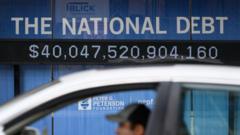
Treasury Secretary Scott Bessent had a simple goal this week: stop the bleeding in the bond market. He rolled out an aggressive plan to double Treasury buybacks of long-dated debt, hoping to inject liquidity and soothe investors who are spooked by rising borrowing costs. The market’s response? A brief moment of relief, followed by a collective shrug and a return to the sell-off.
If you’re wondering why this intervention fell flat, the answer is straightforward. You can’t paper over a $40 trillion debt problem with a few billion dollars of liquidity.
Investors aren't stupid. They see the underlying math, and it doesn't add up. When the federal debt crosses a massive threshold like $40 trillion, technical maneuvers like buybacks start looking less like strategic policy and more like a desperate attempt to ignore the elephant in the room. Bond vigilantes aren't reacting to a lack of liquidity; they're reacting to the reality of the U.S. fiscal trajectory.
The Limits of the Treasury Toolkit
Bessent’s move to increase buybacks from $2 billion to at least $4 billion per operation was meant to signal control. He’s essentially trying to use the Treasury’s balance sheet to lean against the wind of market sentiment. But here’s the rub: bond markets are driven by expectations, and right now, those expectations are anchored in fear of inflation and unsustainable deficits.
The bond market is currently grappling with several structural forces:
- Mounting Debt: The national debt just hit the $40 trillion mark.
- Inflationary Pressure: Higher oil prices, partly fueled by geopolitical tensions in Iran, have kept inflation sticky.
- Corporate Borrowing: Massive capital expenditures by tech companies diving into the AI race are competing for capital.
When you have these forces pushing yields toward 19-year highs, a small-scale buyback operation is a band-aid on a gaping wound. Bessent might talk about a "big toolkit," but the market is clearly looking at the contents of that box and finding it insufficient for the scale of the crisis.
Why Inflation Worries Won't Quit
The real issue is that the market is beginning to price in a "debasement trade." This is the classic signal that investors are losing faith in the dollar’s long-term stability. You can see this clearly in the recent surge of gold and Bitcoin. Investors are moving toward hard assets because they don't believe the Treasury can solve the deficit without printing more money—which, of course, just fuels the inflation fire they are trying to cool.
Bessent promised that a new fiscal plan is coming. He mentioned cuts to "frittered away" state spending and potential revenue from tariffs. But for a professional trader, "coming soon" isn't a substitute for a concrete budget reduction. Until Congress shows a bipartisan willingness to touch entitlement spending, the market is going to assume the debt keeps growing.
The Danger of Market Desperation
There is a real risk here that an overly interventionist Treasury makes things worse. When a regulator steps in too aggressively, it can look like panic. If the market perceives that the Treasury is "desperate," it actually creates more volatility.
Think about how this impacts your own bottom line. If you are watching mortgage rates or trying to finance a business, you're likely feeling the squeeze. Higher yields on the 10-year and 30-year Treasuries act as a benchmark for almost everything else in the economy. When the Treasury tries to force those yields down and fails, it sends a signal that the government is losing its grip on the cost of borrowing.
Lessons for the Average Investor
So, what should you do? First, stop betting on the "buy the dip" mentality that worked for the last decade. We are in a different regime now. When you see officials announcing "surprise" interventions, don't view them as a signal to jump in. View them as a symptom of underlying instability.
The current volatility is extreme. We saw hedge funds suffer major losses this week because the market is rotating so fast that today's winners are tomorrow's losers. If you're trying to time this, you’re playing a losing game against algos that react in milliseconds to every Treasury headline.
Instead of chasing these headlines, focus on the fundamentals:
- Manage your duration risk: Don't get caught holding long-dated paper if the fiscal outlook doesn't improve.
- Diversify away from pure dollar exposure: The debasement trade is real, and it’s a direct response to policy uncertainty.
- Ignore the bluster: When politicians say the deficit has "peaked," wait for the actual CBO data before shifting your portfolio strategy.
Bessent might be right that yields don't currently reflect the "underlying fundamentals" of the U.S. economy, but he’s fighting the wrong battle. You don't convince the market with announcements; you convince them with a balanced checkbook. Until that happens, expect the volatility to continue. The market isn't looking for a quick fix; it's looking for a reason to trust the math again.