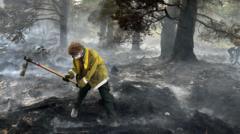
Wildfires don't just burn trees; they rewrite entire ecosystems for decades. When severe blazes tore through parts of the Cairngorms, the damage left conservationists scrambling to figure out how to heal a charred landscape. Now, a multi-million-pound cash injection aims to fix the mess, but throwing money at the problem is only half the battle.
Scottish Climate Action Secretary Gillian Martin recently announced a £1.3 million funding package designed to breathe life back into damaged Scottish habitats. Part of this cash is earmarked squarely for recovery efforts in the Cairngorms, addressing one of the most significant wildfire events the region has seen in recent years. But what does it actually take to nurse a scorched national park back to health?
Where the Money Goes
You can't just plant a few saplings and hope for the best. Real ecological restoration requires targeted, boots-on-the-ground interventions. The Scottish Government package supports projects delivered alongside the Cairngorms National Park Authority and NatureScot.
Beyond the Cairngorms, the funding spreads across seven distinct initiatives, including native oyster restoration, chough habitat work on Islay, river restoration on the Edendon, and conservation tasks across four national nature reserves. In the Cairngorms specifically, the focus falls on tackling invasive species, stabilizing eroded soils, and helping native flora and fauna reclaim ground lost to the flames.
The Rising Threat of Wildfires
Wildfires used to be rare anomalies in Scotland's rugged terrain. That script is flipping fast. Drier spells, shifting weather patterns, and accumulated dry brush have turned parts of the Highlands into tinderboxes.
The scale of recent blazes prompted serious alarm bells across emergency services. Justice Secretary Neil Gray noted that the Cairngorm wildfire was an exceptionally challenging incident, prompting a multi-agency review by the Scottish Fire and Rescue Service, Police Scotland, and the Highland Council. Authorities are currently reviewing the Wildfire Strategic Action Plan to see where response times and prevention tactics fell short.
Action is already shifting beyond post-disaster funding. The Scottish Fire and Rescue Service has introduced measures to place helicopters on standby whenever high wildfire danger alerts go live. Giving commercial aviation suppliers early notice lets them stage assets closer to high-risk zones before smoke even appears on the horizon.
Fixing the Damage on the Ground
Restoring a burned peatland or native pine woodland is tedious, painstaking work. When a severe fire sweeps through, it incinerates the seed bank lying dormant in the soil, leaving the earth vulnerable to wind and rain erosion.
Without human intervention, invasive weeds often outcompete struggling native plants in the aftermath of a disaster. The £1.3 million injection pays for practical labor: stabilizing stream banks, reintroducing native vegetation, and monitoring wildlife corridors to ensure displaced animals can safely return.
If you care about the long-term resilience of Scotland's wild spaces, funding packages like this are a welcome step, but they shouldn't mask the underlying climate pressures driving these disasters in the first place. Keeping watch on wildfire risks, upgrading emergency response fleets, and managing land sustainably are the only ways to ensure the Cairngorms survive the next dry spell.