The scales of justice just tipped heavily in Northern California, and the financial shockwave is only half the story. After a grueling three-year legal chess match inside a federal bankruptcy court, the Roman Catholic Archdiocese of San Francisco finally blinked. They agreed to a massive $395 million settlement. This deal resolves child sexual abuse lawsuits brought by roughly 530 survivors.
If you look at the raw numbers, it stands as one of the largest per-survivor payouts in the history of American clerical bankruptcies. But the real victory isn't sitting in a bank account. The real victory lies in the systematic dismantling of a decades-old wall of secrecy.
For generations, the playbook for institutional cover-ups was simple. You hide behind the statute of limitations. You shift problematic figures between parishes under the cover of night. You force victims into silence using strict non-disclosure agreements. When all else fails, you file for Chapter 11 bankruptcy to freeze civil jury trials. San Francisco tried all of it. They filed for bankruptcy protection back in August 2023. They claimed they couldn't afford to litigate individual cases.
It didn't work. The survivors didn't back down.
As Margie O'Driscoll, a survivor who was abused by a priest nearly 50 years ago at Marin Catholic High School, put it during the announcement, survivors have carried this pain like a ball and chain. She noted that some victims carried it for over 70 years, scorned by the church and doubted by friends. Her summary of the settlement was beautifully blunt. Shame is going to change sides.
Breaking Down the $395 Million Financial Reality
Let's get into how this actually works. A pool of $395 million sounds like an astronomical sum, but when you divide it among 530 individuals, the math changes. We are talking about an average of roughly $745,000 per person before legal fees and administrative costs.
The money won't be handed out in equal slices. That would be unfair to victims who suffered varying degrees of trauma and institutional betrayal. Instead, a special committee formed entirely of survivors will control the funds. They are hiring an independent allocator to evaluate each individual case. Every survivor gets to submit their personal story of survival. The allocator then determines an equitable distribution based on those unique facts.
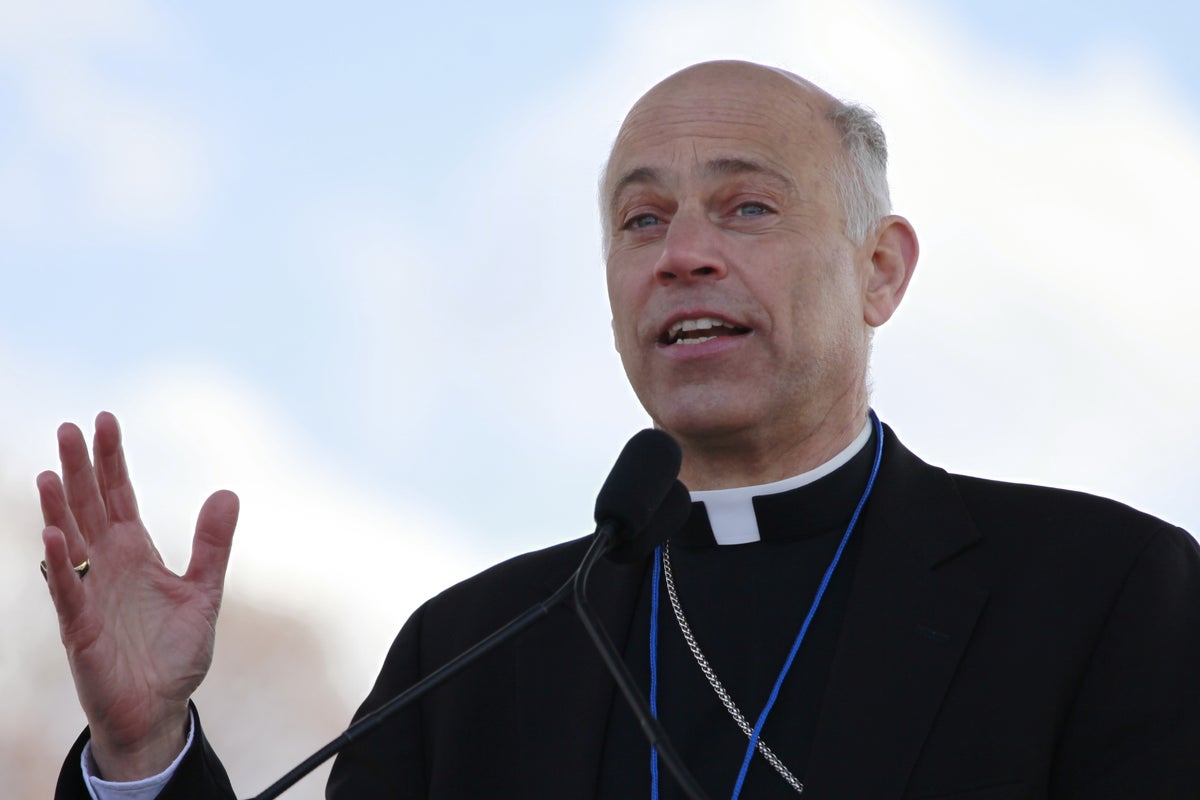
Where is this cash coming from? Archbishop Salvatore Cordileone noted that the central archdiocese has spent decades absorbing legal expenses on behalf of local entities. This time, the central bank account isn't enough.
Local parishes and Catholic schools were technically left out of the 2023 bankruptcy filing. They aren't protected by the bankruptcy shield. They are going to have to cough up money and assets that aren't legally restricted for specific charity purposes. The church claims they have no immediate plans to shut down schools or parishes. That remains to be seen. You can't pull hundreds of millions of dollars out of a regional religious network without causing severe operational strain. The archdiocese is sacrificing financial liquidity to buy a channeling injunction. That legal maneuver forces all current and future historical abuse claims into this specific settlement trust, protecting individual parishes from being dragged into separate, devastating civil lawsuits.
The California Law That Blew the Doors Off
None of this happens without a major shift in California legislation. The archdiocese survived for decades because the clock had run out on these crimes. Then came California Assembly Bill 218.
Passed in 2019, AB 218 did something institutional defense lawyers dreaded. It opened a temporary, three-year lookback window from the start of 2020 through the end of 2022. This window allowed survivors of childhood sexual abuse to file civil lawsuits no matter how long ago the abuse occurred. It did something else even more dangerous to the church hierarchy. It allowed for triple damages if plaintiffs could prove that an institution actively covered up the abuse.
When that window opened, the floodgates broke. Hundreds of elderly and middle-aged survivors stepped forward. They brought detailed accounts of trauma inflicted on them when they were altar boys, students, and vulnerable kids.
The San Francisco Archdiocese saw the writing on the wall. Facing more than 500 individual civil trials, they used their ultimate defensive weapon. They filed for bankruptcy. The goal was simple. Pause the civilian lawsuits, aggregate the claims, and force a global settlement for pennies on the dollar. They spent three years trying to grind the survivors down through legal delays. The survivors didn't break. They forced the church to negotiate on human terms, not just financial ones.
The 14 Points That Dismantle Church Secrecy
The money matters because it forces institutional pain, but the non-monetary conditions in this deal are unprecedented. Jeff Anderson, a prominent attorney who has spent decades fighting the Catholic Church in court, noted that he has never seen an agreement this rigorous.
San Francisco was notoriously stubborn. It was the only Catholic diocese in the entire state of California that refused to publish a comprehensive list of priests credibly accused of child abuse. Even after Archbishop Cordileone admitted in 2023 that such a list existed inside church archives, they kept it locked away.
This settlement forces them to hand over the keys. Under a strict 14-point plan for systemic change, the archdiocese must execute several major reforms.
First, they have to publish and maintain a public, easily accessible list of all credibly accused clergy. This list can't just be a collection of names. It must detail the specific allegations and the actual outcomes of internal and external investigations.
Second, the church is completely banned from using non-disclosure agreements to silence survivors. Any past NDAs are officially null and void. Victims can speak as loudly and publicly as they want.
Third, the archdiocese has to add an actual survivor of clerical abuse to its Independent Review Board. That means an outsider with lived experience will help oversee future allegations.
Fourth, they must implement an anonymous online reporting system managed independently of the central clergy.
Finally, Archbishop Cordileone is legally required to write an individual, personal letter of apology to every single one of the 530 survivors. This isn't a generic, photocopied public relations statement. It is a mandatory, individual admission of institutional failure delivered directly to the people whose lives were shattered.
The Larger Corporate Strategy of Clerical Bankruptcy
This isn't an isolated incident. It is part of a massive institutional collapse across California. The state's legal shifts have triggered a domino effect of archdiocesan bankruptcies. Other regions are facing similar reckonings.
- The Archdiocese of Los Angeles agreed to a record-setting $880 million settlement.
- The Archdiocese of New York agreed to pay out $800 million to victims.
- Northern California dioceses in Oakland, Sacramento, and Santa Rosa have all used Chapter 11 bankruptcy protection to manage the avalanche of AB 218 lawsuits.
Look at the underlying strategy. The church uses bankruptcy court because it treats human tragedy like a corporate restructuring. In a standard civil court, a single horrific case can result in a jury awarding tens of millions of dollars in punitive damages. If you multiply that by 500 cases, the total liability would top billions of dollars, completely liquidating the church's real estate holdings.
By entering bankruptcy, the church forces all victims into one room. They cap the total financial exposure. They protect their core assets like historic cathedrals and administrative buildings.
The difference in San Francisco is that the survivors' legal teams knew this strategy inside out. They used the bankruptcy process as leverage. They told the church that if they wanted to keep their real estate and protect their local parishes from individual lawsuits, they had to trade their most valuable commodity. They had to trade their secrecy.
What to Do If You Are Dealing With Institutional Abuse
If you or someone you know is trying to navigate the complex world of institutional abuse or seeking accountability from a powerful organization, you cannot rely on the institution to do the right thing internally. You need to take specific, strategic steps to protect your rights and force transparency.
- Document everything independently: Write down dates, names, locations, and timelines immediately. Do not store this information on corporate or institutional networks. Keep your own secure digital and physical log.
- Consult specialized external counsel: Standard personal injury lawyers often lack the experience needed to fight deep-pocketed institutional defense teams. Look for firms with a proven track record specifically in clerical or institutional abuse litigation.
- Check for local legislative window extensions: Statutes of limitations are changing rapidly across the country. States frequently pass temporary lookback windows similar to California's AB 218. Monitor state legislative updates to see if a closed legal window has been reopened.
- Connect with independent survivor networks: Organizations like the Survivors Network of those Abused by Priests (SNAP) provide emotional support and critical intelligence on institutional patterns, helping you realize you are not fighting the system alone.
- Refuse immediate, low-ball quiet settlements: Institutions often offer quick, smaller payouts tied to strict confidentiality agreements early in a crisis. Avoid signing away your right to speak before you understand the full scope of the organization's liabilities.
The San Francisco settlement proves that institutional defensive strategies have a breaking point. When survivors refuse to be silenced and use targeted legislative tools, decades of institutional resistance can be brought down. The $395 million payout hurts the church's bottom line, but the permanent removal of their shadow of secrecy is what will protect the next generation of children.