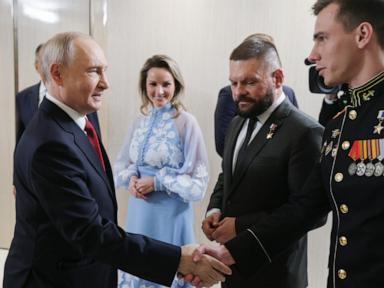
Walk down any major street in Moscow right now, and you'll see them. Faces of men in uniform staring down from billboards, starring in campaign clips, and dominating televised debates. Nearly two hundred candidates who served in Ukraine are running in the latest State Duma parliamentary election. The Kremlin calls them the new "true elite."
It sounds noble. The reality is much more calculated.
Russia's wartime parliamentary election isn't just about filling seats in a rubber-stamp legislature. It's a massive recruitment tool. By putting veterans on party tickets, Moscow wants to convince everyday citizens that heading to the front lines comes with a glorious post-war reward. But scratch beneath the surface of campaign rhetoric, and you'll find a political system scrambling to manage a returning military class while desperately trying to keep new volunteers flowing into the trenches.
The Strategy Behind the Uniforms
When President Vladimir Putin's administration brands these combat veterans as the future of the nation, they are playing a long game. The Kremlin desperately needs to prove that fighting in what official circles call the "special military operation" leads to upward mobility.
Take Vladislav Golovin, a 29-year-old running for the ruling United Russia party. He lost part of his leg fighting in Mariupol, earned the "Hero of Russia" medal, and passed through the Kremlin-backed "Time of Heroes" initiative designed to fast-track veterans into government jobs. Figures like Golovin are the poster children for this political branding. They occupy prominent slots on party lists, signaling to recruits that survival brings status.
Yet, political observers aren't buying the fairy tale. Nikolay Petrov, a senior research fellow at the NEST Centre, points out that the administration fundamentally lacks a long-term plan for the hundreds of thousands returning from the front. Instead of granting real policy-making authority, the establishment tends to herd these veterans into symbolic or minor administrative roles. Real power stays firmly in the hands of entrenched political elites.
Abbas Gallyamov, a former presidential speechwriter turned political analyst, puts it even more bluntly. He describes the entire promotion as empty talk. When you need a constant stream of fresh bodies to maintain a grueling military campaign, you have to feed prospective recruits a steady diet of flattery, financial promises, and grand narratives about building a new empire.
The Darker Side of the Veteran Narrative
Of course, campaign commercials omit the harsh reality facing post-war Russian society. Independent media outlets in Russia frequently report on returning soldiers struggling with severe trauma, leading to violent incidents, public brawls, and criminal offenses. Some of these crimes involve former convicts who traded prison sentences for front-line service.
This creates a massive PR headache for the Kremlin. On one hand, officials want to portray every veteran as a pillar of patriotic virtue. On the other hand, the social fabric is fraying under the weight of a multi-year conflict that has cost hundreds of thousands of casualties.
Promoting high-profile figures like state television war correspondent Yevgeny Poddubny—who survived a Ukrainian drone strike—or ultranationalist candidates with long histories in the Donbas conflict helps drown out the domestic chaos. It keeps the focus squarely on nationalism rather than domestic instability or economic strain.
What This Means for the Future of Russian Politics
The State Duma vote functions as a carefully engineered theater. With major anti-war voices barred from the ballot and the political opposition heavily sidelined, the inclusion of combat veterans serves a singular purpose: manufacturing legitimacy.
By tying the survival of the political system directly to the military campaign in Ukraine, the leadership ensures that questioning the war equals questioning the heroes running for office. It's a clever trap for voters who might feel exhausted by years of economic pain and mounting casualty lists.
Whether these front-line candidates ever wield actual legislative influence matters little to the architects of the campaign. For now, their uniforms are simply the most effective marketing tool left in the box.
Check your local voter registration status or follow independent political monitoring groups if you want to track how these state-managed elections unfold on the ground.