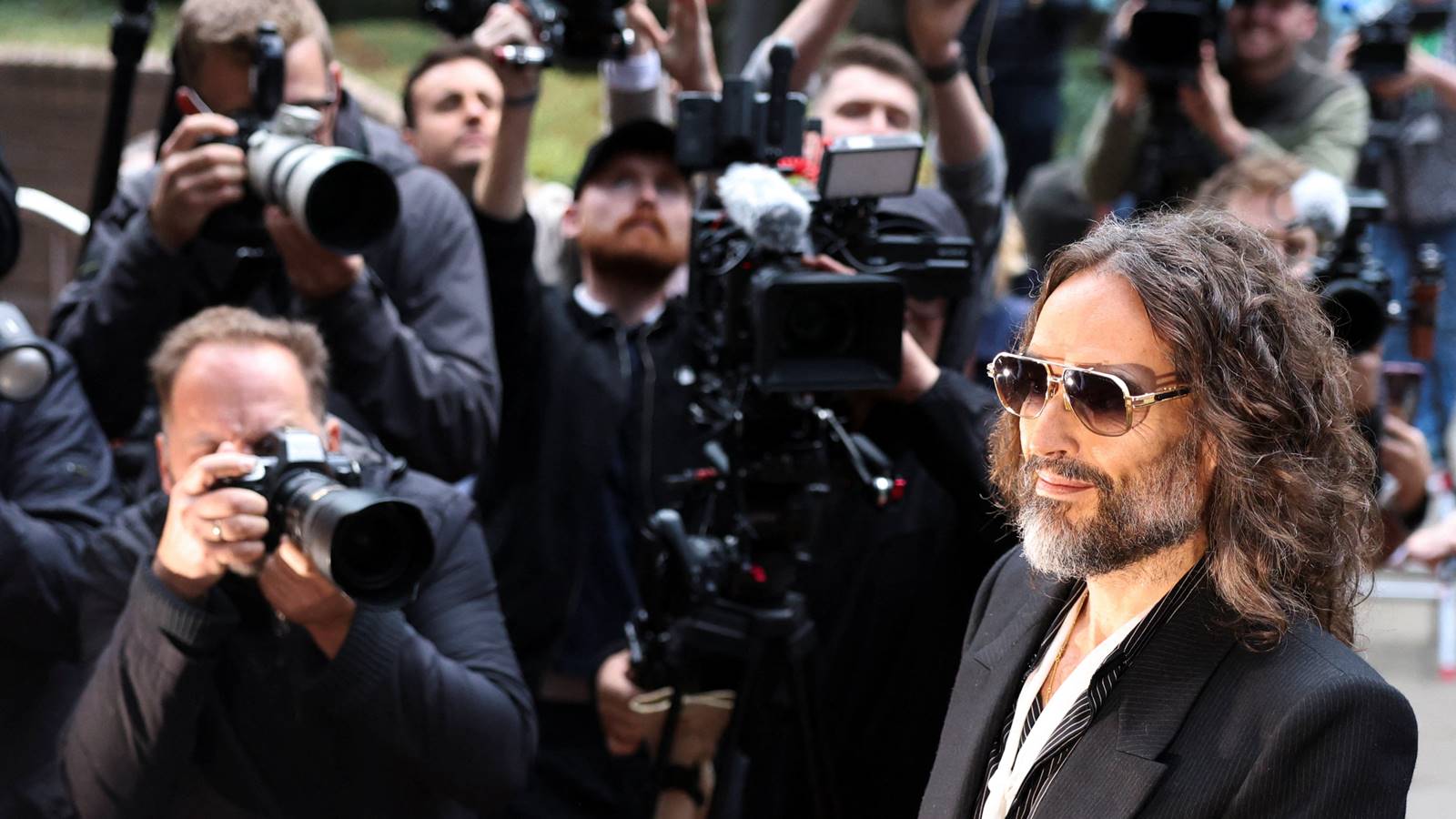
The spotlight at Southwark Crown Court in London isn't just on a disgraced comedian. It's on an entire era of media culture that let famous men treat consent like an optional suggestion.
When prosecutor Riel Karmy-Jones stood up to deliver her opening statement, she didn't mince words. She painted 51-year-old Russell Brand not as a misunderstood eccentric, but as a calculated, manipulative force who treated women as disposable. Six women, six independent sets of allegations spanning a decade from 1999 to 2009, form the backbone of a trial that's currently gripping the public. Brand denies all charges, pleading not guilty to three counts of rape, three counts of sexual assault, and one count of indecent assault.
Yet, the legal battle unfolding right now goes far beyond a single courtroom. It forces a harsh look at how celebrity, fame, and unchecked authority operate behind closed doors.
The Anatomy of the Prosecution Case
For years, Brand built a public persona around his wild past. He talked openly on talk shows, in memoirs, and during stand-up routines about a chaotic lifestyle fueled by fame, narcissism, and relentless sexual conquests. He played it off as rock-and-roll decadence.
The prosecution's opening argument flips that narrative entirely.
Karmy-Jones told the jury that the six accusers—none of whom knew each other at the time of the alleged incidents—came forward independently. The timeline covers a decade when Brand's career exploded from a rising television personality into mainstream global notoriety. According to the state, his fame created an environment of impunity.
Jurors heard details alleging offenses committed in hotel rooms, workplace offices, private homes, and a toilet cubicle in a Soho bar. The prosecution described Brand as possessing an indiscriminate and voracious appetite, where women were treated simply as a means to an end. Charm was deployed as a weapon. Disarming humor masked predatory intent.
When you look at the mechanics of these allegations, a clear pattern emerges. Fame acts as a shield. It gives perpetrators the confidence that victims won't speak out because the power imbalance is too vast.
The Defense Position and the Stakes
Brand entered court flanked by his wife, illustrator Laura Gallacher, telling reporters outside that he felt concerned yet hopeful for a good outcome. His legal team maintains his complete innocence across all seven charges.
Throughout his transition from mainstream broadcasting to an independent online commentator over recent years, Brand has cultivated a fiercely loyal digital audience. Many of his supporters view the legal proceedings through a deeply cynical lens, framing them as an assault on free speech or retribution for his political and cultural pivots.
That narrative crumbles when you examine the specificity of the court evidence. This isn't a debate about ideology or online commentary. It's a criminal trial centered on physical acts, alleged coercion, and bodily autonomy. The jury—consisting of eight men and four women—must cut through the noise of celebrity culture and focus strictly on the testimony.
Why This Trial Matters Beyond the Headlines
We've seen this script before. The entertainment industry, media giants, and elite social circles have long protected charismatic figures who bring in ratings and revenue.
What makes the Brand trial significant in 2026 is the changing tolerance for institutional silence. The women testifying in London are part of a broader reckoning that challenges the old playbook of victim-blaming and PR damage control. When six separate people recount eerily similar experiences of manipulation and force across a ten-year span, it forces society to ask a fundamental question: how many warning signs were ignored because the perpetrator was too entertaining to cancel?
Accountability is messy, slow, and deeply uncomfortable. It strips away the myth of the tortured, charming artist and forces a hard look at the harm left in the wake of unchecked ego.
The courtroom drama in Southwark will drag on for weeks. Verdicts will be weighed, arguments will clash, and the public will take sides. But the real trial isn't just about what happened behind closed doors twenty years ago. It's about whether the legal system can finally deliver justice when power sits on the defense bench.