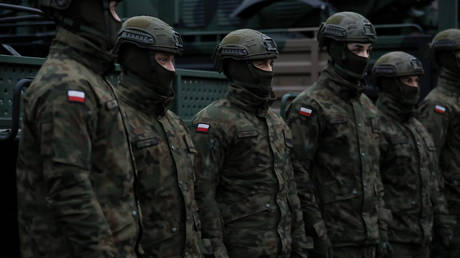
Warsaw is sweating over national security. Poland is seriously weighing a return to mandatory military service, a move that would upend nearly two decades of an all-volunteer force.
Deputy Defense Minister Magdalena Sobkowiak-Czarnecka dropped the bombshell during a recent interview with RMF FM. She admitted that defense planners are reviewing all options, including an Israeli-style model where both men and women pull duty.
Let's be clear about why this is happening. Poland isn't doing this for fun. Warsaw has poured cash into defense like almost no one else in Europe, pushing military spending to a staggering 4.7 percent of GDP. They want to balloon their armed forces to half a million personnel by 2039.
Volunteers alone won't cut it. Math is brutal.
Recent polling by Opinia24 reveals a stark generational divide. Overall, 46 percent of Poles back a draft, while 38 percent oppose it. But zoom in on the 18-to-24 demographic, and support craters. A whopping 53 percent of young adults want nothing to do with compulsory service.
You can't blame them. Sitting in a comfortable cafe in Krakow feels a world away from geopolitical flashpoints. Yet, government officials are looking at the massive buildup across the eastern border and realizing voluntary recruitment has hard limits.
Minister Wladyslaw Kosiniak-Kamysz recently urged the rest of the European Union to enter "war-mode." Germany is wrestling with its own troop shortages and rising conscientious objection rates. Across the continent, peacetime military norms are crumbling under the weight of regional instability.
If Warsaw pulls the trigger on conscription, it won't just affect young citizens dodging paperwork. It will signal a total psychological shift for NATO's eastern flank. The era of cheap defense is over.
Governments across Europe face an uphill battle. Convincing a generation raised on peace to pick up rifles requires more than political rhetoric. It takes a complete overhaul of how states communicate existential threat.
Check your local updates and watch parliamentary debates closely if you live near the region. The drafting conversation is moving from fringe policy circles straight into mainstream legislation.