If you live in the Philippines and open your monthly electricity bill with a sense of impending dread, you aren't alone. In fact, a recent Pulse Asia survey revealed that a staggering 97 percent of Filipinos are stressed out by current energy challenges.
It makes sense. The country now holds the title for the most expensive residential electricity in Southeast Asia. When the conflict in Iran spiked global fuel prices earlier this year, power distributor Meralco hit consumers with a 10% rate hike almost immediately. For a typical family using 200 kilowatt-hours a month, that electric bill eats up roughly 12% of their entire household income.
Because the national grid relies heavily on imported coal and gas, any global supply shock or drop in the peso's value gets passed directly to your wallet. That is why rooftop solar has shifted from a "green lifestyle choice" for the wealthy into an aggressive, practical defensive strategy for the Filipino middle class.
The Math Behind the Madness
For years, the biggest argument against solar was the upfront price tag. It felt like a massive gamble with a payout too far in the distance. But the economics have fundamentally flipped.
Data from the think tank Ember shows that solar panel imports to the Philippines skyrocketed by 145% in the three months leading into mid-2026. The country actually became China’s second-largest solar export market, right behind the Netherlands. This buying frenzy is happening because the payback period has completely crashed.
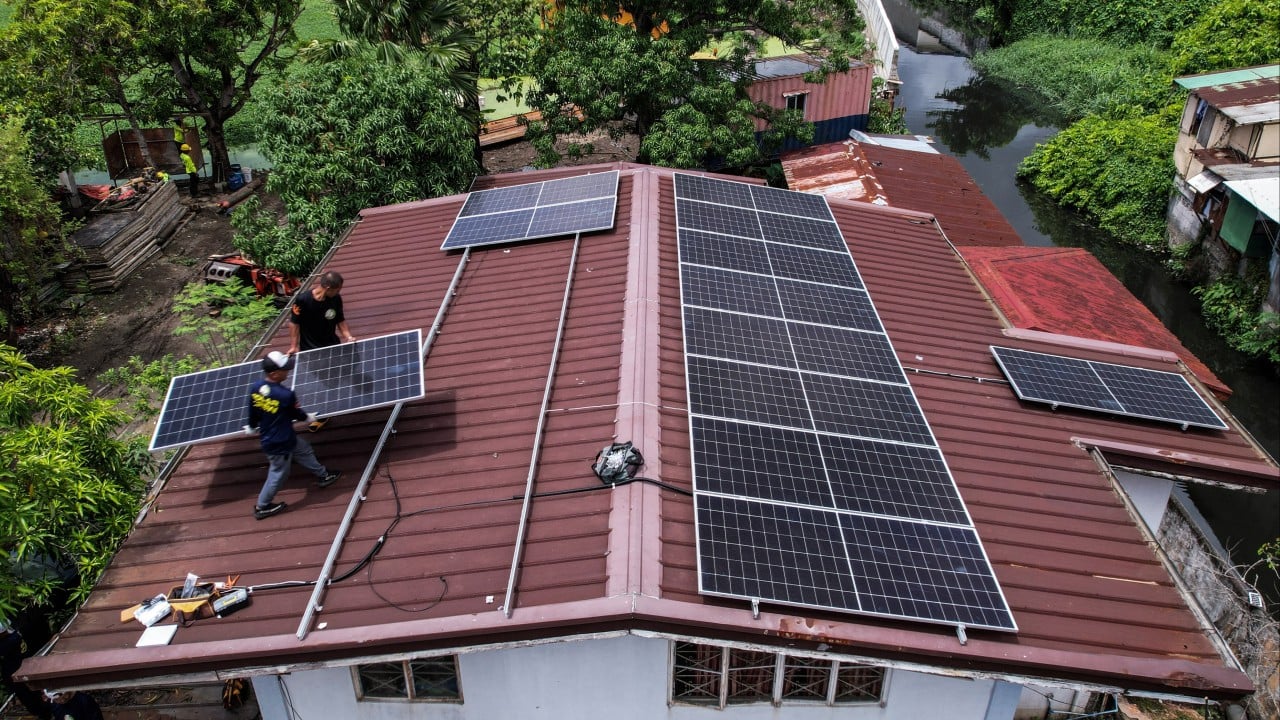
[Image of solar panels on residential rooftop]
Take a look at how fast you can get your money back now compared to just a year ago.
- Residential systems: Payback time dropped from 4 years down to 3.1 years.
- Commercial installations: Payback plummeted from 3 years to just 2.3 years.
- Industrial setups: Dropped from 3.9 years to 3.1 years.
When you realize a high-quality solar panel system lasts 20 to 25 years, hitting your break-even point in about 3 years means you get over two decades of nearly free electricity. The cost per watt for installation fell from around 80 to 90 pesos in 2024 down to 55 to 75 pesos in 2026. You're paying 20% to 30% less for the equipment while the grid price keeps climbing. It’s a double win.
Red Tape is Finally Shrinking
Historically, dealing with distribution utilities for net metering approvals was a bureaucratic nightmare. You would buy the panels, put them on your roof, and then wait months for the utility company to let you plug into the grid and earn credits for the excess power you generated.
The Energy Regulatory Commission finally changed the game. New regulations implemented early this year mandate that net metering approvals must take no longer than 10 days, and local electrical permits must be issued within three working days.
For businesses, it gets even better. Multi-site and aggregate net metering rules now allow a company with multiple locations to over-produce solar power on one large roof and use those credits to offset the electricity bill of another branch that doesn't have a good roof layout.
What the Grid Won't Tell You About Batteries
If you're looking into solar right now, every installer will try to upsell you on a Lithium Iron Phosphate (LFP) battery system. They'll pitch it as the ultimate shield against the frequent brownouts plaguing Luzon and the Visayas.
Here is the honest truth you need to hear: financially, batteries drastically slow down your return on investment. A good 5 to 10 kWh battery backup setup will add 150,000 to 300,000 pesos to your installation bill. That pushes your payback period from three years out to eight or twelve years.
If your primary goal is slashing a massive 15,000-peso monthly Meralco bill, a grid-tied system without batteries is your best bet. You run your air conditioners and heavy appliances during the day directly off the sun, and you use net-metering credits to offset what you pull from the grid at night. Only buy the battery if you absolutely cannot tolerate a two-hour power outage for your home office or business.
How to Get Started Without Getting Ripped Off
Don't just sign up with the first solar company that targets you with a Facebook ad. The market is flooded right now, and quality varies wildly.
First, look at your monthly bill. If you're spending less than 6,000 pesos a month, a small 3 kWp system (costing between 165,000 and 225,000 pesos) is usually plenty. If you're running multiple split-type air conditioners all day and your bill crosses the 12,000-peso mark, look at a 5 kWp or 8 kWp system.
Second, check your financing options. While the government offers some subsidized 5% interest loans through state program funds, they often lock out private-sector employees. Instead, leverage the major banks. BPI, Metrobank, and UnionBank have all launched dedicated "green loans" for residential solar with competitive 6% to 9% rates. Many top-tier installers will also offer 12-to-60-month zero-interest installment plans directly. If your monthly loan payment is lower than the amount of money you're saving on your electric bill, you are cash-flow positive from the very first month.
Stop waiting for electricity rates to drop. With global fuel markets remaining highly unstable, the grid isn't getting cheaper anytime soon. Get three separate quotes from certified installers, ensure they use modern TOPCon or mono-PERC panels with a 25-year warranty, and demand that they handle the 10-day net metering paperwork as part of the package.