Riyadh wasn't built for pedestrians. It was built for cars. For decades, if you wanted to get anywhere in the Saudi capital, you turned the ignition, turned on the AC, and prayed the traffic on the King Fahd Road wouldn't swallow your entire morning. The city sprawled outward, a concrete desert of highways and gated communities.
Then, the script flipped. Don't forget to check out our previous post on this related article.
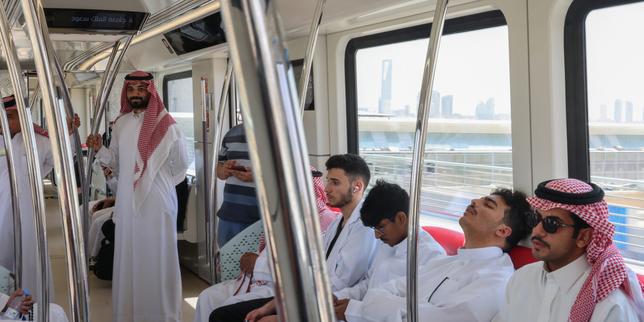
In late 2024, the city launched the Riyadh Metro. It wasn't just another infrastructure upgrade. It was a complete overhaul of how a modern megacity functions. We aren't talking about a few extra bus lanes; we're talking about a six-line, 176-kilometer automated rail network that cost $22.5 billion. It’s arguably the most aggressive attempt to rewrite a city’s DNA in real-time.
The Reality of Car Dependency
If you've spent any time in Riyadh, you know the struggle. The city’s growth in the late 20th century was explosive. Infrastructure couldn't keep pace with the population, which surged from a few hundred thousand in the 1950s to over 8 million today. For a long time, the only way to survive the heat and the distance was your own private vehicle. To read more about the background of this, The Motley Fool provides an excellent breakdown.
This created a massive efficiency trap. When everyone is in a car, everyone is part of the problem. Congestion became the default state of the city.
The Riyadh Public Transport Project—anchored by the metro—is the state’s answer to this. It’s designed to do more than move people. It’s meant to break the habit of the individual car journey. The plan includes the metro and an extensive bus network. The goal is simple: reduce the city’s massive daily car count by roughly 250,000 trips.
It's Not Just About Trains
Building 85 stations is the easy part. Changing a culture that has been married to the automobile for fifty years is the real challenge.
Look at the numbers. In its first week of operation back in December 2024, the system moved nearly 2 million passengers. That’s not a typo. It’s a sign that the appetite for an alternative was always there; it just needed a vehicle.
What makes this project different from other transit developments? It’s the sheer ambition of the integration. You don't just have a train; you have a feeder bus network. The "last mile" problem—that gap between the station and your front door—is being addressed with thousands of bus stops and hundreds of buses designed to weave into the fabric of residential neighborhoods.
The Economic Ripple Effect
If you’re watching the real estate market, you’re already seeing the shift. Business districts aren't just hubs anymore; they’re nodes. Areas near stations are becoming prime real estate. Developers are pivoting toward mixed-use, walkable projects.
This is what urban planners call transit-oriented development. It means offices, shops, and homes clustered around stations. It’s a radical change for a city that used to pride itself on vast distances.
But there’s a catch. Real estate prices in prime, well-connected zones are climbing. Prime rental values have already seen double-digit increases in some sectors. If you're a business, the metro brings employees closer, but it also forces you to compete for space in the most accessible parts of town.
Beyond the Concrete
The environmental argument for the metro is clear: lower emissions, less fuel waste—400,000 liters of fuel saved daily is the target. But the social impact is arguably more important.
For the average resident who doesn't have a car or can't drive, the metro is a game-changer for employment. It opens up the city. A student in a southern district can now easily reach a university or a job in a northern commercial hub. It flattens the city’s geography.
Is it perfect? Hardly. Any project of this scale faces teething issues. Crowd management, technical bugs, and the physical struggle of navigating a city that is still largely heat-locked in the summer months are constant hurdles. The success of the system will ultimately depend on how well the city integrates these stations into the daily lives of residents.
What This Means for You
If you're operating or investing in Riyadh, the game has shifted. The era of the "car-only" business model is dying.
- Focus on Mobility: If your location isn't near a station, you need a strategy for accessibility. How do your customers or employees reach you?
- Watch the Hubs: The areas surrounding the major intersections—like the KAFD or STC station zones—are the new centers of gravity. Keep an eye on how these hubs evolve.
- Adapt or Lag: The city is becoming more pedestrian-friendly, slowly but surely. If you're building or planning, move away from the massive parking lot model. Think density.
Riyadh isn't waiting for the future. It’s building it under the sand. The metro is no longer a promise; it’s an operational reality. The question isn't whether it will change the city—it’s how fast the residents can adapt to a life that doesn't require a steering wheel to function.