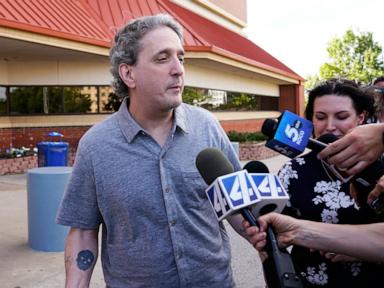
Eating your last meal three separate times changes a person. For Richard Glossip, a former Oklahoma death row inmate, that nightmare wasn't a movie plot. It was reality. Now, after nearly thirty years behind bars and nine scheduled execution dates, Glossip is back in an Oklahoma City courtroom. His original conviction is gone, tossed out by the highest court in the country. He walks into court this week on bond, a free man for the moment, but facing a state that still wants to put him on trial for a 1997 murder.
This case is a mess. It exposes the deepest fractures in our legal system. If you think the justice system is always fair, this story will destroy that belief.
The Fragile Foundation of the Case Against Richard Glossip
The state's entire case rests on a single pillar. That pillar is incredibly shaky. In 1997, Barry Van Treese, the owner of the Best Budget Inn in Oklahoma City, was beaten to death with a baseball bat. Nobody disputes who swung the bat. A 19-year-old maintenance worker named Justin Sneed admitted to the brutal killing.
Sneed didn't face the death penalty. Why? Because he cut a deal. He claimed that Glossip, the motel manager, hired him to do it. Sneed got life without parole. Glossip got a death sentence.
Think about that for a second. The actual killer avoids execution by pointing the finger at someone else. No physical evidence linked Glossip to the crime scene. No fingerprints. No DNA. Just the word of a desperate teenager trying to save his own skin. For decades, Oklahoma prosecutors fought tooth and nail to protect Sneed's story. They hid the truth about their star witness. They allowed him to lie on the stand about his psychiatric treatment and his true motivations.
Last year, the U.S. Supreme Court finally said enough is enough. They ruled that prosecutors knowingly allowed false testimony. That violation completely stripped Glossip of his right to a fair trial. It took thirty years for the system to admit a blatant lie.
A State Attorney General Who Broke Ranks
Capital cases usually follow a predictable script. The state pushes for execution, and the defense fights back. But Oklahoma Attorney General Gentner Drummond ripped up that script.
Drummond did something unprecedented for a conservative prosecutor in a deep-red state. He conducted an independent review of Glossip's files. What he found shocked him. Box after box of hidden evidence showed a pattern of prosecutorial misconduct. Drummond took the findings straight to the courts, explicitly stating that the state could no longer support the conviction.
Timeline of a Broken Justice Track:
1997: Barry Van Treese murdered; Glossip arrested based on Sneed's claim.
1998: Glossip convicted and sentenced to death.
2001: Conviction overturned due to ineffective defense counsel.
2004: Re-convicted and sentenced to death a second time.
2015: Execution halted at the last minute due to an illegal drug mix-up.
2023: U.S. Supreme Court overturns the conviction based on false witness testimony.
2026: Glossip released on a $500,000 bond; returns to court to face retrial.
Drummond wants a retrial, but he dropped the death penalty. The state will try Glossip for murder, but they won't try to kill him again. It's a compromise that satisfies no one. Glossip's supporters want total exoneration. The Van Treese family wants the original conviction restored. They feel completely abandoned by the state's sudden shift.
Escaping the Execution Chamber by Minutes
The sheer physical and psychological toll on Glossip is hard to comprehend. Most people can't imagine waiting for an execution date. Glossip survived nine of them.
In 2015, he sat in a holding cell directly adjacent to Oklahoma’s execution chamber. He was dressed in scrubs. His veins were cleared for IV lines. He was minutes away from being strapped to a gurney when everything stopped.
Prison officials realized they had the wrong lethal injection drug. They received potassium acetate instead of potassium chloride. The state was forced to call a sudden halt to the proceeding. That drug mix-up didn't just save Glossip's life that afternoon. It exposed a culture of administrative incompetence that forced a seven-year freeze on all executions in Oklahoma.
Celebrities like Kim Kardashian and high-profile activists have championed Glossip's cause. Susan Sarandon used her platform to bring international attention to the case. But the real shift happened because the legal paperwork was so fundamentally flawed that even pro-death penalty politicians couldn't look away.
What Happens Right Now in Court
The current hearings will determine the exact roadmap for the state's next move. The judge has a critical choice to make. The case can go straight to a full retrial, or the court can hold a preliminary evidentiary hearing.
An evidentiary hearing would force prosecutors to show their cards. They'd have to prove they have enough untainted, valid evidence to justify a new trial. Honestly, without Sneed's compromised testimony, their hands are incredibly weak.
If it goes to trial, Sneed will have to take the stand again. This time, defense attorneys have a mountain of newly uncovered documents to tear his old story to shreds. It's going to be an uphill battle for the state.
Action Steps for Following Judicial Accountability
If this case frustrates you, don't just read about it. Watch how your local system operates. Misconduct thrives when nobody pays attention.
- Monitor Brady Disclosures: Read up on Brady violations in your state. Prosecutors are legally required to turn over exculpatory evidence to the defense. When they don't, cases fall apart decades later at immense taxpayer expense.
- Track Conviction Integrity Units: Check if your local District Attorney or State Attorney General has an independent unit dedicated to reviewing old, questionable convictions. Support policies that fund these units.
- Demand Witness Transparency: Push for stricter judicial oversight regarding jailhouse informants and co-defendant testimony. Deals made behind closed doors shouldn't be the sole basis for a life-or-death conviction.
The state of Oklahoma spent thirty years trying to kill a man based on a known lie. No matter what a jury decides in the upcoming retrial, that fact remains an permanent stain on the state's legal history.
You can watch the emotional moment he walked out of prison in this Richard Glossip bond release footage, which captures him exiting the detention facility hand-in-hand with his wife after nearly three decades behind bars.