For 116 years, one stubborn drawbridge in Kearny, New Jersey held hundreds of thousands of people hostage. A barge floated down the Hackensack River. The old Portal Bridge swung open. Trains sat idle. Commuters stared at their watches while Amtrak and NJ TRANSIT schedules unraveled up and down the Northeast Corridor.
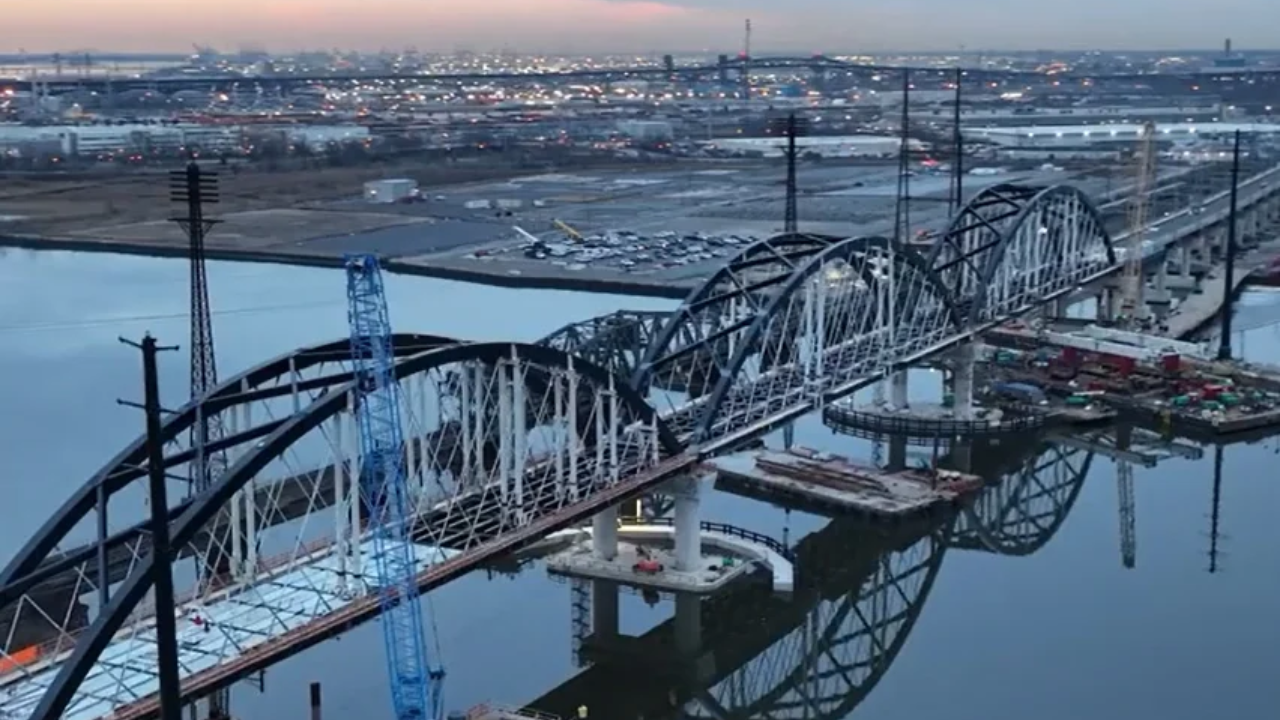
That era ended on November 16, 2026. Both tracks of the new $2.3 billion Portal North Bridge entered full service, finally giving trains and marine vessels separate paths across and under the Hackensack River.
Honestly, if you've ever sat trapped in the New Jersey meadowlands waiting for a century-old steel span to lock back into place, this milestone feels personal. Let's look at why the old bridge caused so much chaos, how the new fixed-span design actually fixes it, and what comes next for riders.
Why the 1910 Portal Bridge Became a Commuter Nightmare
Built by the Pennsylvania Railroad and placed into service in November 1910, the original Portal Bridge was engineered for a completely different world. It opened right alongside service to the original Pennsylvania Station in New York City, using a rotating swing span to let boats pass through the Hackensack River.
On paper, swinging open worked fine a hundred years ago. In practice, moving parts wear out, get stuck, and choke high-frequency rail lines.
Before the COVID-19 pandemic, more than 450 NJ TRANSIT and Amtrak trains carrying roughly 150,000 to 200,000 passengers crossed this stretch every weekday. That works out to roughly a train every couple of minutes during peak periods. When a swing bridge needs to rotate or refuses to lock properly, the ripple effect doesn't stop at Kearny. It backs up trains into Newark, Secaucus, and New York Penn Station.
The old bridge also had a checkered safety and reliability record that most quick news summaries gloss over:
- The 1996 derailment: On November 23, 1996, the swing bridge failed to close properly, leaving a rail five inches higher than intended. A train derailed, sending 34 people to the hospital and forcing speed restrictions down to 60 mph.
- Electrical fires: Overheated overhead catenary wires sparked fires on the bridge in May 2005 and August 2014, halting trains and costing millions in damage and lost time.
- Aging machinery: Even with periodic overhauls—including work in the 1980s and timber replacements in 2019—moving heavy steel over water in harsh weather remained a constant maintenance headache.
When NJ TRANSIT Executive Director Kris Kolluri marked the retirement of the old crossing in November 2026, he called it the busiest train corridor in the Western Hemisphere and noted that the bridge would never open again. For anyone who spent years bracing for "bridge mechanical issues" announcements, that relief is real.
How the $2.3 Billion Portal North Bridge Solves the Bottleneck
You fix a moving-parts bottleneck by removing the moving parts. That's the core idea behind the Portal North Bridge.
Instead of swinging sideways to let boats through, the new two-track structure rises roughly 50 feet above the Hackensack River—more than double the vertical clearance of the old bridge. River vessels can cruise underneath while trains keep rolling overhead without waiting for a span to swing or lock.
Let's look at the numbers behind the build:
- Price tag: Roughly $2.3 billion (with project figures around $2.36 billion), backed by federal, state, and regional funding, including a $1.56 billion construction contract awarded in October 2021 to the Skanska/Traylor Bros joint venture.
- Scale: Extending about 2.44 to 2.5 miles along the Northeast Corridor including approaches, the project required roughly 45 million pounds (23,000 tons) of steel, 219,000 cubic yards of concrete, and over 35 miles of pipe piles.
- Speed boost: Trains can cross at up to 90 mph on the new bridge, up from the 60 mph limit on the aging 1910 structure.
Cutting travel times by a few minutes sounds small on its own. Multiply a few minutes across hundreds of trains and tens of thousands of riders every day, though, and reliability gains compound fast. Fewer mechanical failures also mean fewer cascading delays across connecting lines.
A Phased Cutover Without Shutting Down the Corridor
Building a brand-new bridge right next to an active rail line is tricky. Switching trains over without grinding the entire region to a halt takes careful sequencing.
Crews moved the first track onto the new Portal North Bridge in spring 2026 (entering service on March 15 after transition work starting in February), while the 1910 swing bridge kept carrying trains on the second track. The final phase began on October 9, 2026, requiring five weeks of service adjustments and diversions—such as Midtown Direct reroutes to Hoboken—before both tracks went live on November 16, 2026.
Kudos to the crews who pulled off that cutover in stages, even if five weeks of detours tested riders' patience. If you commute regularly, you know how frustrating single-track bottlenecks and reroutes feel right before a major opening. Now that both tracks are open, regular service and diversions have wrapped up.
What Most People Get Wrong About This Bridge Opening
It's tempting to treat Portal North Bridge as a magic wand that fixes every single rail headache between New Jersey and Manhattan overnight. Let's be straight with each other: it doesn't.
First, a bridge is only one link in a chain. Even with zero swing-bridge openings at Kearny, trains still share critical tunnels and junctions downstream. The Portal North Bridge is a major piece of the broader Gateway Program, which also includes plans for new rail tunnels under the Hudson River and is designed to eventually support higher capacity along the corridor.
Second, skepticism from seasoned commuters isn't irrational. When riders have sat through years of signal problems, equipment shortages, and timetable tweaks, a shiny new steel arch earns trust over months of on-time arrivals—not on day one. As reported by CBS New York, plenty of riders celebrated the opening while taking a "wait-and-see" attitude toward daily reliability.
Third, the 1910 bridge isn't gone yet. It's officially retired from train service, with dismantling scheduled for 2027 (and local reports noting demolition plans moving ahead in early 2027). Until that steel comes down, you'll still see the old and new side by side in the meadowlands.
Practical Next Steps for Riders and Watchers
If you ride NJ TRANSIT or Amtrak along the Northeast Corridor—or you're tracking major U.S. transit infrastructure—here's how to put this update to practical use right now:
- Check your current timetable. With both tracks active since November 16, 2026 and temporary five-week cutover diversions ended, verify your exact departure and arrival times on NJ TRANSIT or Amtrak before heading to the station.
- Watch for residual schedule tweaks. Rail agencies often fine-tune schedules after a major cutover as dispatchers adjust to new speeds and track layouts. Keep alerts turned on for the first few weeks.
- Track the next Gateway milestones. Keep an eye on the 2027 dismantling of the 1910 Portal Bridge and progress on the wider Gateway Program via Amtrak to see how future Hudson tunnel and capacity upgrades roll out.
A century-old swing bridge finally stepping aside for a fixed span is a rare win for everyday commuters. Now let's see how the rest of the corridor keeps pace.