Kim Jong Un didn't walk away from Donald Trump because he hates negotiating. He walked away to raise his opening price.
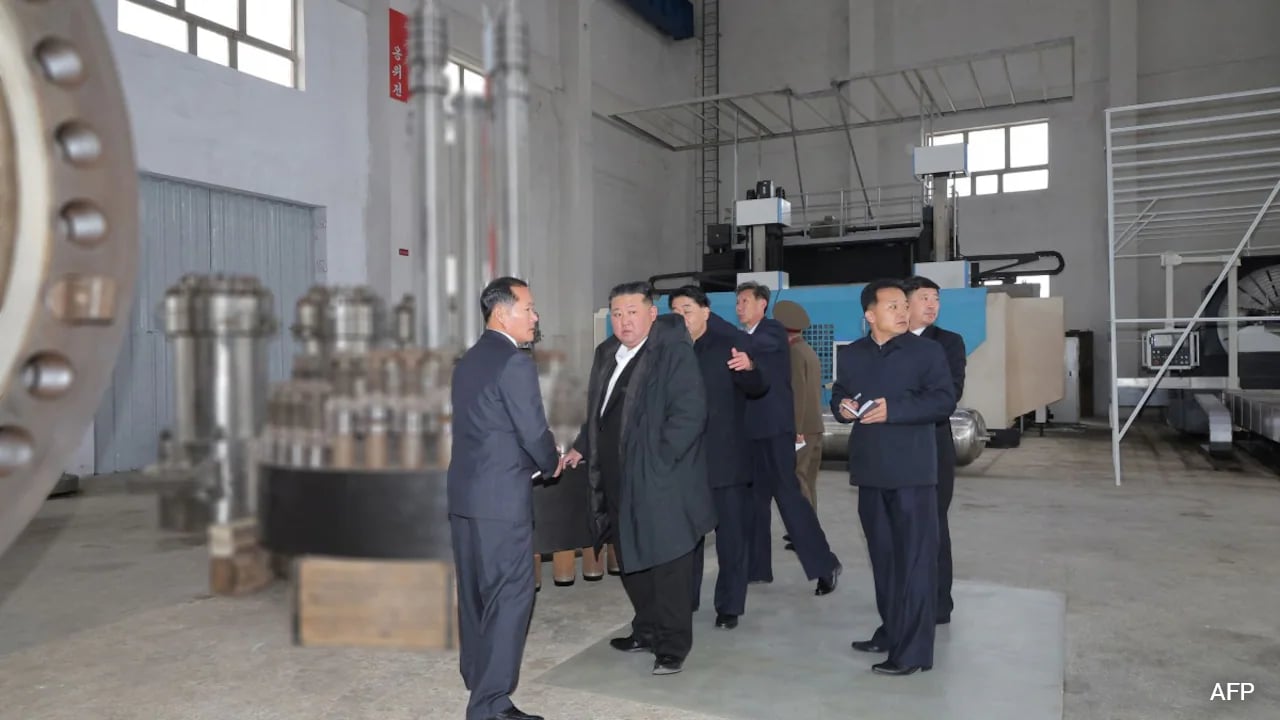
Days after Trump floated another meeting during his Asia trip in November 2026, North Korea's state media dropped a loud counter-punch on Thursday, November 26, 2026. The Korean Central News Agency—KCNA—published reports and blurred photos showing Kim inspecting what state media called a weapons-grade nuclear materials production base, a nuclear-powered equipment production base, and the Nuclear Weapons Institute on Wednesday, November 25. Meanwhile, you can read other events here: What The Ibiza Diesel Tanker Sinking Reveals About Balearic Sea Risks.
If you read quick wire summaries, you might think Pyongyang just slammed the door shut on Washington. Honestly, that's only half the story. Kim declared North Korea's nuclear status irreversible and called for building tactical nuclear weapons across multiple domains for different missions. Yet analysts watching closely see a sharper game: Kim wants talks only if denuclearization is dead on arrival and Washington treats him as an equal nuclear power.
Why Kim Jong Un Snubbed Trump Talks and Showed Nuclear Warheads
Look at the timing. During Trump's first term, three summits produced flashy headlines and personal letters, yet North Korea kept building fissile material and missiles anyway. By November 2026, Trump was again signaling openness to a meeting and personal outreach, while telling the New York Post that skipping a meeting during his busy Asia trip wasn't a snub, just "not really the right time." To see the complete picture, we recommend the detailed analysis by BBC News.
Kim sees the math differently. Waiting gives him leverage.
During Trump's first term, weapons experts estimated North Korea produced roughly six bombs' worth of fissile material per year. Today, outside estimates put that output closer to 12 to 15 bombs' worth annually, depending on enrichment rates and reactor operations. When you're expanding output and stacking hardware, rushing into a summit with a weaker bargaining hand makes zero sense for an autocrat whose survival rests on deterrence.
In his state-media remarks, Kim also pointed straight at alliance politics. He criticized U.S. backing for South Korea's push to acquire nuclear-powered submarines—a plan Trump approved in October 2025—arguing that shifting regional naval capabilities justify expanding North Korea's own nuclear forces.
Five Warhead Designs and a Submarine Reactor Clue
What made this November 25 inspection stand out wasn't just Kim's rhetoric. It was what KCNA let outsiders glimpse through heavy pixelation and tight camera angles.
Ankit Panda, a senior fellow in the Nuclear Policy Program at the Carnegie Endowment for International Peace, noted that the release showed metal casings across five distinct nuclear warhead designs, the largest variety spotted in a single North Korean image. Among them appeared a large warhead design Pyongyang has hyped for years alongside smaller tactical concepts, including miniaturized designs analysts link to systems such as the Hwasan-31.
Then there's the equipment hall. Analysts and outlets including The Japan Times and Korea JoongAng Daily pointed to what looked like North Korea's first public look at hardware tied to a naval nuclear reactor—potentially linked to the nuclear-powered strategic guided-missile submarine hull Kim inspected in December 2025.
Let's be real about what we don't know, though. State media blurs photos for a reason. Metal casings don't automatically prove a warhead is mated to a reliable reentry vehicle, tested at full yield, or deployed with field units. Nor does a row of centrifuges or a reactor component prove a submarine is ready for quiet deep-sea patrols.
Misconceptions People Get Wrong About Pyongyang's Arsenal
People often treat North Korea's nuclear push like a straight line from zero to a massive superpower stockpile. That's a sloppy way to read intelligence.
First, warhead count estimates vary wildly because nobody outside North Korea has verified access to its sites. In August 2026, South Korea's Defense Minister Ahn Gyu Back estimated Pyongyang could hold up to 120 warheads. By contrast, groups like the Federation of American Scientists and the Stockholm International Peace Research Institute put the figure closer to around 60. Both numbers are educated estimates based on fissile material balances, missile inventory, and technical assumptions—not exact headcounts.
Second, "tactical nuclear weapons" sounds neat on paper, yet operationalizing battlefield nukes is messy. Moving small warheads closer to front-line units creates command-and-control headaches, accidental-use risks, and vulnerability to preemptive strikes. Kim talks about multi-domain tactical deployment because he wants South Korean and U.S. planners to worry about every theater at once, even when full operational readiness remains unverified.
Third, watch the fissile material picture closely. Last week, International Atomic Energy Agency Director General Rafael Grossi warned that North Korea has continued expanding uranium enrichment at Yongbyon, calling the trend a serious concern. According to AP reporting, South Korea's Unification Minister Chung Dong-young previously said North Korea had four uranium enrichment facilities operating daily. More centrifuges mean more options—for larger stockpiles, naval reactor fuel, or future warhead variants.
What This Means for Washington, Seoul, and Regional Security
Kyungnam University professor Lim Eul-chul has argued that Kim's posture isn't necessarily a permanent ban on talking to Washington; it's an attempt to shift the premise from denuclearization to dealing with North Korea as a nuclear weapons state. Think about how hard that puts any U.S. president. Accepting "nuclear state versus nuclear state" talks risks undercutting nonproliferation norms and alienating allies in Seoul and Tokyo.
Meanwhile, South Korea's Ministry of National Defense said on Thursday that it takes Kim's push for expanded tactical nuclear use seriously, vows firm deterrence with the United States, and urges Pyongyang to halt its nuclear program and follow UN Security Council resolutions.
Here's where things get tricky. If Kim demands sanctions relief or security guarantees in exchange for caps or arms control rather than disarmament, every diplomatic move becomes a minefield. Too tough, and Pyongyang tests more missiles or expands enrichment unchecked. Too soft, and allies fear abandonment.
Practical Next Steps If You're Tracking This Crisis
If you follow Korean Peninsula security for work, research, or plain curiosity, don't get whiplash from every KCNA photo drop. Do these three things instead:
- Cross-check KCNA releases with independent analysts: Pair state-media headlines with breakdowns from sources like the Carnegie Endowment for International Peace, the Federation of American Scientists, and IAEA briefings so you separate staged propaganda from real technical shifts.
- Watch fissile material and naval milestones over speeches: Loud slogans happen constantly. Track concrete indicators instead—IAEA updates on Yongbyon, centrifuge hall expansions, missile flight tests, and progress on submarine propulsion components.
- Read diplomatic signals through leverage, not mood: When Trump hints at a meeting or Kim cites U.S.-South Korea submarine plans, ask what each side gains by waiting. In Pyongyang's playbook, flexing warheads right after dodging talks is how you set the price before sitting down.


