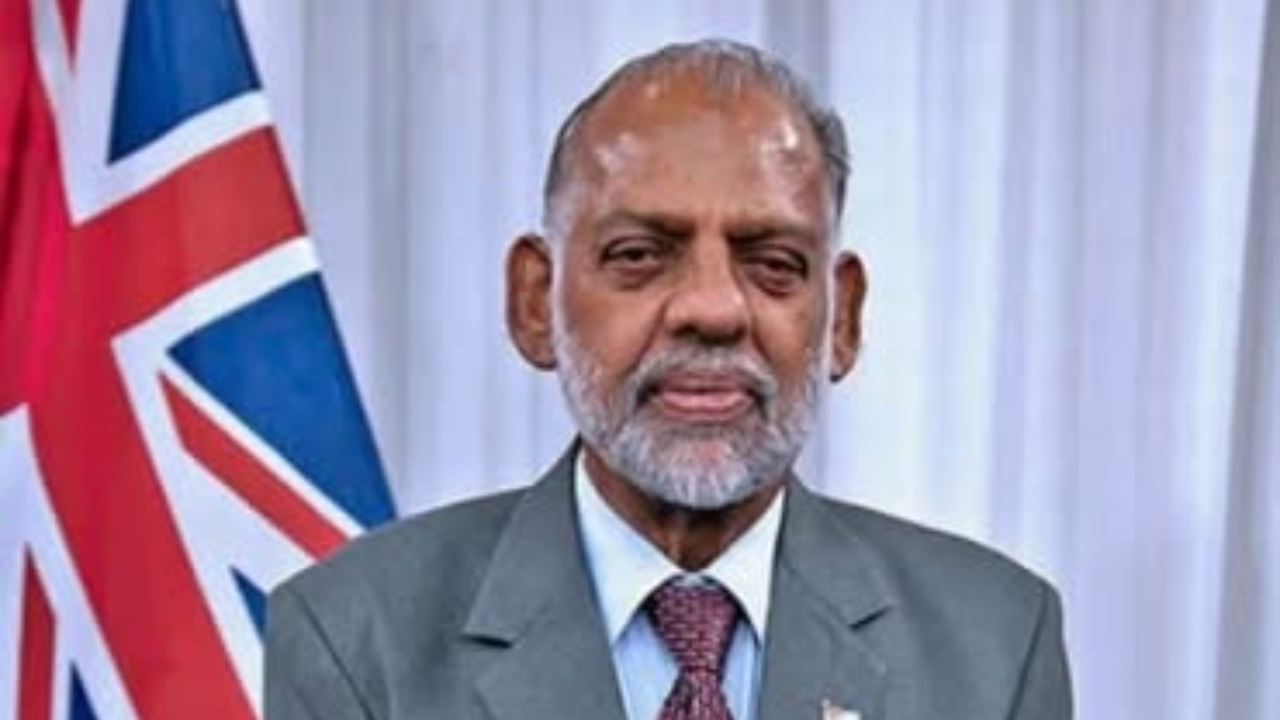
Political careers are usually measured in election victories, policy papers, or party loyalty. Agni Deo Singh measured his by a different standard. When the Fiji minister passed away unexpectedly in Brisbane at age 60, he wasn't sitting in a quiet office or resting at home. He was doing what he had always done—traveling abroad to check on workers, talk to labor representatives, and figure out how to make daily survival slightly better for ordinary people.
His sudden death during an official visit to Australia sent shockwaves through the Pacific region. Prime Minister Sitiveni Rabuka announced the loss, while colleagues across the political spectrum shared tributes for a man who spent decades fighting for labor rights before and during his tenure as Fiji's Minister for Employment, Productivity and Workplace Relations.
If you look past the standard political statements released after a high-profile death, you find a remarkably practical record of reforms that shifted power balances in a country trying to rebuild its economy.
The Reality of Working Under the Fiji-Australia Vuvale Partnership
Singh was in Australia as part of a high-level delegation working within the framework of the Fiji-Australia Vuvale Partnership. The mission wasn't symbolic diplomacy. He was there to inspect conditions for Fijian citizens employed under the Pacific Australia Labour Mobility scheme.
He didn't just meet executives or sign paperwork in air-conditioned boardrooms. During his Brisbane trip, he walked the floor at Australian Country Choice and JBS Australia, talking directly to Fijian workers about their wages, housing conditions, and deductions.
That hands-on approach defined his career. Before entering government as a minister in 2023, Singh spent years as a prominent trade unionist, leading the Fiji Teachers Association. He understood firsthand how corporate supply chains often squeeze workers at the bottom. By visiting processing facilities and demanding transparency from labor-hire companies, he tried to ensure that bilateral labor programs actually protected the people they brought overseas.
Rewriting the Rules on Wages and Retirement
When Singh took charge of the employment ministry, Fiji's working class faced mounting pressure from inflation and stagnant pay. He didn't shy away from aggressive regulatory changes.
Under his watch, the national minimum wage rose from $4 to $4.50 an hour in 2024, climbing again to $5 an hour by 2025. Critics in the business community warned of adverse economic fallout, but Singh pushed forward, arguing that baseline wages had to reflect basic living costs.
Equally important was the restoration of the full 18 percent Fiji National Provident Fund contribution in 2024. For years, workers had watched their retirement savings drained or diluted during economic downturns. Bringing back the full statutory contribution restored a vital safety net for thousands of families.
Closing a Thirty-Year Wound
Legislative adjustments are one thing, but resolving historical injustices is entirely different. One of Singh's most defining victories involved the Vatukoula mine workers.
For more than thirty years, a bitter dispute involving 368 miners sat unresolved, a festering sore that previous administrations largely ignored or kicked down the road. Under Singh's ministry, the government helped broker a $9.2 million settlement that delivered $25,000 to each worker.
It wasn't just about the money. It was about validation. For decades, those miners had fought a brick wall of corporate resistance and bureaucratic indifference. Singh's ministry provided the institutional push needed to finally close the chapter.
Colleagues like Fisheries and Forestry Minister Alitia Bainivalu noted that his impact went far beyond parliamentary debates. He brought back freedom of association, forced employers to take union grievances seriously, and dragged labor standards into the modern era.
What Happens Next for Fiji Labor Policy
Losing a leader of Singh's conviction leaves a massive void. Ministries often drift when their driving force disappears, and the challenge for Fiji's current administration is maintaining the momentum he built.
Labor-hire frameworks in Australia face ongoing scrutiny over worker exploitation and grey areas in recruitment fees. Ensuring that Fijian workers remain protected abroad will require the exact same aggressive oversight that Singh championed.
Agni Deo Singh didn't leave behind a legacy built on empty rhetoric or social media spin. He left behind higher wages, restored pension funds, settled historical grievances, and a standard of advocacy that future ministers will be judged against. The work continues, but the architect is gone.