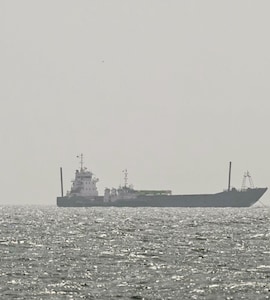
Imagine standing on the bridge of a massive cargo ship weighing over a hundred thousand tons, watching the engine controls suddenly go rogue. No alarms blaring for a physical collision. No rogue wave hitting the hull. Just silent code altering cooling flows and driving up engine speeds from thousands of miles away. Sounds like a sci-fi thriller, right? It isn't. It just happened on the open ocean.
Federal authorities recently confirmed a chilling reality. A joint team from the US Coast Guard and the FBI boarded two commercial vessels bound for the United States after discovering foreign threat actors had completely compromised their digital networks. These weren't random phishing attacks on corporate email servers. These cyber operations directly targeted shipboard industrial control systems.
Maritime security has always focused on physical threats. Pirates, rough seas, and faulty navigation equipment used to keep ship captains awake at night. Today, the real danger lives inside a terminal running outdated operating systems.
Inside the Gulf of Mexico Boardings
The operational details coming out of these incidents point to a coordinated digital siege. Joint agency teams boarded two foreign-flagged ships in late August. One of these vessels was identified as the Liberian-flagged VL Prosperity, which eventually dropped anchor near Galveston, Texas.
Reports indicate things got messy long before the ships reached American waters. Media outlets traced early disruptions back to a transit through the Strait of Gibraltar. During that stretch, communication systems went dark for more than a day. Crew members later reported that hackers managed to break deep into internal engine-room controls.
Think about what that means for a second. An outside actor sitting behind a screen can theoretically manipulate engine cooling, override speed thresholds, and cripple fuel management systems. When you compromise a commercial vessel, you aren't just stealing data. You are turning a massive floating asset into a weapon or a hazard.
Maritime cybersecurity experts have warned about this vulnerability for years. Most commercial ships rely on legacy automation systems built decades ago without modern safety protocols in mind. They were designed to be isolated, connected only to local sensors and physical dials. But modern shipping requires constant satellite connectivity, automated logistics tracking, and remote maintenance feeds. Every single one of those connection points creates an open door for a motivated attacker.
The Geopolitical Chessboard at Sea
While US officials have played things close to the chest regarding specific attribution, the timing coincides with a sharp rise in state-sponsored digital skirmishes. Agencies point fingers toward various state actors whenever critical infrastructure faces a digital breach. Media reports have frequently linked recent marine cyber events to broader geopolitical flashpoints, including ongoing frictions involving Washington and Tehran.
When Iran's Mehr news agency reported on the VL Prosperity incident, it highlighted how vulnerable international trade routes really are. Trade doesn't just happen in cyberspace or on land. It happens in physical choke points like the Strait of Gibraltar, the Suez Canal, and the Malacca Strait. If hostile groups can blind a ship or mess with its propulsion while it navigates a tight shipping lane, the economic fallout is catastrophic.
We are watching a shift in modern warfare and industrial sabotage. Why launch a kinetic strike against a cargo ship when you can compromise its navigation network and cause it to run agound? It is cheaper, harder to trace, and creates maximum disruption with minimal risk to the aggressor.
Why Commercial Shipping Remains a Sitting Duck
Let's be honest about the state of maritime tech. Shipping companies are notoriously slow to spend money on digital upgrades unless a regulator forces their hand. Vessels stay in service for decades. Retrofitting an older bulk carrier or container ship with modern intrusion detection systems costs millions of dollars and requires taking the ship out of service.
Crew members aren't cybersecurity experts either. A standard deck officer knows how to plot a course, manage ballast water, and handle cargo operations. They don't know how to inspect network packets, patch firewall vulnerabilities, or spot advanced persistent threats hiding inside a proprietary engine monitoring software update.
When a third-party vendor logs into a ship's satellite link to service a piece of machinery halfway across the world, they often bypass standard security checks. That vendor connection becomes the weak link. Hackers know this. They hunt for the softest third-party supplier in the supply chain, break into their network, and use that trusted access to jump straight onto the vessel.
What Needs to Change Right Now
If you think this is an isolated incident affecting only a couple of foreign-flagged cargo ships, you are missing the bigger picture. Global supply chains run on thin margins and tight schedules. A single blocked canal or a string of hijacked vessels can throw international markets into complete chaos within hours.
Port authorities and flag states must step up enforcement immediately. Waiting for the FBI and the Coast Guard to board a compromised ship after the fact is a reactive failure.
- Mandatory Cyber Audits: Port states must require strict digital security compliance certificates before allowing foreign vessels to dock.
- Network Segmentation: Shipping companies have to isolate critical engine and navigation systems completely from general crew internet and entertainment networks.
- Crew Training: Basic cyber hygiene needs to be part of every standard mariner certification course worldwide.
The digital Wild West has finally reached the ocean. Until the maritime industry takes software security as seriously as hull maintenance, these high-seas digital intrusions will only accelerate. Secure your systems, audit your vendors, and stop assuming the ocean is big enough to hide your vulnerabilities.