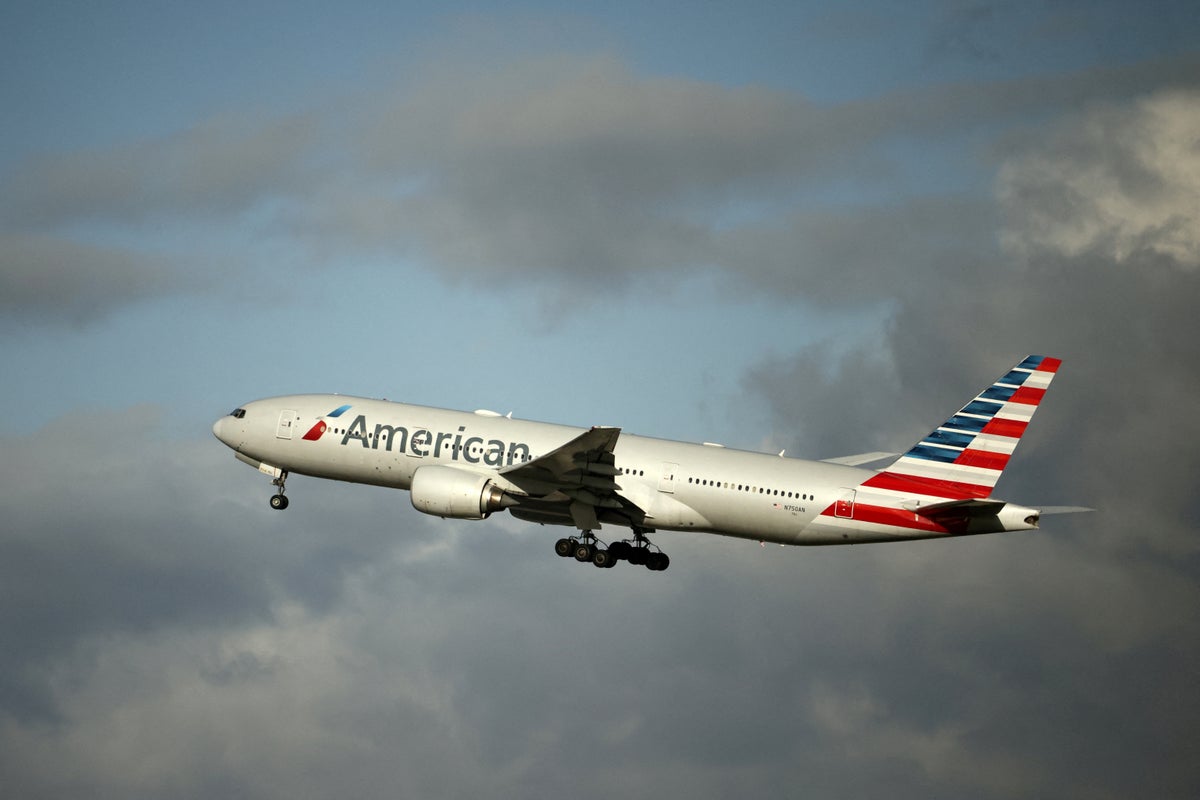
Air travel is stressful enough without your seatmate deciding to ditch all their clothes mid-flight. Yet, that is precisely what happened on an American Airlines flight heading toward Florida, turning a routine trip into a bizarre spectacle.
Let's look at the facts of what went down. American Airlines Flight 1779 left Baltimore/Washington International Thurgood Marshall Airport late on a Friday evening, bound for Miami. Somewhere between takeoff and landing, a traveler seated in row 9 decided the social contract of commercial aviation no longer applied. According to flight crew reports relayed to ground operations, the individual stripped completely naked and began performing indecent acts in full view of shocked passengers.
Cabin crew logged the disruption through standard reporting channels, notifying the airline's operations center that law enforcement needed to meet the aircraft upon arrival. Despite the glaring disturbance in the cabin, the flight did not divert. It touched down in Miami as scheduled just before midnight, where local police officers were waiting at the gate to take the woman into custody.
Incidents like this expose the chaotic reality of modern flying. Flight attendants are trained to handle turbulence, meal service mishaps, and the occasional argument over overhead bin space. They are not mental health professionals, nor are they equipped to deal with extreme public exposure and erratic behavior at high altitudes. Cabin crews must balance passenger safety with operational decisions, often choosing to push through to the destination rather than execute an unscheduled landing, which incurs massive logistical costs and delays for everyone else on board.
People frequently ask how flight crews manage severe disruptions without throwing the cabin into complete panic. The protocol relies heavily on communication, containment, and timing. When someone loses touch with reality or acts out aggressively, crew members assess whether the individual poses an immediate physical threat. If a passenger is destructive, violent, or endangering others, physical restraint becomes necessary. We have all seen viral videos of unruly travelers duct-taped to their seats after attacking neighbors or screaming obscenities about a crashing plane.
Fortunately, this specific Miami-bound incident did not escalate into physical violence, but the psychological toll on surrounding passengers remains high. Being trapped in a confined metal tube for hours while someone engages in erratic behavior creates an environment of total helplessness. You cannot simply walk away. You cannot leave the room. You sit, watch, and wait for the plane to land.
Airlines face mounting pressure to address unruly behavior more aggressively. Federal authorities continue to enforce strict zero-tolerance policies toward disruptions, backed by hefty fines and potential prison time. Yet, public outbursts keep happening. Whether driven by substance abuse, mental health crises, or sheer exhaustion, the frequency of bizarre mid-air incidents suggests that flying brings out the absolute worst in a small fraction of the traveling public.
If you find yourself stuck on a flight with an out-of-control passenger, stay calm, avoid engaging directly with the disruptive individual, and notify the nearest flight crew member immediately. Let the professionals handle the crisis while you keep your distance.