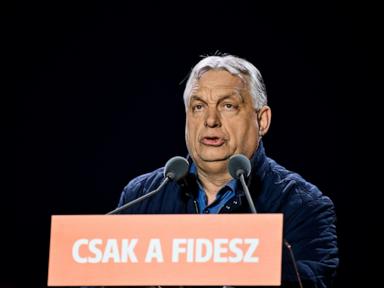
Hungarian authorities just raided the data servers belonging to Viktor Orbán's Fidesz party, and the political reverberations are shaking Budapest. Tax investigators and prosecutors moved in without warning, targeting a data center housing the communications infrastructure and voter databases of the former ruling party.
The raid stems from a criminal investigation into the alleged embezzlement of public funds through Hungary's National Cultural Fund (NKA). Investigators suspect around 17 billion forints ($53.5 million) were funneled through opaque grants to artists and performers who actively campaigned for Orbán's party. Six current and former officials face charges connected to the scheme.
If you've followed Central European politics over the last decade, you know this isn't just routine legal housekeeping. For 16 years, Orbán built a political stronghold that seemed impervious to domestic legal scrutiny. Now, following a decisive electoral loss to Péter Magyar and his pro-European Tisza party, the legal shield around Fidesz is crumbling fast.
What Investigators Were Actually Looking For
The raid was carried out by prosecutors from Bács-Kiskun County alongside specialists from the National Tax and Customs Administration. While Fidesz leaders framed the operation as a political attack designed to seize their entire party database, law enforcement focused heavily on financial trails tied to state-funded grants.
The National Cultural Fund was set up to support Hungarian arts, music, and cultural heritage. Instead, investigators allege it turned into a slush fund for political loyalty. Grants flowed disproportionately to high-profile performers and cultural figures who openly endorsed Fidesz during national election campaigns.
Six people have been formally charged in connection with the misuse of these funds. They deny any wrongdoing, claiming the grant allocation followed standard procedures. However, prosecutors argue that decision-making processes were intentionally obscured to bypass public oversight.
Targeting party data servers gives authorities access to digital paper trails, internal communications, and financial records that could connect high-ranking party officials directly to discretionary payout decisions.
Fidesz Claims Political Persecution While Tisza Pushes Accountability
Fidesz wasted no time responding on social media, claiming there hasn't been a precedent for a law enforcement raid on a major party's servers since the fall of communism in 1990. Party spokespersons accused Prime Minister Péter Magyar's government of using state institutions to intimidate the political opposition and dismantle democratic competition.
The narrative from the governing Tisza party looks completely different. Magyar campaigned on a platform centered on dismantling state corruption and recovering public assets. For his supporters, law enforcement taking unannounced action against former ruling elites proves that independent oversight is finally returning to Hungary.
Magyar kept his public statements brief, noting on Facebook that he awaited further formal updates from the independent prosecutor's office. Tisza officials maintain that the judiciary is acting autonomously without political direction from the prime minister's office.
"There has been no precedent for this in Hungary since the end of Communism in 1990!" — Fidesz statement on Facebook following the data center search.
The Broader Cleanup of Hungarian State Institutions
This server raid doesn't exist in a vacuum. Since taking office, the Tisza administration has systematically moved to undo political appointments made during Orbán's 16-year tenure.
Earlier this year, Hungarian authorities froze assets and accounts linked to major media moguls who secured lucrative state contracts under the previous administration. Companies owned by figures like Gyula Balásy, whose agencies ran multi-billion-forint government ad campaigns for years, came under scrutiny for suspected money laundering and overpriced public contracts.
Financial authorities also blocked offshore wire transfers linked to senior advisers from the previous administration. The strategy appears straightforward. The new government is using financial intelligence units and regional prosecutors to track public money spent over the past decade.
Here's a breakdown of the key legal actions unfolding across Hungary right now.
- National Cultural Fund Probe: Focuses on 17 billion forints in redirected grants with six officials charged.
- Media Contract Asset Freezes: Target high-profile advertising groups that handled state political messaging.
- Server Data Seizures: Aim to preserve internal party communications and administrative records tied to state grant allocations.
- Offshore Transfer Blocks: Prevent sudden capital flight by individuals linked to former senior officials.
Why Regional Prosecutors Handled the Data Center Raid
One intriguing detail of this operation is that it was led by the Bács-Kiskun County prosecutor's office rather than central authorities based in Budapest. In Hungarian legal procedure, regional prosecutor offices often handle financial crime cases when the original complaint or primary activity originates within their jurisdiction.
Assigning complex financial probes to regional offices can also insulate investigations from central political pressure. Bács-Kiskun lies south of Budapest, and its prosecutors have built a reputation for handling complex tax fraud and public asset misuse cases independently.
Spokesperson Marianna Bodó confirmed the regional office's involvement, emphasizing that strict confidentiality rules remain in place to prevent evidence tampering or data destruction while digital forensics experts review the seized hardware.
What Happens Next for Hungary's Opposition
Fidesz faces a difficult road ahead. Losing access to power stripped the party of state resources, and ongoing legal probes threaten its internal infrastructure. Seizing server data could disrupt the party's digital operation, communication channels, and fundraising capabilities for months.
For international observers and European Union officials, these developments mark a turning point. Brussels froze billions of euros in EU funds assigned to Hungary over rule-of-law and corruption concerns during Orbán's government. Active, visible steps to investigate financial irregularities could clear the way for Hungary to restore full access to those frozen European funds.
If you are tracking European political developments or analyzing state governance, keep an eye on these actionable indicators over the coming weeks.
- Watch for formal court filings from the Bács-Kiskun County prosecutor detailing specific digital evidence recovered from the servers.
- Monitor European Commission announcements regarding the release of suspended cohesion funds to Hungary.
- Track motions filed by Fidesz defense lawyers challenging the legality of the server seizures in Hungarian constitutional courts.
- Keep tabs on follow-up financial audits targeting other state-funded foundations established between 2010 and 2026.