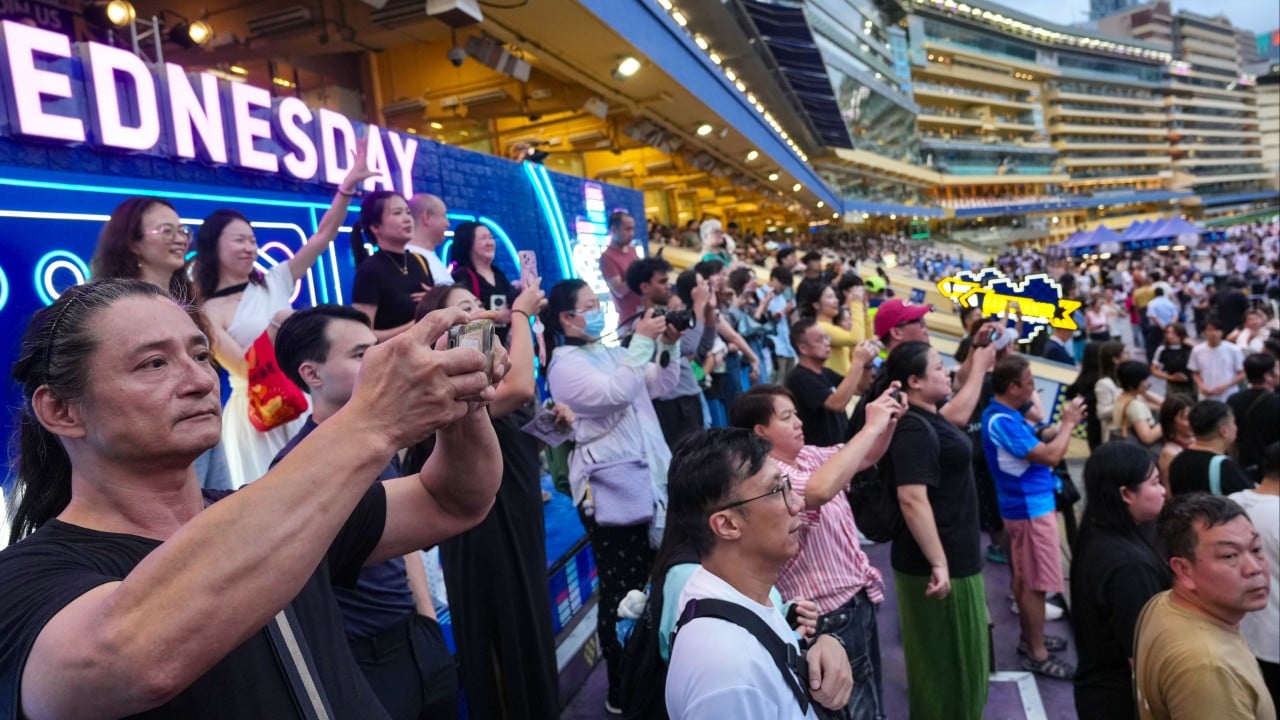
People think of Hong Kong horse racing as a local obsession. They picture packed stands at Happy Valley on a Wednesday night, under the neon glare of skyscrapers, or the sprawling tracks of Sha Tin. They think of billions of dollars in turnover, the clinking of glasses, and the frantic shouting of bettors as the horses round the final turn.
But there is a bigger picture emerging. This is not just a Wednesday night hobby anymore.
On July 16, 2026, the Hong Kong Jockey Club made a move that could redefine the region's economy. They handed over a detailed proposal to the government for the city's first Five-Year Plan, which runs from 2026 to 2030. The core message is simple: we need to turn the Guangdong-Hong Kong-Macao Greater Bay Area into a massive equine hub.
If you think this is just about putting more money on horses, you are missing the point. This is about high-end tourism, cross-border infrastructure, and serious economic integration. It is about transforming a localized sport into a massive regional ecosystem.
And it is exactly what Hong Kong needs right now.
Why the Greater Bay Area needs a unified equine hub
Let's look at the numbers. The Hong Kong Jockey Club is the city's single largest taxpayer. In the 2024/2025 financial year alone, the club returned a massive HK$39.1 billion to the community, with over HK$30 billion of that going straight into government coffers through taxes and duties.
But taxes can only grow so much when you are limited by physical space. Hong Kong is crowded. Happy Valley and Sha Tin are iconic, but they cannot expand.
That is where the mainland comes in. Just across the border sits the Conghua District in Guangzhou. It is a scenic area, famous for its hot springs and clean air. It is also home to the Conghua Racecourse, a world-class training center that sits on 150 hectares of land.
By linking these locations, Hong Kong can scale up. The plan is to build a high-value sports economy that stretches across cities. It is a smart play. The Greater Bay Area has a population of over 86 million people. Many of them are affluent, tech-savvy, and looking for premium leisure activities. If you can get even a fraction of them hooked on the thrill of equine sports, the economic returns will be astronomical.
We are talking about a major shift. By moving beyond traditional betting and focusing on the sport itself, Hong Kong can attract a brand-new demographic.
The two cities and three racecourses strategy
So, how do you actually make this happen? The Jockey Club's vision centers on a concept called "Two Cities, Three Racecourses."
The cities are Hong Kong and Guangzhou. The racecourses are Sha Tin, Happy Valley, and Conghua.
The plan connects these three venues into a single, flowing tourism circuit. This is not a distant dream either. Regular racing is scheduled to begin at the Conghua Racecourse in October 2026. For the first time, mainland audiences will get to experience the sheer scale of professional speed racing right in their backyard.
But you cannot just float horses across the border and hope for the best. Horses are sensitive, expensive athletes. They require strict biosecurity.
To solve this, the Jockey Club wants to expand its highly successful disease-free zone protocols. They are proposing to take the biosecurity systems used between Hong Kong and Conghua and apply them to other areas in China, including Xinjiang. This would make it much easier to transport horses safely across different provinces.
There is also the human element. You need world-class veterinarians, trainers, and stable staff to run a massive equine hub. Right now, qualifications do not translate easily across the border. The Jockey Club is urging governments to recognize veterinary credentials mutually. They also want to set up clinical training centers in places like Shenzhen and Dongguan in partnership with local universities.
It is a complete infrastructure upgrade, disguised as a sports initiative.
Beyond the betting window
A common criticism of racing is that it relies too heavily on gambling. Many people assume that without the wagering element, the sport cannot survive.
The Jockey Club is actively fighting this assumption.
Chief Executive Winfried Engelbrecht-Bresges has made it clear that racing is a world-class sport, not just a vehicle for betting. At the Conghua venue, there will be no betting. Instead, the focus will be on the entertainment value, the athletic performance of the horses, and the culture of the sport.
They are planning innovative team racing formats and large-scale horse-themed carnivals to bring in crowds. The goal is to draw in families, high-end tourists, and people who might never have stepped foot inside a betting shop.
Look at what is happening with younger generations. The club is investing HK$7.5 billion into upgrading the Sha Tin racecourse. They are building a dedicated grandstand for families, digital experience zones, and a brand-new arrivals hall. They want to appeal to the social media generation, creating spaces where people want to be seen.
If you visit the stables, you see kids as young as twelve falling in love with the animals, not the odds. That is how you build a sustainable fan base for the next fifty years.
To make this work on a larger scale, the club has teamed up with China Tourism Group. They are actively building travel packages that incorporate the racecourses into broader itineraries across the region. Imagine taking a high-speed train from Hong Kong, spending a day watching elite races in Guangzhou, and then exploring the local culture. It is a compelling pitch for domestic and international travelers alike.
Practical steps to build a real horse power economy
To turn these big ideas into reality, governments and business leaders need to take immediate, practical action.
First, the regulatory frameworks need to change. We need fast-track customs and quarantine clearances for elite horses moving between Hong Kong and the mainland. If a horse is stuck at a border checkpoint for hours, its performance suffers, and its health is put at risk. The current green channel between Sha Tin and Conghua works well, but it must be expanded to handle a much higher volume of traffic as regular racing begins.
Second, the private tourism sector must step up. Travel agencies shouldn't just wait for the Jockey Club to hand them packages. They need to design unique, high-end tours that combine equine sports with golf, luxury resorts, and cultural heritage sites in Guangdong.
Finally, we need to focus heavily on education. Universities in Hong Kong and Guangdong should establish specialized programs in equine science, sports management, and veterinary medicine. Building training centers in Shenzhen and Dongguan is a great start, but we need a steady stream of local talent to run these facilities.
The foundation is already there. The money is there. Now, it is just a matter of execution. If the region can pull this off, the Greater Bay Area won't just be a manufacturing and tech giant. It will be the horse racing capital of the world.
This video captures the unique atmosphere of horse racing in the region and highlights how the sport successfully blends traditional culture with modern entertainment to attract a diverse global crowd.
What makes Hong Kong horse racing unforgettable?
http://googleusercontent.com/youtube_content/1