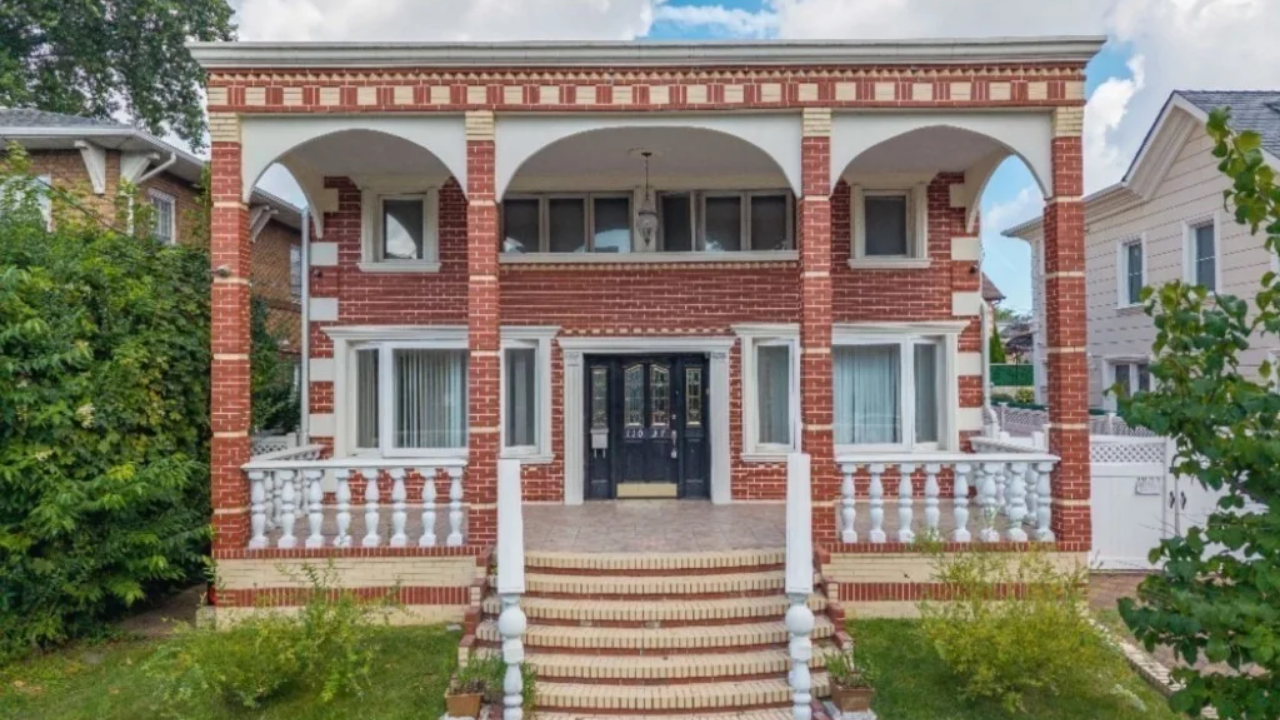
Buying a house is supposed to be the ultimate milestone of stability. For Eduard and Arkadiy Bangiyev, their 2003 purchase of a five-bedroom home in Forest Hills, Queens, turned into a two-decade legal nightmare that culminated in a federal forfeiture auction.
They paid $850,000 for the property back then. Today, after sweeping racketeering convictions, intense family disputes, and years of bitter court battles, the Treasury Department is auctioning it off with a starting bid of just $900,000.
If you think real estate litigation is messy, you haven't seen federal asset forfeiture in action. Here is how a residential suburban house became collateral in an international criminal conspiracy.
The Roots of the Scandal
Back in 2003, the Forest Hills housing market looked very different. The Bangiyev brothers secured the 3,572-square-foot house at 110-37 69th Avenue with an $850,000 price tag, backing it up with a heavy $750,000 mortgage. At the time, they were branching out into legitimate-looking enterprises, operating jewelry stores on Long Island and later a gold-refining operation in Manhattan’s Diamond District.
Beneath the facade of ordinary business owners, the brothers were quietly ramping up an industrial-scale counterfeiting enterprise.
Starting around 2004, the operation began manufacturing and distributing fake US currency on a massive scale. Federal prosecutors later uncovered that counterfeit notes were produced overseas in Israel as well as domestically, then smuggled into the United States hidden inside industrial machinery containers.
At its peak, the ring pumped roughly $3 million in fake bills into circulation every three months. By the time federal authorities dismantled the operation, it was linked to more than $80 million in counterfeit currency passed or seized globally.
The Guilty Pleas and the Forfeiture Trap
Law enforcement eventually caught up. In January 2015, Eduard and Arkadiy pleaded guilty to participating in a RICO conspiracy involving counterfeiting and money structuring. Prison sentences followed, but federal prosecutors weren't finished. Under federal forfeiture laws, the government targeted assets bought, maintained, or influenced by dirty money.
The Forest Hills home sat right in the crosshairs. But seizing it wasn't a straightforward process.
The title was split among family members. Arkadiy held a one-third stake, their sister Ilana held another third, and Eduard alongside his wife, Irina Alishayeva, held the remaining third. What followed was a multi-layered legal battle over who actually owned the bricks and mortar.
Ilana claimed her ownership share came from a legitimate gold investment she had made with her brothers. The courts disagreed, ruling there was zero proof that the claimed investment generated the funds used to buy the properties.
Meanwhile, a separate legal battle revealed that the mortgage and home-equity lines of credit on the Forest Hills house were paid off in 2012 using money stolen from a jewelry customer in a separate $1 million fraud scheme.
The Life Estate Battle That Led to the Fourth Circuit
One of the most unusual hurdles in the government's path was a district court ruling that allowed Irina Alishayeva to keep living in the house for the rest of her life, provided she remained married to Eduard.
That lifetime stay effectively blocked the federal government from cashing out its two-thirds ownership stake, rendering the asset nearly unmarketable. The government appealed, arguing that a co-owner cannot be indefinitely locked out of realizing the value of their seized property simply because a criminal's spouse lives there.
In 2023, the U.S. Court of Appeals for the Fourth Circuit completely sided with the government. The appellate court vacated the lifetime residency order, ruling that the lower court had overstepped its bounds. That legal victory cleared the final major roadblock, pushing the property straight toward the auction block.
What Happens Next at the Treasury Auction
The U.S. Treasury Department scheduled the online auction for October 23, setting the opening bid at $900,000—a figure only slightly higher than what the brothers paid over twenty years ago, despite explosive appreciation in Queens real estate over the decades.
Bidders face steep requirements. You can't just show up and throw out a number. Participants must wire a $150,000 deposit just to get in the game, and the property is being sold strictly "as is."
When you factor in the home's 1930 construction, an enclosed porch, a finished basement, a sauna, a detached two-car garage, and its chaotic legal provenance, it's a unique asset.
Real estate deals rarely come with this much baggage. If you are tracking federal asset forfeiture or looking at distressed properties, this case proves that the ghosts of past crimes can haunt a deed for decades. Check local public notices and review the Treasury’s strict auction terms before jumping into a title dispute of this magnitude.