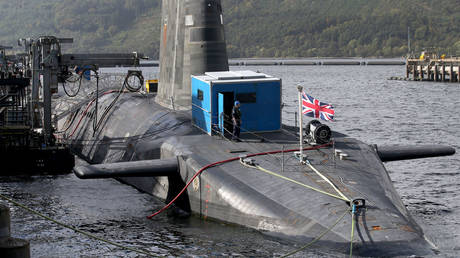
Imagine a multi-billion-dollar nuclear deterrent. Picture the most advanced engineering known to mankind. Now picture a sailor clutching a garden-style hose, standing watch against airborne explosive drones.
It sounds like a dark military satire. Unfortunately, it is the current reality at HM Naval Base Clyde in Scotland. Reports indicate that crews aboard the Royal Navy's Vanguard-class nuclear submarines are drilling with center-fed fire hoses as an ad-hoc air defense measure against unmanned aerial vehicles. When you are moored at a sensitive naval facility and a cheap commercial drone buzzes overhead, you use whatever is within arm's reach.
The Reality of Low-Cost Asymmetric Threats
Modern military budgets run into the trillions, yet defense ministries are scrambling to counter off-the-shelf quadcopters that cost less than a used car. The asymmetric threat equation has completely inverted.
Vanguard-class submarines carry the UK's Trident II ballistic missiles. Each hull represents a £4 billion investment and the backbone of national security. Yet, when these massive vessels are sitting dockside, their sophisticated combat management systems and sonar suites are basically useless against a small, low-flying drone packed with explosives.
Naval planners spent decades preparing for torpedoes, spy planes, and enemy submarines. They didn't design for hobbyist drones modified with improvised ordnance. High-end naval air defense relies on missile systems like Sea Viper or expensive electronic jamming suites. Those systems aren't optimized to track a tiny plastic quadcopter hovering two hundred feet above a wet dock.
The Broader Crisis Facing the Royal Navy
The fire hose story isn't just about quirky improvisation. It highlights a much deeper structural rot within Britain's maritime defense capabilities.
Retired military commanders have been sounding alarms for months. Former Chief of the Naval Staff Lord Alan West recently described the current state of the surface fleet as pathetic. The numbers speak for themselves. The UK operates a shrinking number of operational frigates, while maintenance backlogs sideline crucial attack submarines. When five out of six Astute-class nuclear-powered attack submarines face constant maintenance delays, the entire fleet feels the strain.
Governments love to announce grand strategic doctrines and billions in new pledges. Procurement takes decades. Bureaucracy moves at a glacial pace. Meanwhile, drone warfare evolves every six months in active conflict zones around the globe.
Why Traditional Defense Is Failing Fast
Military acquisition models are built for the twentieth century. They want massive shipyards, multi-decade design phases, and gold-plated hardware. That approach creates incredible ships, but it leaves massive blind spots.
If an adversary can disable or damage a multi-billion-dollar strategic asset using a fifty-dollar drone dropped from a commercial DJI controller, the traditional definition of deterrence crumbles. Fire hoses with pistol-grip nozzles are a symptom of a desperate capability gap. High-pressure water streams might destabilize a lightweight drone if a sailor hits the target dead-on, but it is hardly an air defense umbrella.
Critical infrastructure protection needs a complete overhaul. Navies are realizing that kinetic interceptors cost hundreds of thousands of dollars per shot. Firing a missile at a cheap drone is financial suicide. Directed-energy weapons and specialized electronic countermeasures are finally entering testing phases, but they are arriving years too late for the sailors currently pulling dock duty.
Fixing this mess requires admitting that the old playbook is dead. Until next-generation close-in weapon systems become standard across all naval bases, sailors will keep training with whatever is on deck. When the next generation of aerial threats arrives, a stream of water won't cut it.