You’ve seen the script play out a million times. An England fan gets absolutely swept up in tournament fever, downs a few pints, and decides that this is, without a doubt, the year football finally comes home. So, naturally, they head straight to the nearest tattoo parlor to get "Winners" permanently etched onto their skin before the trophy has even been polished.
Sean Carrington, a 36-year-old construction worker from Wigan, is the latest to join this legendary hall of fame.
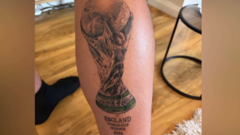
Before England’s semi-final clash with Argentina in the 2026 World Cup, Carrington shelled out £550 for a massive leg piece of the World Cup trophy surrounded by the bold declaration: "England World Cup Winner 2026".
Then, reality hit. Thomas Tuchel's side crashed out of the tournament, losing 2-1 to Argentina.
Most people would panic, book an expensive laser removal session, or hide their leg in trousers for the rest of their days. But Carrington already has his damage-control plan lined up, and honestly, it is brilliant. He is heading back to the studio to add a simple, self-deprecating punchline right beneath the trophy: "only kidding."
Let's break down why these doomed tattoos keep happening, how Carrington plans to fix his, and why we secretly love when fans fly too close to the sun.
The Birth of an Impulsive Leg Sleeve
Carrington’s journey to becoming a viral sensation began during a holiday in Tenerife.
While watching England edge past DR Congo 2-1 in the Round of 32, the beer was flowing, the hype was building, and his friends were whispering the ultimate lie: this is our year.
Carrington admits he's an incredibly impulsive guy. "The longer it goes on in your head, the more you talk yourself out of it," he told media outlets after the tournament exit. Instead of waiting for the actual final, he booked a four-hour session at Holy Trinity Tattoo Studio in Standish.
The studio manager, Jamie Taylor, tried to be the voice of reason. He warned Carrington that the ink is permanent and won't wash off with water. But Carrington was completely adamant. Surprisingly, even his girlfriend—who usually acts as his impulse filter—gave her full approval.
The ink was finished before England's quarter-final win against Norway. For a brief, shining moment, it looked like a masterstroke. Carrington confidently predicted a 3-0 demolition of Argentina followed by a 2-1 victory over Spain in the final.
Instead, the classic England semi-final curse struck again.
How to Salvage a Doomed Sports Tattoo
If you find yourself with a permanent record of a sporting disaster, you have three real options.
- The Laser Route: It is incredibly painful, takes months, and will cost you way more than the original tattoo.
- The Cover-Up: You turn the World Cup trophy into a giant black rose or a skull. Boring.
- The Comedy Save: You double down on the joke.
Carrington is firmly choosing the comedy route. By adding "only kidding" (or "only joking" as initially floated) beneath the 2026 winners claim, he transforms a massive sporting embarrassment into a permanent piece of self-deprecating British humor. It shows you don't take life, or football, too seriously.
He isn't the first to deal with this exact dilemma.
During Euro 2024, Dan Thomas from Swindon got "England Euro 2024 Winners" tattooed on his leg before the final. After Spain sunk England 2-1, Thomas simply decided to keep it, joking that he could easily alter the "4" into an "8" for the 2028 tournament.
Go back to the 2018 World Cup, and a fan named Teddy Allen got Harry Kane's face and "World Cup Winners 2018" inked on his thigh. When Croatia knocked England out, friends suggested tattooing "void" over the winners section, but Allen stood by his extreme piece of body art.
Why Fans Keep Committing to Premature Ink
To the average observer, getting a tournament winners tattoo before the semi-finals seems like madness. It is the ultimate jinx. But psychologically, there is a weird, beautiful logic to it.
- The Ultimate Badge of Loyalty: Anyone can buy a shirt or paint their face. Getting a permanent tattoo is the ultimate way of saying, "I believed when no one else did." It's about showing absolute, unwavering devotion to your team.
- The No-Lose Narrative: If the team actually wins, you are instantly crowned a legendary prophet. You get to walk around for the rest of your life as the fan who knew. If they lose, you still win a different kind of prize: you become a viral sensation, a great story at the pub, and a symbol of classic fan optimism.
- The Shared Experience: Football tournaments are fleeting moments of intense community. These tattoos are permanent markers of a specific, incredibly happy summer or winter spent with mates, dreaming of glory.
What to Do Before Getting a Tournament Tattoo
If the booze is flowing and you feel the sudden urge to sprint to a tattoo parlour during the next major tournament, run through this quick mental checklist first.
- Can it be easily edited? Years like 2026 are tough. Converting a "6" into an "8" for 2028 or a "0" for 2030 takes some creative font manipulation. Dan Thomas had the right idea with 2024 to 2028.
- Is there space for a punchline? Always leave a few inches of clear skin directly below your prediction. If things go south, you need room for your "only kidding," "void," or "terms and conditions apply" disclaimer.
- Are you ready for the banter? You will be asked about it at every pool party, beach holiday, and gym changing room for the next forty years. If you don't have the thick skin to laugh along with the jokes, stick to buying a souvenir scarf instead.
At the end of the day, Carrington's leg tells a hilarious story of hope, heartbreak, and a brilliant save. It is far more interesting than a standard tribal band or a generic quote. Football is all about the emotional highs and lows, and sometimes, those lows just happen to cost £550 and a lifetime of explanation.