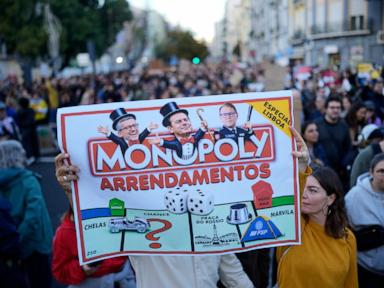
You can’t work a full-time job in Lisbon or Porto and expect to afford a basic apartment anymore. That’s the raw reality driving tens of thousands of people into the streets across Portugal. When citizens march through more than 30 cities and towns in the largest housing protests the country has ever seen, you know the social contract has fundamentally snapped.
Let’s look past the glossy travel brochures. Portugal has long sold itself as a sun-drenched haven for remote workers, retirees, and foreign investment funds. But that economic model has created an internal disaster. Real estate prices nationwide have surged by staggering margins, and rental costs have climbed a jaw-dropping 68% since 2020 alone. Meanwhile, local wages remain stagnant, leaving an entire generation locked out of stability. Learn more on a similar issue: this related article.
The Math Doesn't Work Anymore
If you want to understand why people are angry, look at the numbers compiled by Eurostat and Portugal's National Statistics Institute. Between 2015 and 2025, Portugal posted the single biggest home price-to-income ratio jump in the entire European Union. In major urban centers like Lisbon and Porto, overall house prices have skyrocketed by roughly 170% to 180% over the last decade.
Compare those figures to local salaries, which hover among the lowest in Western Europe, and you find a gaping chasm. Renting a modest apartment now consumes the vast majority of an average worker's monthly take-home pay. People aren't protesting out of impatience; they're protesting because survival in their home cities has become mathematically impossible. Further analysis by Forbes explores related perspectives on this issue.
Foreign buyers, golden visas, and a massive pivot toward short-term tourist rentals hollowed out urban neighborhoods long before local families realized what was happening. When landlords can make a week’s worth of traditional rent from tourists on a weekend booking, long-term residential leases vanish overnight.
Political Friction and Disconnect
The government’s response has done little to soothe public fury. Prime Minister Luís Montenegro’s center-right administration has faced severe backlash, with critics accusing officials of ignoring the depth of the crisis. Protesters have pointed out the bitter irony of political leaders dismissing public frustration while real estate markets spiral out of control.
Tensions boiled over when police cleared protest encampments in cities like Lisbon and Porto, leading to dozens of arrests and injuries. Rather than diffusing the anger, heavy-handed tactics only galvanized the movement. Human rights organizations and hundreds of legal professionals publicly condemned the use of excessive force against demonstrators demanding basic shelter.
The administration has pointed to initiatives like building 145,000 new homes, cutting taxes on new construction, and placing restrictions on short-term rentals. Yet, critics note that these promises offer cold comfort to families facing eviction today. Construction takes years, but rent hikes happen at the stroke of a pen.
What the Rest of Europe Can Learn
Portugal's housing crisis isn't an isolated incident. It serves as a warning sign for urban centers globally. When housing is treated purely as an asset class for global capital rather than a fundamental human necessity, local populations get squeezed out.
Spain, France, and other European nations are watching closely as similar cost-of-living pressures ignite street protests and general strikes. The modern digital nomad economy brought cash into Southern Europe, but it failed to account for the infrastructure needed to protect the people who actually run local hospitals, schools, and transit networks.
Fixing this mess requires more than modest housing pledges. It demands strict rent stabilization, genuine protections against arbitrary evictions, and a hard look at how cities balance tourism with liveability. Until governments prioritize local residents over speculative real estate profits, the tents will keep returning to city squares, and the marches will only grow larger.