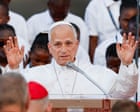
National identity rarely sits neatly on the shoulders of a global religious leader. When Pope Leo XIV sat down for an interview with NBC on the grounds of Castel Gandolfo, he made sure to distance his sacred office from his passport. The 70-year-old pontiff, born Robert Francis Prevost and recognized as the first American-born leader of the Roman Catholic Church, offered a blunt clarification about his loyalties. He doesn't view himself as an American representative sitting on the Chair of Saint Peter. He views himself as a universal pastor who simply happened to be born in the United States.
That distinction matters. Especially right now. Meanwhile, you can read related developments here: What Life Actually Looks Like Inside Wartime Ukraine Today.
Relations between the Vatican and Washington have frayed significantly under Donald Trump's administration. Between fierce disagreements over strict immigration crackdowns and the joint US-Israeli military actions against Iran, Pope Leo has found himself walking a diplomatic tightrope. Rather than leaning into national pride, the pontiff used his platform to air a complicated personal history, pointing out that his grandparents were immigrants while noting that his mother's side of the family includes both slaves and slave owners.
Grappling With Founding Ideals
The timing of these remarks isn't accidental. The interview arrived closely on the heels of America's 250th anniversary celebrations, prompting the pontiff to look hard at the foundational myths and real history of his home country. To understand the complete picture, check out the detailed analysis by USA.gov.
While Leo has expressed genuine affection for core American principles like freedom and economic opportunity, he refuses to treat those ideals as an excuse to ignore policy failures. He has repeatedly criticized the Trump administration's deportation strategies, labeling them inhuman. By invoking his own family legacy of immigration and historical bondage, Leo is signaling that nations built on complex, painful histories must hold themselves accountable to a higher moral standard today.
Instead of waving flags, he is holding up a mirror.
The Strategy Behind the Soft Tone
Critics often wonder if Pope Leo will match the loud, populist mic-drops of his predecessor, Pope Francis. The answer is usually no. Leo prefers a quieter style of diplomacy, working behind closed doors through his college of cardinals and direct channels with political figures like US Secretary of State Marco Rubio and Vice President JD Vance.
Yet, when he does speak publicly, his critiques carry extra weight precisely because he understands the American psyche from the inside. He grew up within the culture, spent decades serving as a missionary abroad in Peru, and now looks at domestic US politics from the detached altitude of the Vatican.
He loves the country's historic identity as a sanctuary for outsiders, but he won't hesitate to reprimand modern leaders who slam the door on the next generation of migrants.
Ultimately, Pope Leo wants the faithful to understand that spiritual duty transcends borders. His American roots provide context, but his mandate belongs to the world.
Pope Leo XIV receives the Liberty Medal at the Vatican
This video captures the historic Vatican presentation ceremony where Pope Leo XIV was honored for his lifelong work defending religious liberty and freedom of conscience.
http://googleusercontent.com/youtube_content/1