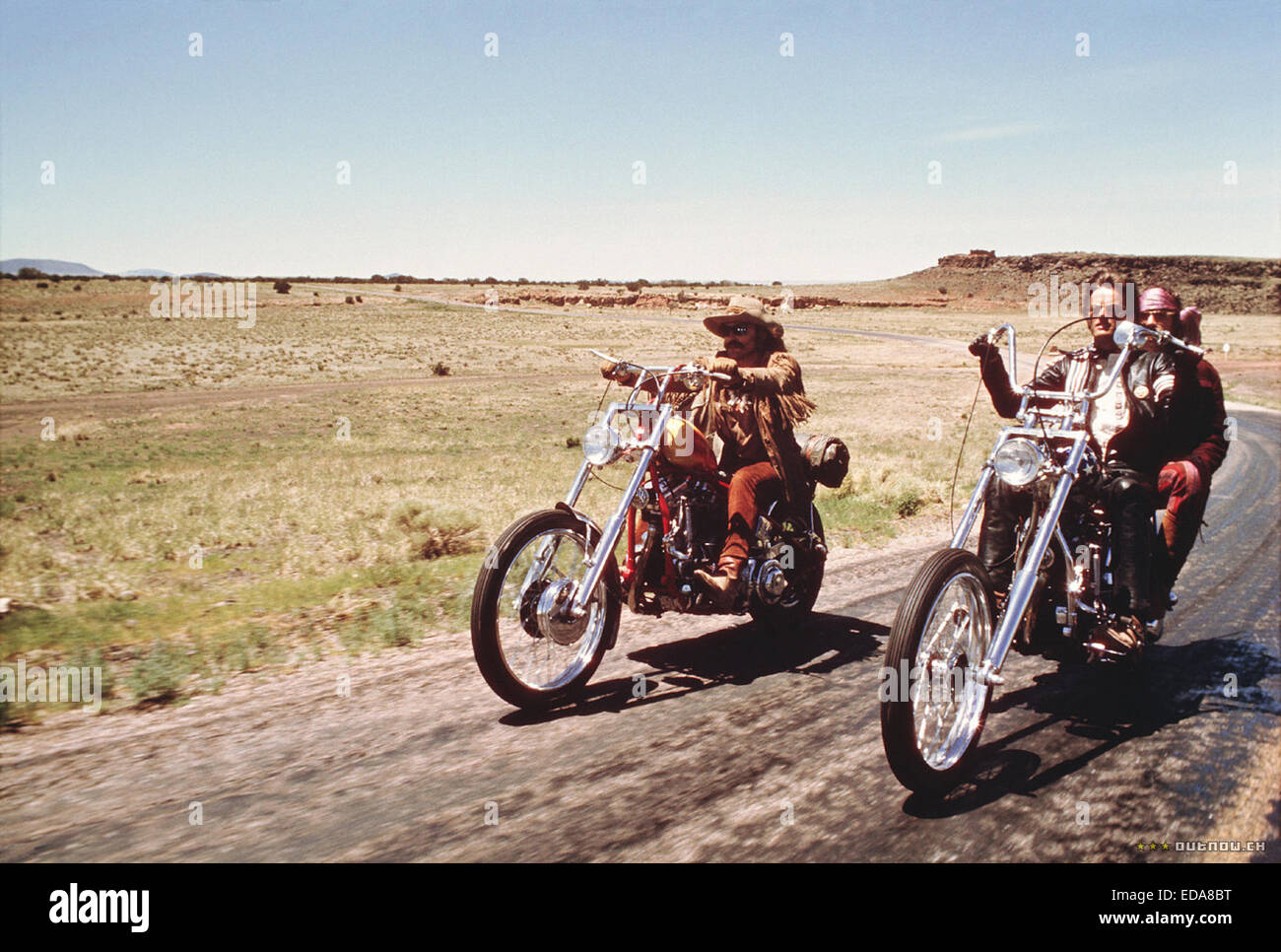
The common history of the New Hollywood era usually starts with a motorcycle jump-start and a roar of rebellion. Ask any casual film buff about the 1969 counterculture touchstone and they'll rattle off the names of the two outlaw protagonists and the breakout lawyer who stole the show. But the mainstream narrative of Who Played In Easy Rider is fundamentally flawed because it prioritizes the faces on the poster over the actual architects of the film’s chaotic energy. We've been told for decades that this was a movie about two men seeking America, yet the reality is that the film’s identity was forged by a rotating cast of non-actors, commune dwellers, and a supporting ensemble that represented a dying world the lead actors didn't actually belong to. If you think this was just a star vehicle for three guys, you're missing the point of how the film actually functioned as a piece of ethnographic cinema.
The Myth of the Three Man Show
Most retrospectives focus exclusively on Peter Fonda, Dennis Hopper, and Jack Nicholson. It’s easy to see why. Nicholson’s turn as George Hanson didn't just save the production; it launched him into the stratosphere of American acting. But the fixation on these three masks a deeper truth about the production's DNA. The film’s power doesn't come from the scripted lines delivered by the leads. It comes from the friction between the Hollywood outsiders and the genuine outsiders they encountered on the road. When we talk about the cast, we usually ignore the people of the commune or the terrifyingly real patrons of the Louisiana diner. Those weren't just background extras. They were the heartbeat of the movie.
The commune scene provides the best evidence for this argument. Hopper didn't just hire actors to play hippies. He found a real group of people living off the grid and let the cameras roll. These individuals weren't performing a lifestyle; they were defending one. Their presence on screen provides a weary, desperate realism that the leads, despite their denim and long hair, couldn't quite manufacture. The tension you see on their faces isn't acting. It’s the look of people who knew their experiment in radical living was already failing. By centering the story only on the famous trio, we ignore the fact that the film’s most haunting moments belong to those whose names never made the top of the marquee.
The Louisiana Diner and the Danger of Reality
The most chilling sequence in the film takes place in a small-town eatery where our protagonists are met with visceral, murderous hostility. To understand Who Played In Easy Rider, you have to look at the men sitting in those booths. These weren't SAG-AFTRA members from Los Angeles. They were local residents of Morganza, Louisiana, whom Hopper essentially goaded into expressing their genuine disdain for "long-hairs." This wasn't a controlled environment. The threats felt real because the sentiment was real.
The bigots in that diner represented a segment of America that didn't need a script to show hate. By casting locals and allowing them to improvisationaly vent their frustrations, the production blurred the line between documentary and fiction. This choice transformed the project from a simple road movie into a terrifying mirror of the national psyche. The "performers" here weren't playing characters; they were playing themselves, unaware that they were providing the film with its most potent and lasting villainy. Critics often praise the leads for their bravery, but the real weight of that scene is carried by the anonymous faces of the townspeople whose presence turned a movie set into a high-stakes social experiment.
The Hidden Influence of the Artistic Circle
Beyond the faces on screen, the identity of the performers was heavily curated by a specific circle of Los Angeles artists and hangers-on who shaped the aesthetic. Think of Toni Basil and Karen Black in the cemetery scene. Often dismissed as secondary to the drug-fueled trip, their performances are what anchor the surrealism of the New Orleans sequence. They weren't just bodies in a frame. They were established members of an avant-garde community that understood the visual language Hopper was trying to invent.
Skeptics might argue that the leads are the only ones who matter because they carry the narrative arc. They'd say the movie is about Wyatt and Billy, and everyone else is just scenery. That's a narrow way to view a film that was intended to be a "state of the union" address. If you remove the commune dwellers, the New Orleans girls, and the hostile Southerners, you're left with a fairly standard, if somewhat stylish, B-movie. The film’s legendary status is built on its texture, and that texture was provided by the people who weren't the stars. The true subject of the film isn't the two bikers; it's the environment they're passing through, which means the "background" is actually the foreground.
Beyond the Credits of Who Played In Easy Rider
The production was a mess of ego and paranoia, but it succeeded because it captured a moment in time that was rapidly evaporating. When we look back at the roster of talent, we shouldn't just see the names that won Oscars later. We should see the faces of the people who were actually living the counterculture dream and the people who were determined to kill it. The film is a graveyard of 1960s idealism, populated by ghosts who never got a second act in Hollywood.
Even the cameos by people like Phil Spector or the brief appearances of various musicians and artists point to a collaborative effort that was far more communal than the "lone director" myth suggests. The film was a lightning rod that pulled in the energy of everyone who touched it. It wasn't a top-down creation; it was a bottom-up explosion. The leads were merely the observers of a world that was being performed by those who had no intention of ever making another movie.
The legacy of the film is often reduced to its soundtrack or its tragic ending, but the real story is in the casting of the American landscape itself. It’s a film where the extras have more authority than the stars. The leads are tourists in their own story, riding through a country that is being played by people who don't know they're in a movie. This is what gives the film its raw, unpolished power. It isn't a polished reflection of a decade; it’s the decade itself, captured by accident while three actors tried to figure out where they were going.
You've been taught to watch the bikers, but the movie is actually about the people they pass on the side of the road. If you want to understand the soul of that era, stop looking at the guys on the Harleys and start looking at the people in the background who didn't get a trailer or a stunt double. The film’s brilliance isn't found in the lines that were memorized, but in the stares of the people who weren't acting at all. Easy Rider isn't a story about three men; it’s a documentary of a collision between a fake rebellion and a very real, very angry country.