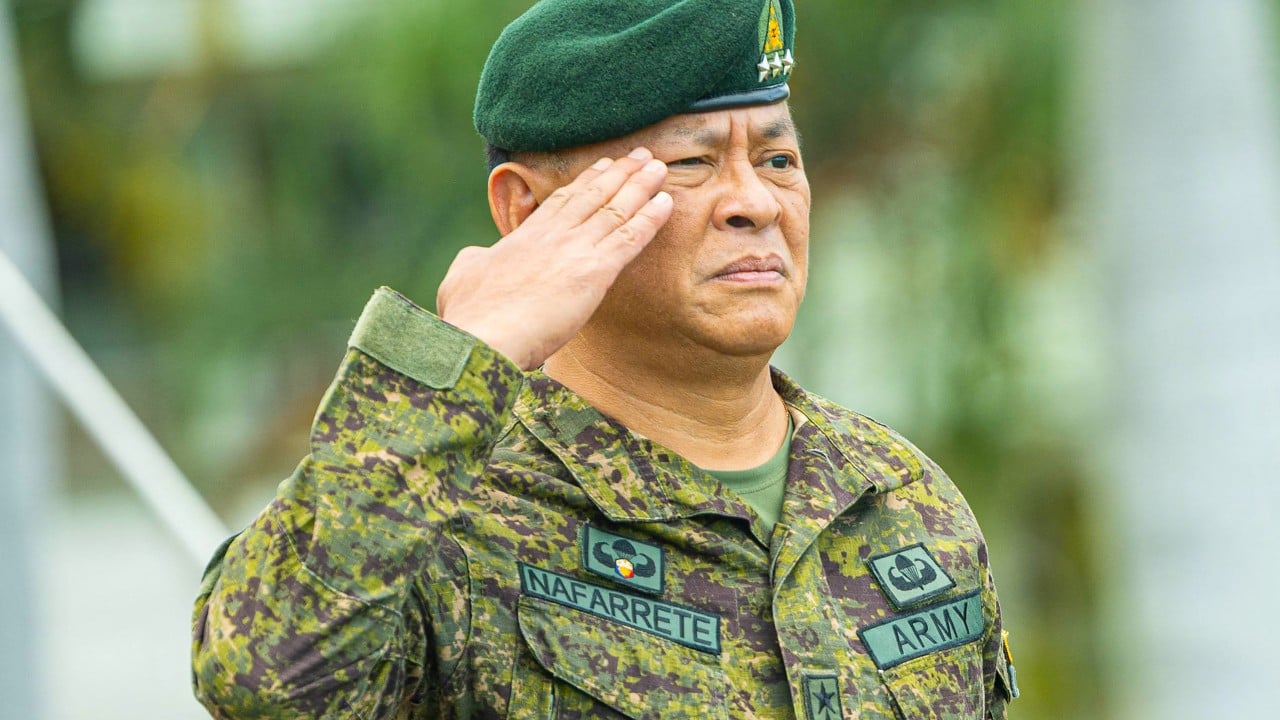
When President Ferdinand Marcos Jr. named Lieutenant General Antonio Nafarrete as the 61st Chief of Staff of the Armed Forces of the Philippines on July 21, 2026, the signal to Manila's regional neighbors was clear.
The country isn't interested in diplomatic theories right now. It wants operational readiness. In other updates, read about: Why Iranian Attacks On Kuwait Power Grid Threaten Middle East Water Security.
Nafarrete replaces General Romeo Brawner Jr., who just completed a full three-year term under Republic Act 11939—a legal reform designed to stabilize military leadership after decades of frequent leadership turnover. By picking a combat-tested army general who previously commanded the Western Mindanao Command and the Philippine Army, Marcos chose continuity in grit alongside an intentional shift toward territorial defense.
If you've been following the tension in the South China Sea, this change matters more than standard political musical chairs. Here's why this military transition took place and what it tells us about Manila's strategic direction. NPR has provided coverage on this critical subject in extensive detail.
A Battle Tested Leader Step into the Top Job
Antonio Nafarrete isn't a desk officer who climbed the ladder through staff meetings. He built his career in active battle zones.
A graduate of the Philippine Military Academy "Sambisig" Class of 1990, Nafarrete spent decades in operations. He commanded the 1st Scout Ranger Battalion, led the 1101st Infantry Brigade, oversaw the 1st Infantry Division, and directed joint operations across Western Mindanao—a region historically plagued by insurgencies and counterterrorism operations.
When you spend thirty years navigating tactical warfare on the ground, your perspective on defense readiness changes. It's not about high-level theory. It's about supply chains, troop morale, communication under stress, and practical readiness.
Before taking the top military post, Nafarrete served as the Commanding General of the Philippine Army starting in July 2025. Taking over from him as Army chief is Lieutenant General Donald Gumiran, former commander of the Western Mindanao Command. That chain of promotion shows a clear pattern: Marcos favors commanders who have managed active threat zones.
Shifting From Internal Counterinsurgency to Archipelagic Defense
For decades, the Philippines focused almost entirely on domestic threats. Communist rebellions and separatist movements in the south consumed military budgets and operational focus.
That focus is gone.
Under the Comprehensive Archipelagic Defense Concept, Manila is executing a fundamental pivot. The goal now is protecting exclusive economic zones, securing maritime borders, and projecting defense capabilities into waters where Chinese vessels routinely test Philippine boundaries.
Nafarrete made his priorities explicit right after taking command at Camp Aguinaldo. In his inaugural address, he stressed that the primary duty of the military is defending national sovereignty and territory.
He didn't promise flashy miracles. Instead, he made an honest point: weapons and advanced hardware don't mean much without well-trained soldiers behind them.
"Our true strength does not only lie in the weapons we wield, the equipment we acquire, or the technology we adopt. Our true strength lies in our personnel," Nafarrete said.
Investments in human capital, tactical training, and air-and-sea interoperability will drive the next phase of military upgrades.
What Most People Get Wrong About the Transition
Outside observers often assume a new chief of staff means a complete reset in defense policy. That's a misunderstanding.
Under Brawner, the military laid the foundation for maritime domain awareness and stronger defense pacts with partners like the US, Japan, and Australia. Nafarrete isn't tearing down that foundation. He's building on top of it.
His appointment delivers three specific tactical advantages:
- Operational pragmatism. A general trained in combat operations knows how to integrate disparate forces fast. Joint operations between the navy, air force, and army will likely speed up.
- Western Mindanao leadership experience. Managing complex maritime-land borders in Mindanao translates directly to archipelagic defense.
- Political neutrality. Nafarrete reaffirmed that the military will remain constitutional, disciplined, and strictly non-partisan—a crucial commitment as regional pressure builds.
What to Watch Next in Manila Defense Policy
Watch three concrete indicators over the coming months to judge whether this leadership shift yields real results:
- Procurement execution. Keep an eye on how fast the military acquires long-range fires, air defense systems, and coastal radar stations under Horizon 3 modernization plans.
- Joint exercises with allies. Look for larger, more realistic joint maritime patrols in the West Philippine Sea with regional security partners.
- Internal restructuring. Watch how Lieutenant General Donald Gumiran reorganizes the Philippine Army to balance residual counterinsurgency duties with coastal defense training.
The Philippines isn't looking for escalation, but it isn't backing down either. By putting a battle-tested commander at the helm, Manila is ensuring its strategic words carry actual weight on the water.