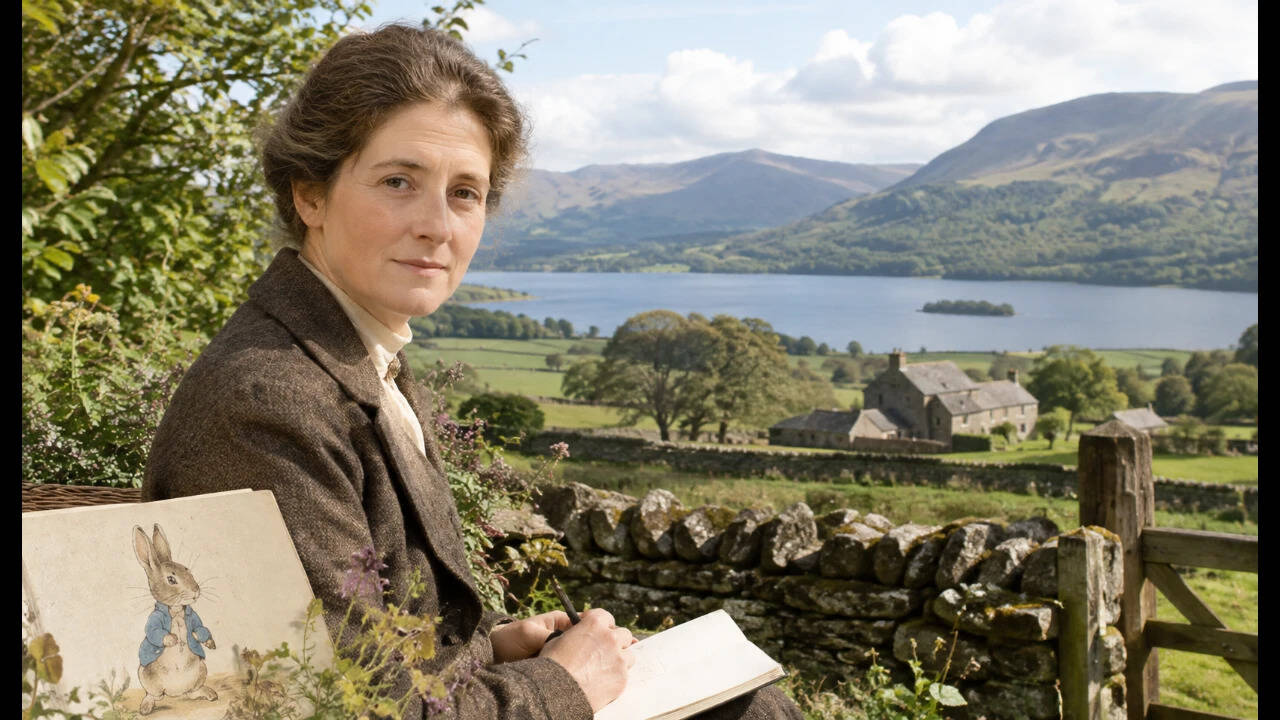
Long before she became an icon of children's literature, Beatrix Potter was just an artist sitting in a suffocating London home, sketching small animals and dreaming of green fields. When her mischievous creation, The Tale of Peter Rabbit, finally took off, it didn't just bring her fame. It handed her an escape route.
In 1905, she used her book royalties and a small family inheritance to buy Hill Top, a 17th-century farmhouse sitting on 34 acres in the Lake District village of Near Sawrey. She was 39 years old, fiercely independent, and ready to swap drawing desks for muddy boots.
If you think Hill Top was just a quaint countryside writing retreat, you're missing the real story. It became a frantic, living, breathing agricultural enterprise.
From Sketchbook to Working Farm
The property didn't stay quiet for long. Potter didn't buy the land to sit on a porch and watch the sunset. She wanted a real farm, and she got one fast.
Within a short time, Hill Top filled up with livestock and poultry. Sheep grazed the rough pastures, cows churned out milk, pigs rooted in the dirt, and ducks and hens ran everywhere. Potter hired a local property manager initially, but she quickly dove headfirst into the messy, grueling reality of hands-on farming.
She didn't just own the animals; she studied them. Every quirky habit, bad-tempered goose, or stubborn sheep ended up feeding directly into her work. The Tale of Jemima Puddle-Duck wasn't born from an abstract imagination. It was inspired by a real, rebellious runaway duck living right there at Hill Top. The house and its sprawling garden became the unmistakable backdrop for The Tale of Tom Kitten. Her art and her agriculture were completely tangled together.
The Real Shift From Author to Farmer
Life threw a devastating curveball right around the time she bought the farm. Her editor and fiancé, Norman Warne, died suddenly just four weeks after proposing to her. Potter responded by doubling down on her work and throwing herself entirely into the daily operations of Hill Top.
She learned the trade from experienced local shepherds and farmhands. Her letters from that era reveal someone deeply obsessed with crop yields, lambing percentages, and livestock health. By the time the 1921 census rolled around, her official occupation wasn't listed as "authoress." It simply read "farmer."
Her ambitions didn't stop at 34 acres, either. Potter kept buying up neighboring land as her wealth grew. By the 1920s, she managed massive flocks of Herdwick sheep across thousands of acres, winning agricultural awards and fighting hard against the economic pressures of falling wool prices.
What Her Story Teaches Us Today
Most people look at Beatrix Potter and see a cozy Victorian children's author who got lucky with a blue-jacketed rabbit. They miss the gritty, practical land steward who spent decades preserving the very landscape that inspired her.
She used her commercial success to buy back the countryside, partnering with the National Trust to protect thousands of acres from runaway development. When she died in 1943, she left behind fifteen working farms and a legacy that went far beyond ink and paper.
Next time you open one of her small books, remember that those charming illustrations were drawn by a woman who spent her afternoons wrestling with livestock, managing stubborn farmhands, and getting her hands permanently dirty in the clay of the Lake District.