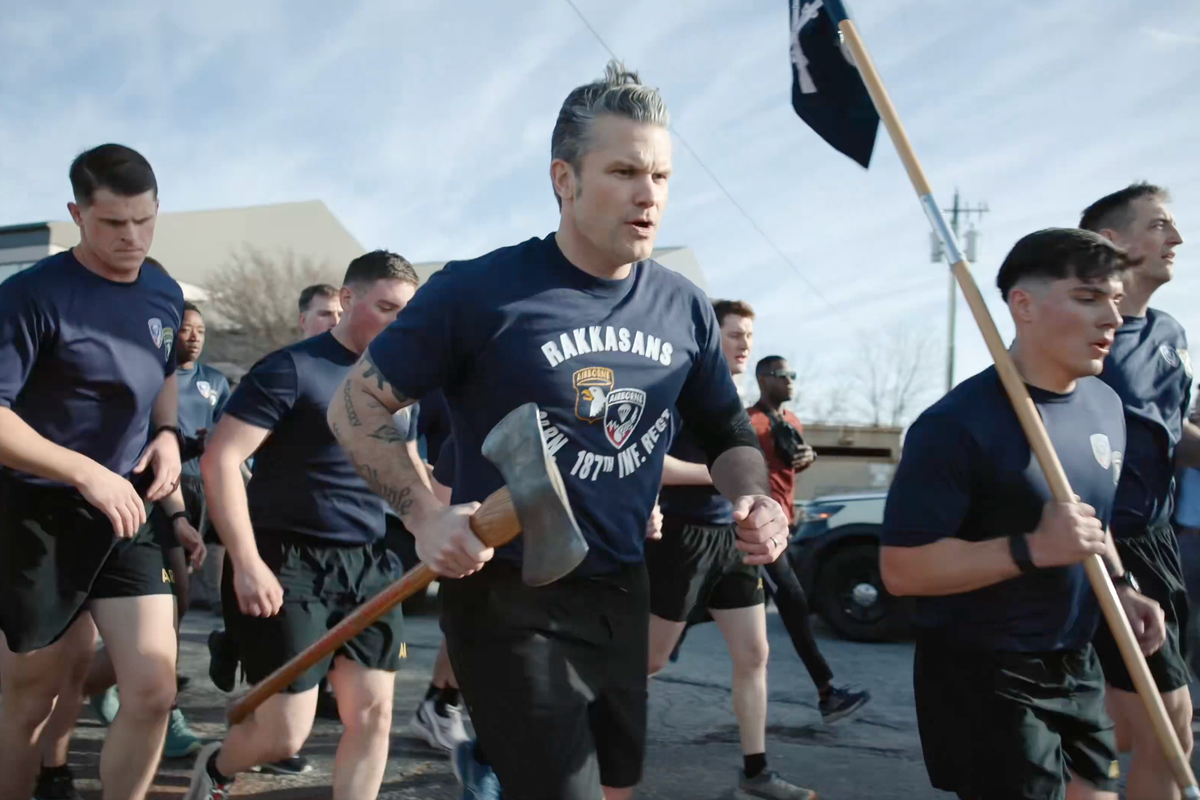
Pete Hegseth loves a camera when he's lifting weights. As Defense Secretary, he made physical fitness a central plank of his platform, lecturing generals on waistlines and demanding strict adherence to military standards.
Yet every time the Pentagon posts a clip of him working out with troops, actual fitness experts and military veterans wince. Meanwhile, you can find other developments here: Why The Tragic Custody Death Of Abderrahim Fakir Is Shaking Italy.
If you've watched those viral videos, you already know something looks off. He's benching in Guantanamo Bay or running drills on the deck of the USS Boxer, surrounded by uniformed personnel who act as background props. But look closely at the form. The push-ups lack depth. The pull-ups involve wild leg kicks. The kettlebell swings look like an invitation to lower back surgery.
When you preach strict military standards to everyone else, your own form better pass muster. For Hegseth, it doesn't. To understand the bigger picture, we recommend the excellent analysis by NPR.
The Gap Between Preaching Standards and Executing Them
Talk is cheap in physical training. Action is everything.
Hegseth hasn't held back when critiqueing military readiness. He chided senior leaders for being out of shape. He took aim at combat roles and pushed for strict physical metrics across every branch.
That sets a high bar. When you appoint yourself the chief enforcer of physical standards, people will watch how you move.
Military fitness tests aren't about feeling good or showing off for social media. They're about strict, reproducible standards. Every branch maintains specific rules on what counts as a rep. In the Army, a hand-release push-up requires your chest to hit the floor before you extend your arms straight out to the side. In the Air Force, your feet can't sit more than twelve inches apart.
If your hips sag or you fail to reach full lockout, the grader calls out one word.
"No-go."
That repetition doesn't count. In an official evaluation, Hegseth's viral push-up sequences would yield a steady stream of no-gos.
He cuts the movement short at the bottom and skips full extension at the top. It looks energetic on a three-second social video clip. On an official military score sheet, it's zero points.
Breaking Down the Pull-Up Controversy
Pull-ups expose weakness faster than almost any other exercise. They require raw relative strength and strict control.
In one widely circulated video, Hegseth attempted a high-volume challenge involving 50 pull-ups and 100 push-ups in under ten minutes. To hit those numbers, he resorted to "kipping."
Kipping means using momentum. You swing your legs and drive your knees toward your chest to generate upward force. Crossfitters use it for speed in specialized workouts.
The military forbids it.
Marine Corps physical fitness guidelines explicitly ban kicking, swinging, or kipping during pull-up tests. The requirement is clear: a dead hang at the bottom, chin cleared over the bar at the top, zero momentum.
Retired Brigadier General Maureen LeBoeuf, who previously headed West Point's physical education department, pointed out that kicking during a pull-up simply isn't permitted in military testing. Fatigue might explain why someone's form breaks down during a hard set, but official military tests don't award partial credit for exhaustion. You either meet the standard or you fail.
When a cabinet official demands absolute discipline from troops while using momentum to fake his own pull-up numbers on official Pentagon social feeds, servicemen notice.
Benching and Swinging for the Cameras
The push-ups and pull-ups were just the start.
In June, official Pentagon media accounts shared a clip of Hegseth bench pressing at Guantanamo Bay. The post claimed he "crushed" 44 reps on the bench after a morning run.
Strength coaches took one look and disagreed.
Nike trainer Cole Francum noted that while Hegseth put up weight, his technique revealed clear inexperience. He failed to plant his feet firmly to drive power through his lower body—a basic tenet of heavy bench pressing.
In other clips showing dumbbell overhead presses, Hegseth skipped full lockout overhead and failed to drop into a deep squat.
Then came the kettlebell swings.
A proper kettlebell swing relies entirely on hip drive. Your glutes and hamstrings launch the weight forward, while your arms simply act as chains guiding the bell. Hegseth's viral footage showed him pulling the weight up using his shoulders and lower back while his hips remained stagnant.
Strength coaches warn that pulling heavy kettlebells with your arms destroys your spine over time. It's bad biomechanics. More importantly, it's a terrible example for young recruits watching their Defense Secretary demo exercises online.
Why Form Actually Matters in the Armed Forces
Critics aren't just nitpicking a middle-aged guy having fun in the gym. Form matters for concrete reasons in combat readiness.
First, poor form causes injury.
Military medical budgets spend millions annually treating preventable joint and spinal injuries caused by poor lifting mechanics. When service members sacrifce form for speed or ego, knees blow out, shoulders tear, and lower backs give way.
Second, standard enforcement relies on fairness.
If a junior officer or enlisted soldier gets called out for partial push-ups during a Physical Fitness Test, they face real career consequences. Failing a PFT can halt promotions, prompt administrative reviews, or end a career entirely.
Seeing the top civilian leader post half-reps while declaring himself a paragon of military toughness creates resentment. It signals a double standard where leadership gets praise for optics while rank-and-file service members face strict discipline for the exact same flaws.
What Real Fitness Standards Look Like
If you want to train with military-grade standards, you need to strip away ego and track true reps. Here is how actual military testing standards break down across major exercises:
Push-Ups
- Chest Depth: Chest must touch the ground or an assigned foam block (typically 4 inches high).
- Lockout: Arms must fully lock out at the top of every rep.
- Plank Body Line: Spine, hips, and legs must remain in a straight line. Sagging hips invalidate the rep immediately.
- Hand Release (Army PFT): At the bottom of each rep, hands must lift completely off the ground before pressing back up.
Pull-Ups
- Dead Hang: Movement starts from a full dead hang with elbows locked out.
- No Kipping: Legs must stay still. Swinging, kicking, or driving knees upward results in a disqualified rep.
- Chin Over Bar: Chin must pass clearly above the bar without tilting the head back to reach.
Squats and Swings
- Squat Depth: Hip crease must drop below the top of the kneecap.
- Kettlebell Drive: Force must come strictly from explosive hip extension, not pulling with the front deltoids or lower back.
How to Audit Your Own Gym Form
Most people make the same errors Hegseth makes when trying to move quickly under fatigue. Fix your form by taking these direct steps next time you train:
- Film your sets from the side. Front-facing mirrors lie. Side angles reveal sagging hips, partial squat depth, and incomplete arm lockouts instantly.
- Count only strict reps. If your chin didn't clear the bar or your arms didn't lock out, don't put it in your logbook.
- Slow down the eccentric phase. Dropping fast and bouncing off joints creates momentum, not muscle strength. Control the weight for two seconds on the way down.
- Prioritize joint health over social media numbers. Sacrificing posture to claim 44 bench reps or 50 pull-ups leads directly to physical therapy. Move with intent, stay within valid ranges of motion, and hold yourself to real standards before calling out anyone else's.