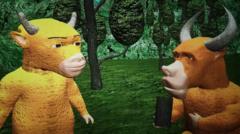
We love a train wreck. That is the only logical explanation for the bizarre box-office explosion of the Chinese animated film Niulai.
The movie is objectively bad. The animation looks like a relic from the early 2000s, the character designs are eerie, and the story is about as sophisticated as a toddler’s doodle. Yet, Niulai just pulled in over 17 million yuan—roughly $2.5 million—after starting its run with daily ticket sales as low as 30 dollars. If you found value in this post, you might want to look at: this related article.
How does a film mocked as "terrible" become a commercial success? It’s not because the movie suddenly got good. It’s because the audience turned the viewing experience into a social experiment.
The Irony of the Viral Meme
In the age of social media, being "good" isn't the only path to box-office relevance. Sometimes, being hilariously bad is even more effective. For another perspective on this story, see the latest update from GQ.
Niulai has become a massive inside joke among Chinese youth. The title itself, which translates roughly to "the bull is coming," has become a double entendre for Chinese stock market investors hoping for a bull run. When you market a "terrible" movie as a "must-watch" to your friends, you aren't doing it because you want to watch high-quality cinema. You’re doing it to share the misery.
It’s the ultimate prank. Students are heading to theaters just to trick their friends into sitting through an hour of genuinely bad animation. They film their reactions, post them on social platforms, and suddenly, the movie isn't a product anymore. It’s a meme.
Why Quality Standards Don’t Always Matter
We’ve been conditioned to think that high-budget, polished animation is the gold standard. We expect crisp textures, fluid movement, and professional lighting. But when everything is polished, everything looks the same.
Some viewers are actually embracing the crudeness of Niulai. The film was reportedly made over five years by just two people—director Xin Yumeng and his mother, Sun Lifan. For some in the audience, that context changes everything. It’s not just a bad movie; it’s a weird, honest, and DIY project that stands out against the backdrop of overly sterile, corporate-produced blockbusters.
This isn't the first time we’ve seen this, and it won't be the last. When movies become "so bad they’re good," they enter a different category of entertainment. They aren't trying to be The Lion King. They are trying to be a conversation piece.
The Financial Reality of Internet Trends
The numbers tell a story of a wildfire. In its first 10 days, Niulai barely made a ripple. Then, the internet got hold of it. Once the mocking reviews and the "go see it if you want to be shocked" posts hit platforms like Douban, the box office numbers spiked. Monday saw a surge to 8.2 million yuan. That isn't organic growth based on critical acclaim. That’s pure, unadulterated viral marketing.
If you are a filmmaker, there is a lesson here. You can spend millions on marketing, or you can create something so bizarre and polarizing that the internet does the marketing for you.
What This Means for Moviegoers
You shouldn't go into Niulai expecting a masterpiece. If you do, you’ll hate it. If you go in expecting to laugh at how strange and off-putting it is, you’ll have a great time. It’s a reminder that we are the ones who decide what a movie is worth.
If you want to experience the absurdity for yourself:
- Check your expectations. Forget about cinematography and plot structure.
- Bring a friend who is easily confused. The fun is in the shared confusion.
- Understand the context. Know that this is a low-budget, two-person project. Approaching it with that in mind changes the "ugly" visuals into something that feels almost charmingly amateur.
Don't overthink the box office success. This isn't a shift in cinematic taste. It is just the internet finding a new way to entertain itself. Sometimes, a movie is just a vehicle for a prank, and in this case, that’s exactly what the audience paid for. Stay curious, stay skeptical, and keep your expectations firmly on the floor when a "viral" movie starts making noise.
:max_bytes(150000):strip_icc()/9781635574074_cov_front-bb026b108013494e90a2984233e0d861.jpg)