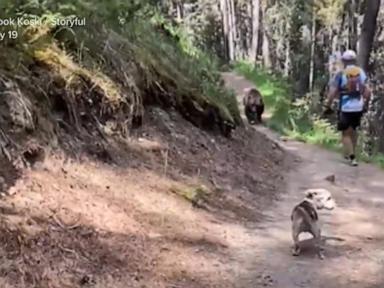
When footage went viral showing a hiker in Alberta, Canada facing down a massive grizzly bear, social media flooded with armchair survival advice. A woman walking her dog near Kananaskis Country found herself trailing backwards as a full-grown grizzly lunged and bluff-charged at her. She screamed, threw her coffee mug, held onto her dog's leash for dear life, and eventually escaped into a nearby glamping tent.
It makes for dramatic viewing. Everyone watches those 80 seconds of heart-pounding video and imagines what they would do.
Most people get it completely wrong.
Watching someone survive a grizzly charge on video gives a false sense of security. You see someone yell, back away, and pull out a smartphone to record their potential last moments. You think that is how wilderness defense works. It isn't. In fact, several actions captured in recent viral bear videos violate core safety protocols established by Canadian park rangers and wildlife biologists.
If you hike through Alberta or anywhere in bear country, knowing what actually saves lives matters.
The Real Danger of the Dog Factor in the Wilderness
Dogs and grizzly bears have a complicated, dangerous dynamic.
In many Canadian wilderness encounters, dogs act as the primary trigger. To a brown bear, a canine isn't a beloved family pet. It's a natural competitor or potential prey. When an unleashed or anxious dog barks at a bear, the bear rarely runs away. Instead, it gets curious or defensive.
When the dog gets spooked, it instinctually runs straight back to its owner. That brings an enraged 600-pound predator right to your boots.
Wildlife experts in Alberta repeatedly stress that keeping dogs on a short, non-retractable leash is non-negotiable. In the Kananaskis incident, the hiker kept her dog restrained, which likely prevented the animal from darting into the brush and escalating the charge. But having a pet along instantly elevates the stakes of any encounter.
Pulling Out Your Phone Is a Fatal Distraction
Notice how almost every recent bear confrontation comes with high-definition video? That happens because victims instinctively reach for their phones the moment danger appears.
That is a terrifying habit.
Fumbling with a smartphone camera robs you of critical reaction seconds. While you align a shot, you lose visual focus on the bear's body language. More importantly, your hands are occupied when they should be resting on a safety latch.
If a grizzly turns a bluff charge into a full attack, you have less than two seconds to deploy bear spray. If your hands hold a phone and a coffee cup, you won't make it.
Drop the camera. Your life is worth more than social media views.
Why Bear Spray Beats Standing Your Ground Alone
People love arguing over whether you should play dead, run, or fight back. The answer depends heavily on the species and the situation, but one rule applies across the board. You need bear spray.
The woman in the viral Alberta incident admitted after her ordeal that she wasn't carrying bear spray. She got lucky. Her screaming and coffee mug toss worked, but wildlife officials pointed out that spray would have ended the threat in seconds.
Bear spray is an EPA-approved deterrent containing capsaicin and related red pepper chemicals. It creates a dense fog cloud that inflames a bear's eyes, nose, and lungs without causing permanent physical harm.
Here is why it works better than firearms or harsh shouting for average outdoor enthusiasts:
- It requires basic aiming rather than precision marksmanship under extreme stress.
- The expanding cloud creates a physical barrier between you and the charging animal.
- Studies show bear spray is over 90% effective at stopping aggressive grizzly behavior.
Carrying spray inside your backpack is useless. It must sit in a hip holster or chest harness where you can draw it instantly.
How to Handle a Close Encounter Step by Step
If you bump into a bear on a trail, panic is your worst enemy. Running triggers their chase instinct. You cannot outrun a grizzly. They reach top speeds of 35 miles per hour, even uphill or through dense bush.
Here is what you must do instead.
Assess the Bear's Behavior
Is the bear surprised, defensive, or predatory?
A defensive bear usually huffs, clacks its teeth, lays its ears back, or swats the ground. It feels threatened because you surprised it, approached its cubs, or got near its food carcass. A predatory bear, which is rare, stalk silently with its eyes fixed directly on you.
Stand Your Ground and Speak Firmly
Do not scream in a high-pitched panic. That sounds like an injured animal. Speak in a deep, calm, authoritative voice.
Raise your arms slow to make yourself appear larger. If you are with a group, cluster tightly together so you resemble one massive entity rather than separate targets.
Unholster Bear Spray and Remove the Safety Clip
Hold the canister with two hands. Point it slightly downward to account for wind drift and the bear's low approach.
If the bear charges within 30 feet, spray in short 1-to-2 second bursts, aiming right for its face and snout.
Back Away Slowly Once the Bear Pauses
Never turn your back. Walk backwards slowly, keeping your eyes on the animal.
If the bear follows you, stop. Stand firm again. Only resume moving away when the animal relaxes or changes direction.
Immediate Steps to Prepare for Bear Country
Before heading out on your next mountain trip, run through this survival checklist.
- Buy two canisters of bear spray. Use an inert practice canister to build muscle memory before using the real thing.
- Mount the holster properly. Keep it on your belt or front chest rig, never in side mesh pockets or inside your pack.
- Make noise on the trail. Talk loudly, clap, or call out periodically, especially around rushing rivers or blind corners.
- Pack away all food scents. Store food, trash, and toiletries in approved bear-resistant containers or hard-sided vehicles.