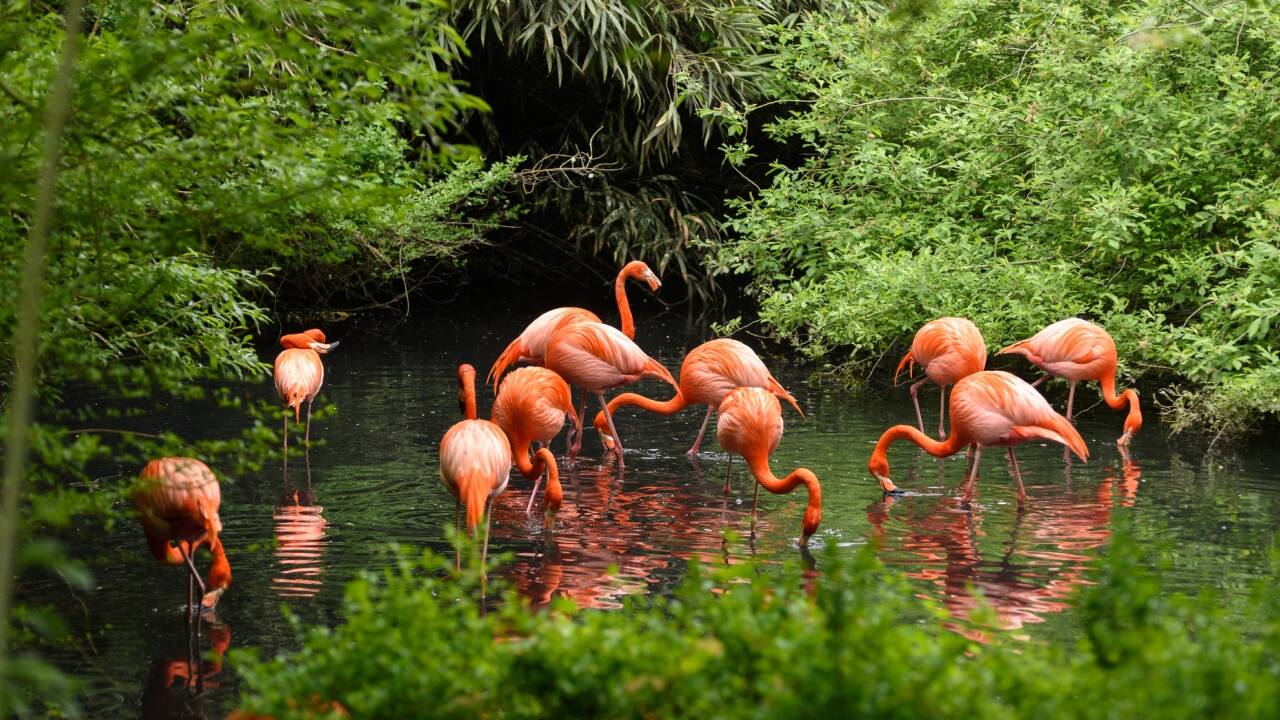
Look closely at a pink smudge on a Florida mudflat, and you might be watching history rewind. American flamingos are showing up again in the coastal Everglades, and huge flocks of ducks and wading birds are gathering in numbers people haven't seen in roughly eight decades.
That sounds like a clean fairy tale until you dig into the actual hydrology. For more than a century, canals, levees, and roads chopped up the slow, sheet-like flow of freshwater that once fed the southern wetlands and Florida Bay. When Congress approved the Comprehensive Everglades Restoration Plan in 2000, nobody expected a quick fix on a marsh that drops only inches across miles of flat ground. Twenty-six years later, aerial surveys show real signs of life alongside stubborn setbacks like droughts, rising seas, and water-storage bottlenecks. Don't forget to check out our recent post on this related article.
Why Florida Bay lost its rhythm
To understand why a flamingo matters here, you have to look at water first. Historically, freshwater spilled south from Lake Okeechobee, crept through sawgrass marshes, and met salty tides in Florida Bay at roughly four times the volume reaching the bay today, according to Audubon Florida research. Drainage ditches and levees sped that runoff out to sea or redirected it elsewhere, leaving coastal marshes saltier and shallower at the wrong times.
In the 1930s and early 1940s, the broader region supported around 250,000 wading bird nests, heavily concentrated along the coast. Once freshwater flows dropped, food webs shifted fast. Tiny fish, shrimp, and aquatic invertebrates concentrate in shallow pools during dry spells when water levels are managed right—and scatter or vanish when water is too deep, too salty, or drained away too early. If you want more about the history of this, National Geographic Travel offers an informative summary.
Mark Ian Cook, who leads the Everglades Research Group at the South Florida Water Management District, flies over coastal nesting colonies every two weeks during breeding season with a camera pointed through a small flap in a helicopter door. Counting tens of thousands of nests by eye from a bouncing aircraft is basically impossible, so photographs do the heavy lifting—and give water managers proof they can't ignore. As Cook noted in recent reporting covered by Mongabay, a vivid aerial photo changes rooms in a way a spreadsheet of nest counts never does.
What the Everglades flamingo comeback actually means
Here is a detail that trips up plenty of birders: seeing an American flamingo in South Florida doesn't mean a breeding colony is already established there. Birds hunted out of Florida for meat and feathers more than a century ago are visiting coastal mudflats and shallows as wintering birds, feeding head-down as they sweep their bills to filter tiny crustaceans, insect larvae, algae, and plankton.
Even without active nesting in the bay yet, Cook's point is spot-on—a bird doesn't need a nest in your backyard to be native. Caribbean flamingo populations have rebounded across their broader range, and improved coastal conditions give wandering or wintering birds better places to feed. Still, calling the job done would be premature. Real ecological recovery means consistent foraging, safe roosting, and eventually successful breeding without constant human rescue.
Other coastal wildlife is reacting to the same shifts in salinity and flow. Aerial views from the southern marshes show tens of thousands of wintering waterfowl—including blue-winged teal and lesser scaup—piling into coastal lakes in 2024 at levels not seen in roughly 80 years. American crocodiles, which can't tolerate high salinity for long as juveniles before their salt glands mature, also benefit when tannin-stained freshwater pushes back saltwater in bays and mangrove creeks.
The messy reality behind the rebound
If you only read headlines, you'd think bird numbers march upward in a straight line. They don't.
Wading bird nests across South Florida hit 138,834 in 2018—the highest mark since system-wide surveys began in 1995—helped along by restoration work, bridge openings along the Tamiami Trail that let water move south under an old highway barrier, and heavy rains from Hurricane Irma in 2017. Nests topped 100,000 again in 2021. Then came drops in subsequent years, and a severe drought in 2025 pushed nesting in Everglades National Park down to roughly 30-year lows.
Roseate spoonbills tell a similar story of mixed signals. Florida Bay once served as their main U.S. nesting stronghold, yet spoonbill nests in the bay fell from around 400 in 2012 to 157 in 2022 as rising sea levels deepened mangrove feeding pools and drought squeezed prey availability. Some spoonbills have shifted north to start new colonies, proving how quickly coastal birds adapt—and how much pressure sea-level rise puts on low-lying edges.
Money and timelines have shifted just as dramatically. What began as an estimated $8.2 billion, roughly 30-year effort is now projected by the Congressional Research Service at about $26.9 billion (in 2023 dollars) over roughly 50 years. And water managers still lack enough storage south of Lake Okeechobee, which forces occasional releases of excess lake water into coastal estuaries when storage fills up. The Everglades Agricultural Area Reservoir isn't slated for completion until 2029, according to reporting from The Times of India and Audubon Florida.
What people get wrong about Everglades restoration
- Myth: One wet year or a single bridge project fixes the marsh. A single rainy season or new Tamiami Trail bridges can spark a great nesting year, yet a dry year like 2025 can erase short-term gains fast. Hydrology in a flat wetland depends on timing, depth, and storage across years.
- Myth: Flamingos in Florida are automatically captive escapees. While escaped birds have turned up in the past, wild American flamingos have long historical ties to Florida and move across Caribbean and Gulf waters. Wildlife researchers track sightings carefully rather than assuming every pink bird came from a zoo.
- Myth: Restoration only helps birds. Restoring sheet flow and water storage also protects coastal estuaries from sudden freshwater dumps, recharges underground aquifers that supply South Florida's drinking water, and supports reptiles and fish.
How to follow—and support—this recovery smartly
Watching wildlife bounce back in a place that took a century to plumb is genuinely thrilling, and honestly, the most useful thing you can do is stay grounded in what's actually happening on the ground.
- Read annual wading bird and restoration reports, not just viral snapshots. Check South Florida Water Management District updates and Audubon Florida project trackers to separate multi-year trends from single-year weather swings.
- Give wildlife space if you visit coastal parks. If you're paddling or birding in Everglades National Park or Florida Bay, keep plenty of distance from mudflats, roosting flocks, and wading colonies—flushing birds during migration or breeding burns energy they can't afford to lose.
- Log sightings responsibly and support local science. If you spot a flamingo or banded bird in Florida, report accurate location and time details to recognized birding databases or local conservation groups rather than crowding the site, and back organizations funding long-term hydrological and avian monitoring.