You wake up, step outside, and the sky is an eerie, bruised shade of yellow. The air smells faintly of a campfire, but there's no cozy cabin in sight. Instead, you're looking at a massive, toxic blanket of wildfire smoke that has drifted hundreds of miles to settle over your neighborhood.
If you live in the Midwest or the Northeast, this scenario isn't a freak occurrence anymore. It's becoming a regular summer routine.
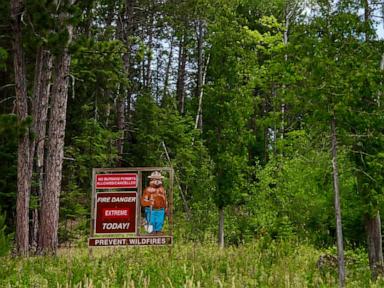
Right now, several massive wildfires tearing through Canada and northern Minnesota are sending heavy, dangerous smoke plumes directly into some of the most densely populated regions of the United States. Millions of people from Minneapolis to Boston, and down to Washington, D.C., are breathing in highly polluted air.
The immediate reaction for many is to shrug it off. "It's just haze," some say. Or, "I'll just wear a regular mask if I go out."
That's a mistake. A dangerous one.
To survive this smoke season without damaging your lungs, you need to understand exactly what you're breathing, why this is happening, and how to protect your home.
The Perfect Storm Behind the Haze
We can't blame this entirely on bad luck. The current crisis is the result of a precise, unfortunate alignment of weather and climate factors.
First, look at the ground. Severe drought conditions mixed with intense summer heat across Canada and the northern U.S. have turned forests into giant tinderboxes. Dan Westervelt, an associate professor at Columbia University’s Climate School, points out that this combination has created a perfect storm, providing an endless supply of dry fuel for these wildfires to burn.
Second, look at the wind. A massive, slow-moving high-pressure system—a heat dome—is currently parked over the central United States. Air flows clockwise around these domes. Because the northern edge of this heat dome is sitting right over northern Minnesota and southern Ontario where the fires are raging, it is acting like a giant conveyor belt. It's scooping up the thick smoke and throwing it south and east, straight into major cities.
So far, we've watched this play out in real time:
- Minnesota officials had to issue multi-day air quality alerts, with places like Two Harbors and the Tribal Nation of Grand Portage hitting hazardous, unsafe-for-everyone levels.
- Michigan and Wisconsin environmental agencies warned residents that fine particulate pollution would make the air unsafe for days.
- New England and the East Coast are next. Intense smoke has already stained the skies yellow over Maine, and the plume is actively spreading into Detroit, Milwaukee, northern Pennsylvania, New York, and Washington, D.C.
Compounding the issue is the heat. Tyler Hasenstein, a meteorologist with the National Weather Service in Chanhassen, Minnesota, warned that extreme heat and heavy smoke are coinciding. When you mix triple-digit temperatures with air that's thick enough to chew, your body's ability to cool itself down and breathe properly takes a double hit.
Why Wildfire Smoke Is Far Worse Than Standard Pollution
To protect yourself, you have to understand what you're actually fighting. Wildfire smoke isn't just ash and soot. It's a complex, toxic cocktail of gases and microscopic particles.
The primary culprit is PM2.5—particulate matter that is 2.5 micrometers in diameter or smaller. To put that in perspective, a single human hair is about 70 micrometers wide. You can't see these particles individually, but you can see them when billions of them gather to turn the sky orange.
Because these particles are so incredibly small, your body's natural defense systems—like the hairs in your nose or the mucus in your throat—can't filter them out. They pass right through. They travel deep into your lungs, bypass your respiratory system entirely, and enter your bloodstream.
Once in your bloodstream, PM2.5 triggers systemic inflammation.
In the short term, breathing this stuff causes:
- Dry, scratchy throats and coughing fits.
- Shortness of breath and sudden fatigue.
- Burning, watery eyes.
- Severe headaches and dizziness.
For anyone with asthma, COPD, or heart disease, the effects are immediate and potentially life-threatening. In the long term, things get much grimmer. Exposure to fine particulate matter from wildfire smoke is a leading cause of premature death. A study tracking the impacts of wildfire PM2.5 in the U.S. estimated that planet-warming pollution caused approximately 15,000 more deaths between 2006 and 2020 than would have occurred in a cooler world.
This Is Not 2023, But Don't Get Complacent
It's tempting to compare this to the historic 2023 wildfire season. That year, more than 4,300 fires scorched over 25 million acres in Canada, sending a historic wall of smoke that swallowed the New York City skyline.
We aren't quite at those apocalyptic levels yet. So far in 2026, U.S. fires have burned around 3.6 million acres. While that is a massive number—well above the multi-year average—the Canadian fires aren't currently burning at the record-shattering pace of 2023.
That doesn't mean you're safe.
Even a moderate wildfire season can produce highly toxic localized conditions if the wind blows the wrong way. You don't need a historic, continent-spanning fire to suffer lung damage. All you need is a few days of stagnant, smoke-filled air trapped over your city.
How to Actually Keep Yourself Safe
Most of the generic advice out there is useless. "Stay indoors" is great in theory, but houses aren't airtight. Outdoor air constantly leaks inside.
If you want to keep your lungs clean, you need to take active, tactical steps.
Throw Away Your Surgical Masks
Surgical masks and cloth face coverings do absolutely nothing against PM2.5. They are designed to stop large droplets, not microscopic particles. If you have to spend time outside, you must wear a well-fitted N95 or KN95 respirator. It must form a tight seal around your face. If air is leaking out of the sides when you breathe, the mask isn't working.
Stop Bringing Outdoor Air Inside
If you have a central HVAC system, set it to recirculate. If you leave it on the fresh air setting, you are literally pumping Canadian smoke directly into your living room. Check your system's air filter. Standard cheap filters don't stop smoke. You need a filter rated MERV 13 or higher to capture fine smoke particles.
Build a DIY Air Purifier
Dedicated HEPA air purifiers can be expensive, and they often sell out the moment smoke alerts hit the news. You can build a highly effective alternative for under $40.
It's called a Corsi-Rosenthal Box, and it's incredibly simple:
- Buy a standard 20-inch box fan.
- Buy four MERV 13 furnace filters (20" x 20").
- Tape the four filters together to form a square box, ensuring the arrows on the filters point inward toward the center of the box.
- Tape the box fan securely to the top of the filter box, blowing upward.
- Seal the bottom of the box with cardboard and tape.
This DIY setup moves more air and cleans a room faster than many commercial purifiers costing hundreds of dollars.
Monitor the Right Numbers
Don't rely on the weather app on your phone; many of them use delayed or estimated data. Use AirNow.gov or the AQI (Air Quality Index) map.
- 0 to 50: Good. Go outside.
- 51 to 100: Moderate. Extremely sensitive individuals should keep an eye out.
- 101 to 150: Unhealthy for sensitive groups. Children, elderly, and those with respiratory issues should stay indoors.
- 151 to 200: Unhealthy. Everyone should limit outdoor exertion.
- 201+: Very Unhealthy/Hazardous. Keep windows closed, run purifiers on high, and do not exercise.
What to Do Right Now
The smoke isn't going to disappear overnight. With several months left in the summer wildfire season, meteorologists warn that the door remains wide open for more smoke plumes to move south.
Don't wait until the sky turns yellow to prepare.
Go to the hardware store today. Grab a box of N95 masks, check your HVAC filter rating, and perhaps pick up a box fan and some MERV 13 filters. Keeping your indoor environment clean is the single most effective way to protect your long-term health when the air outside turns toxic.