Washington just escalated things in the Persian Gulf. By tightening the screws on Iranian maritime traffic, the US has essentially reinstated an active naval blockade. If you think this is just another round of diplomatic posturing, you're missing the bigger picture.
This isn't business as usual. It's an aggressive maritime enforcement strategy designed to starve Tehran of its remaining economic lifelines.
Most news outlets are covering this as a simple political stunt. They're focused on the immediate rhetoric coming out of the White House and the predictable responses from the Iranian regime. That's a mistake. The real story lies in the water. It's about shipping lanes, insurance premiums, dark fleets, and the sudden shift in global energy security.
The Reality of Maritime Enforcement
A naval blockade sounds simple on paper. Warships park in a circle and stop bad guys from leaving. In the modern world, it doesn't work that way. The US military isn't physically line-item auditing every single fishing boat in the Gulf.
Instead, they're targeting the infrastructure that keeps illegal trade alive.
To understand how this plays out, you have to look at how Iran moves its oil. For years, Tehran relied on a sophisticated "shadow fleet" of aging tankers. These vessels operate under flags of convenience. They turn off their automatic identification systems to vanish from tracking maps. They conduct risky ship-to-ship transfers in the middle of the night.
The new US strategy shifts from tracking individual ships to treating entire shipping routes as high-risk zones.
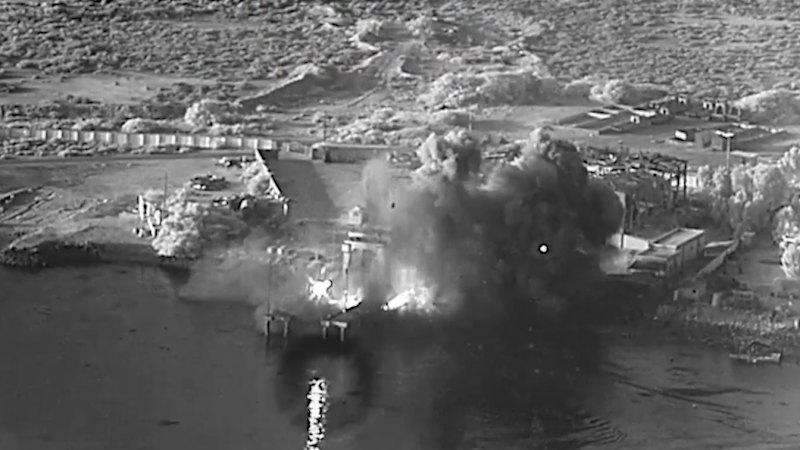
American naval assets, alongside regional coalition forces, are stepping up boardings and inspections. They are intercepting vessels suspected of carrying illicit crude or smuggling advanced weaponry. This has turned the Strait of Hormuz into a literal chokepoint. If you're a commercial captain operating in these waters, your life just got a lot more complicated. Inspections take time. Delays cost money.
How This Affects Global Energy Markets
When you choke off one of the world's primary energy arteries, the market notices. Oil traders aren't looking at political speeches. They're looking at supply disruptions.
Iran has been pumping significant amounts of oil despite years of heavy sanctions, mostly finding its way to buyers in Asia who don't mind looking the other way. This new blockade changes the math for those buyers. If the US Navy is actively seizing cargo or blocking routes, the risk of buying Iranian oil skyrockets.
Consider what happens to maritime insurance.
Lloyd's of London and other major underwriters track these developments closely. The moment a naval blockade becomes active reality, war-risk insurance premiums for the region spike. This means it becomes dramatically more expensive to ship anything through the Gulf, not just Iranian crude. Every barrel of oil coming out of Saudi Arabia, Iraq, or Kuwait suddenly carries an extra premium.
Consumers feel this at the pump. It doesn't matter if you live in London, Tokyo, or Chicago. A tense Persian Gulf means higher fuel prices. The White House knows this risk, which tells you exactly how serious they are about stopping Tehran's regional influence. They are willing to tolerate global market instability to achieve this geopolitical goal.
The Legal and Geopolitical Gray Zones
International law regarding blockades is notoriously murky. Technically, a traditional blockade is an act of war. The US administration avoids using that specific word, opting instead for terms like "enhanced enforcement" or "maritime interdiction."
Iran doesn't care about the vocabulary. They view it as a hostile act.
Tehran has already threatened to retaliate. Their playbook is predictable but highly effective. They don't have a navy that can go toe-to-toe with the US Fifth Fleet in an open battle. They don't need one. Instead, they use asymmetric tactics. They deploy fast-attack boats, sea mines, and kamikaze drones.
They can make the Gulf unusable for everyone.
This creates a massive headache for Washington's allies. European nations rely heavily on Middle Eastern energy stability. They want to contain Iran, but they don't want a shooting war that cuts off their gas supplies. China is another massive factor. Beijing is the primary destination for a lot of that discounted Iranian oil. By cutting off this supply line, the US is directly squeezing Chinese economic interests, adding fuel to an already burning trade rivalry.
What Happens Next for Shipping Fleets
If you own or manage a commercial fleet, you aren't waiting around to see how the politics shake out. You're altering your routes right now.
Some companies are already choosing to bypass the region entirely, opting for longer, more expensive journeys around the Cape of Good Hope. It adds weeks to transit times. It burns thousands of tons of extra fuel. But it keeps crews safe and avoids the nightmare of a ship getting caught in a crossfire or seized by hostile forces.
The shadow fleet will try to adapt. They'll find new ports to hide in, new flags to fly, and new ways to mask their ownership structures. It's a cat-and-mouse game where the stakes have never been higher.
To stay ahead of the disruption, logistics coordinators and commodity traders need to take immediate steps. Stop relying on outdated routing schedules. Monitor real-time naval updates from the UK Maritime Trade Operations and the US Naval Forces Central Command. Re-evaluate your insurance contracts to ensure you're covered for sudden war-risk escalations. Expect delays, budget for higher freight costs, and diversify your supply chains away from single-source dependencies in the Middle East. The situation on the water is changing daily, and flexibility is the only way to survive the fallout.