History has always been a battleground, but it rarely gets rewritten overnight with a crowbar.
That is exactly what happened at Independence National Historical Park in Philadelphia. Under the cover of darkness, federal workers finished swapping out the long-standing educational panels at the President’s House. They replaced an unflinching look at early American slavery with a sanitized, federally approved narrative.
If you think this is just a local dispute over some museum plaques, you're missing the bigger picture. This is the first major flashpoint in a coordinated federal campaign to reshape how we remember the nation's founding.
The Sudden Removal on Independence Mall
For nearly two decades, the open-air President's House memorial stood as a jarring, necessary counterweight to the triumphant stories told nearby at Independence Hall. It sat on the footprint of the home where George Washington and John Adams lived while Philadelphia was the nation's temporary capital. Crucially, the exhibit did not shy away from a heavy truth: George and Martha Washington held at least nine enslaved people in that very house.
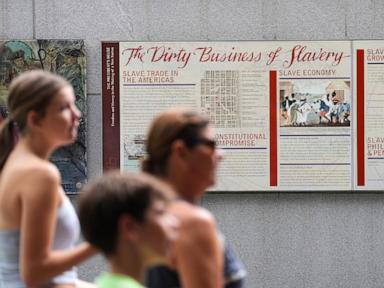
The original displays didn't pull punches. They featured a panel titled "The Dirty Business of Slavery". They detailed how the men who drafted the U.S. Constitution built a nation on the concept of liberty while actively maintaining human bondage.
Then came the federal intervention.
Following a 2025 executive order aimed at stripping public lands of materials that "disparage Americans past or living," the National Park Service quietly began dismantling the exhibit. By mid-July 2026, the overhaul was complete.
"Overnight, under the cover of darkness, the federal government removed panels at the President’s House," said Philadelphia Mayor Cherelle L. Parker. She argued that doing the work at night proved the federal government knew the action violated community trust.
How the Narrative Was Shifted
The Department of the Interior argues the new signs are "full of historical context" and merely balance the narrative. But a close look at what was taken out—and what replaced it—tells a different story.
To understand how a history exhibit gets neutralized, you have to look at the specific editorial choices:
- The Title Changes: The provocative "Dirty Business of Slavery" panel is gone. Visitors now read a panel titled "Celebrating Independence Throughout the Years".
- Softening Washington's Legacy: The original exhibit confronted Washington’s direct, economic dependence on human bondage. The new panels emphasize his private expressions of discomfort with slavery and suggest he merely complied with the laws of his time.
- Omitted Visuals: A map of transatlantic slave trade routes and a detailed timeline of slavery in the Americas were entirely removed.
- A Shift in Focus: Instead of zeroing in on the lived experiences of the nine specific people enslaved at the site, the new signage broadens the scope. It spends significant space on early Quaker abolitionist movements and the general history of the physical executive mansion.
The federal government claims the new display still honors the essential humanity of the enslaved individuals, pointing out that their names remain on the site. But local activists aren't buying it. Michael Coard, a founder of the Avenging The Ancestors Coalition (ATAC), called the changes an act of state-sponsored whitewashing.
"This is nothing more than Big Brother's Ministry of Truth," Coard said, referencing George Orwell's dystopian novel 1984.
The Legal Battle to Reclaim History
The midnight swap was the climax of a chaotic legal tug-of-war.
When federal workers first began removing the panels in January 2026, the City of Philadelphia and ATAC filed a lawsuit. In February, a district judge agreed with the city, citing Orwell and ordering the National Park Service to immediately restore the original exhibit.
The victory was short-lived. The federal government appealed. On July 3, 2026, a three-judge panel of the U.S. 3rd Circuit Court of Appeals reversed the lower court's decision, giving the National Park Service the green light to install their updated panels. The appellate court ruled that the federal government ultimately controls the messaging on federal park properties.
Mayor Parker and local advocacy groups have vowed to keep fighting, aiming to seek a rehearing from the appeals court. But for now, the physical landscape has changed.
Why This Matters Beyond Philadelphia
This isn't just about Philadelphia, and it isn't just about George Washington. This is about who owns the public square.
The President’s House site was originally built as a compromise. It was a collaborative effort between local Black activists, historians, and the federal government to ensure that the birth of American democracy wasn't taught as a flawless fairytale. By stripping the local community of its voice in this exhibit, the federal government has signaled that local consensus means nothing when it clashes with national political agendas.
When we sanitize the past to make ourselves feel better in the present, we lose the ability to understand our actual national trajectory. The original exhibit was powerful precisely because it forced visitors to hold two conflicting truths at once: that America was founded on noble ideals of freedom, and that those very founders denied those freedoms to the people living under their own roofs.
If you want to support the preservation of honest local history, here is what you can do next:
- Read the original accounts: Seek out the historical narratives of Oney Judge and Hercules, two of the individuals enslaved by Washington in Philadelphia who bravely escaped his captivity.
- Support local preservationists: Follow the work of groups like the Avenging The Ancestors Coalition and the National Parks Conservation Association as they navigate the ongoing legal appeals.
- Visit local, non-federal historic sites: Direct your educational visits and financial support toward municipal or privately run museums that retain editorial independence over their exhibits.
The panels in Philadelphia may have changed, but the actual history remains exactly what it was. It's up to us to make sure it doesn't get forgotten.