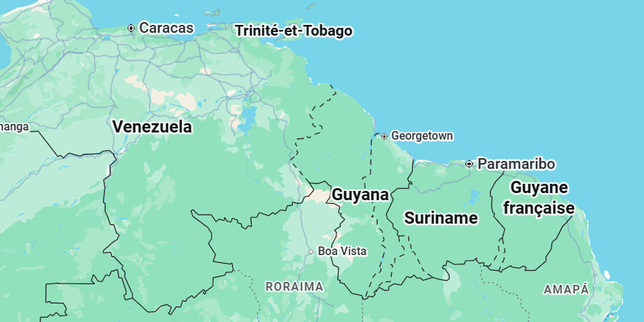
A boat built in 1939 shouldn't carry over a hundred souls across open ocean waters in the middle of the night. It happened anyway. On Saturday night, the MV Barima capsized off the coast of Guyana near Iron Punt. The vessel was heading from Georgetown to Port Kaituma, a transit point deep within the Essequibo region. Initial headlines pointed entirely to the age of the ship. They blamed a catastrophic mechanical failure.
They were wrong.
The sinking of the MV Barima is not just a tragic maritime accident. It's a glaring failure of administrative oversight and human recklessness. While early reports scrambled to estimate the number of missing people based on official documents, the reality on the ground exposed something much worse. The paperwork was garbage.
The Illusion of the Passenger Manifest
You expect authorities to know exactly who is on a commercial ship before it leaves port. In this case, the passenger manifest proved completely useless. Government officials initially stated that 116 passengers and 17 crew members were on board. That equals 133 people.
When rescuers pulled 67 survivors from the water, they checked the names. Only 35 of those rescued individuals were actually on the official list. The remaining 32 people didn't exist on paper. This means the total headcount was a complete guess. It turns a standard search and rescue operation into an impossible math problem.
How do you look for people when you don't even know their names?
Two bodies have been recovered. Fifteen children are among the 67 survivors who made it out alive. Beyond that, the true number of those lost remains dangerously uncertain. Survivor Leon Murray recounted hearing screams just four hours after leaving Georgetown. He managed to grab a life jacket and pull his son to safety. His wife, his daughter, and four of his grandchildren are gone. Their names may or may not be on that useless piece of paper left at the harbor.
Cargo and Cannabis at Sea
The mechanical integrity of the MV Barima wasn't the main trigger. Prime Minister Mark Phillips confirmed the boat carried 286 tonnes of cargo. Its legal limit was 284 tonnes. An extra two tonnes might sound negligible on a massive vessel, but every single pound counts when a ship is nearly 90 years old.
The real shock came from the crew cabin.
Guyana Public Works Minister Juan Edghill revealed that both the captain and the first engineer allegedly tested positive for marijuana. They didn't face an unexpected storm. They weren't blindsided by a rogue wave. Instead, the individuals responsible for navigating a packed passenger ferry through nighttime waters were apparently impaired. Both men are now in police custody facing criminal investigations.
Systemic Failure Beyond the Crew
Blaming the captain is easy. It lets the system off the hook. But a captain doesn't load a ship alone, and a captain doesn't clear an inaccurate manifest past port authority officials without someone looking the other way.
The government has launched an expanded criminal investigation targeting multiple state departments. Investigators are looking directly at the maritime administration department, the local police force, and the defense force. This wasn't an isolated mistake by a couple of negligent sailors. It was a breakdown across every single layer of safety enforcement designed to protect everyday citizens.
The ferry carried 250 life jackets and multiple life rafts. The safety gear was there. The structural limits were known. What lacked was basic human competence and strict regulatory enforcement.
Next Steps for Maritime Safety in the Region
If you travel by water in South America, you need to know what to look for before boarding. Do not rely blindly on regional port authorities to guarantee your safety.
- Check the visible water line on the hull before boarding to see if the vessel sits dangerously low.
- Locate the life jacket storage areas immediately upon stepping onto the deck.
- Avoid traveling on overnight coastal ferries during heavy cargo transport days if alternative transport exists.
Demanding accountability from regional operators is the only way to prevent another MV Barima. Watch the local regulatory updates closely as the criminal trial against the crew and port officials unfolds in Georgetown.