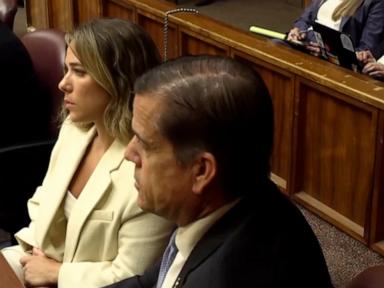
A Miami jury just handed down a not guilty verdict for George Pino, the real estate broker behind the wheel during a horrific 2022 boat crash that killed a teenage girl and left another permanently disabled. If you are tracking this story on social media, the reaction is exactly what you would expect. People are furious. They are screaming about wealth, privilege, and a system that lets well-connected boat owners walk free after an absolute tragedy.
But anger is not a legal argument.
When the five-man, one-woman jury deliberated for just over an hour on Monday night, June 22, 2026, they were not deciding whether the crash was devastating. Everyone knew it was. They were deciding whether the state proved, beyond a reasonable doubt, that Pino committed felony manslaughter and vessel homicide. They decided the state did not.
Understanding how a man can drive a 29-foot boat into a highly visible, day-glo green channel marker at nearly 50 miles per hour and walk away with an acquittal requires looking past the raw emotion. It requires looking at how the state built its case, where the gaps were, and how the defense systematically tore apart the narrative of criminal recklessness.
The Chaos on Cutter Bank
To understand the verdict, you have to look at what actually happened out on Biscayne Bay during that Labor Day weekend in 2022. Pino was heading back to the Ocean Reef Club in north Key Largo. His wife, Cecilia, was next to him. In the back were 12 teenage girls, celebrating his daughter’s 18th birthday. They had spent the afternoon at Elliott Key.
The boat was flying down the Cutter Bank channel. GPS data showed it was moving between 43 and 47 miles per hour. Then, total disaster. The boat slammed directly into channel marker 15. The impact was violent enough to flex the fiberglass bow upward and tear apart the right side of the vessel.
Teens flew into the water. Bodies lay unconscious. 17-year-old Luciana "Lucy" Fernandez drowned after the impact. Katerina "Katy" Puig, now 21, survived but was left with severe, permanent neurological and physical disabilities.
If you stop the story right there, it looks like a clear-cut case of criminal negligence. You are probably thinking that driving a boat into a fixed object at that speed with a dozen kids on board is the definition of reckless. But the law demands a much higher standard than a bad result.
The Sovereignty of Reasonable Doubt
Criminal court does not operate on what is fair or what is tragic. It operates on specific statutory definitions. For the state to win a conviction for manslaughter or vessel homicide, prosecutors had to prove that Pino showed a "gross, flagrant violation" of human life, or an utter disregard for safety.
They tried to do this by painting a picture of an afternoon fueled by alcohol and careless speeding. They pointed out that Pino admitted to drinking two beers earlier in the day. They brought up a Yeti cup filled with prosecco and berry liqueur that his wife had packed. They showed body camera footage of the chaotic rescue to make the jury feel the horror of that evening.
But the state’s case had a massive, gaping hole right at the center. It had no objective science to back up the claim that Pino was impaired.
Law enforcement officers who responded to the scene never performed a breathalyzer test. They never drew blood to check his blood-alcohol content. For months after the crash, the Florida Fish and Wildlife Conservation Commission treated this as a misdemeanor traffic case. It only exploded into felony territory after an aggressive newspaper investigation kept digging into why a wealthy, connected local developer was facing nothing more than a slap on the wrist.
By the time prosecutors brought felony charges, the lack of physical evidence became a fortress for the defense. You cannot prove someone was legally drunk based on an admission of two beers over several hours. The state tried to substitute the lack of chemical tests with witness testimony, but that backfired completely.
The Problem With Memory Under Trauma
When you don't have a blood test, you have to rely on what people saw. The prosecution called survivors to the stand. They wanted these young women to describe a reckless captain. Instead, the defense used those same witnesses to show the jury how completely unreliable human memory becomes during a life-or-death crisis.
During a blistering cross-examination, the defense took one of the surviving girls through three wildly different accounts she had given about Pino’s actions right after the impact.
On the witness stand, she remembered seeing Pino standing on the boat, screaming at the girls to jump into the water. But in a prior sworn deposition, she testified that she did not see Pino on the boat at all. To make matters more complicated, during her initial interview with a marine patrol officer right after the crash, she stated that Pino was actually lying flat on the floor next to her, unconscious and bleeding from the head.
This girl was not lying. She was a traumatized teenager who lived through the worst day of her life and watched her friend die. Her brain did what brains do during extreme trauma; it fractured the timeline.
But for a defense attorney like Howard Srebnick, those contradictions are pure gold. If a survivor cannot definitively place where the driver was or what he was doing because the scene was too chaotic, how can a jury confidently lock a man up for thirty years? The defense successfully argued that if the memories of the event are this slippery, the state cannot claim it has cleared the incredibly high bar of proving a crime beyond a reasonable doubt.
The Traumatic Brain Injury Defense
The defense did not just play defense; they went on the offensive with medical science. They brought in a neurologist to argue that the crash was not caused by alcohol, but that Pino's bizarre behavior and fragmented memory after the impact were the direct result of a physical brain injury.
Pino did not skate away from the collision untouched. The force of the impact smashed his teeth and split his scalp open, requiring seven staples to close the wound. Medical records and early responder statements indicated he was knocked out cold when the boat hit the marker.
The defense argued that when Pino gave confusing or incorrect details to investigators later that night—like misidentifying which kids were sitting directly behind him or failing to accurately describe his own boat’s engines—he was not trying to cover up a crime. He was suffering from confabulation, a medical phenomenon where a brain with a traumatic injury automatically fabricates false memories to fill in blank spaces, without any conscious intent to deceive.
If Pino was unconscious or concussed, his post-crash behavior cannot be used to prove he was a callous criminal who did not care about the kids. The jury was left with a choice: was he a drunk driver trying to evade justice, or was he a concussed father who suffered a sudden, inexplicable loss of control of his vessel?
A Freak Accident vs. Criminal Intent
The prosecution tried to hammer home the idea that there was no excuse for hitting that specific marker. It was painted bright green. GPS data showed Pino had navigated that exact channel dozens of times before. He knew it was there. Therefore, they argued, hitting it could only be the result of extreme recklessness.
Pino’s defense countered with an explanation that hits close to home for anyone who spends time on the water in South Florida. They argued that a rogue wake from a larger, passing vessel caught the boat at the worst possible second, throwing it off course and sending it screaming into the piling.
Because there is no speed limit in that specific section of the Cutter Bank channel, moving at 45 miles per hour was entirely legal. Speeding alone does not equal a felony.
The jury had to look at a real estate broker who was driving his own wife and daughter, along with a dozen of his daughter's closest childhood friends, on an afternoon cruise. He loved these kids. He had known Lucy Fernandez since she was a little girl. The defense asked the jury a common-sense question: would a man intentionally or recklessly risk the lives of his own flesh and blood? Or was this a terrifying, split-second maritime mishap?
By rendering a quick verdict of not guilty on both manslaughter and vessel homicide, the jury chose the latter. They decided that a terrible outcome does not automatically mean a felony occurred.
What This Means for Your Next Trip on the Water
If you operate a boat in Florida, this verdict should not make you breathe a sigh of relief. It should terrify you. It shows just how fast an ordinary afternoon can turn into a legal and personal nightmare.
The civil battles over this crash are far from over. Pino only carried $300,000 in liability insurance on that vessel. When you consider the millions of dollars in medical care required for Katy Puig’s lifetime of permanent disabilities, that insurance policy is a drop in the bucket. Pino attempted to use federal maritime laws to limit his financial liability, a move that drew massive public scorn, though his lawyers argue it is a standard procedural step mandated by insurance providers.
The practical takeaways from this case are immediate and concrete. If you own or operate a boat, you need to audit your setup right now.
- Check your liability limits. A standard $300,000 policy is dangerously inadequate the moment you invite passengers on board. If a catastrophic accident happens, your personal assets are completely exposed. Look into massive umbrella policies specifically tailored for marine use.
- Understand the legal reality of the captain’s chair. The moment you take the helm, you are legally responsible for every soul on that boat. Even if a jury clears you of criminal charges, your life, reputation, and finances will be systematically dismantled in the aftermath of a tragedy.
- Rethink speed in crowded channels. Just because there is no posted speed limit does not mean it is safe to run at top speed with a heavily loaded boat. Extra passengers alter your vessel's center of gravity, slow down your reaction times, and drastically increase stopping distances when an unexpected wake or obstacle appears.
The justice system decided George Pino is not a felon. But that doesn't mean there are any winners in this courtroom. A family is still mourning a 17-year-old girl who never came home, another family is managing a lifetime of severe disability, and the boating community is left with a stark reminder of how thin the line is between an afternoon celebration and total devastation.
For a closer look at the medical evidence that defined the closing days of this trial, you can watch the medical examiner testimony on the boat crash which details the forensic findings presented to the jury. This video is highly relevant because it features the actual expert testimony regarding the physical consequences of the collision, highlighting the gravity of the incident that the jurors had to weigh against the legal definitions of negligence.


/media/movies/covers/2024/11/reacher-poster.jpg)