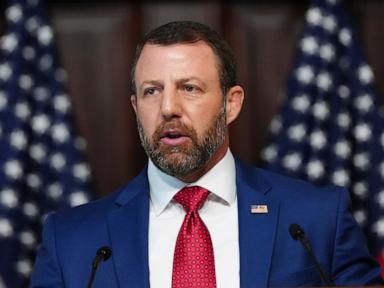
The federal government cannot just seize control of local voting booths because it feels like it. Yet, Homeland Security Secretary Markwayne Mullin wants you to think otherwise. Standing at the White House complex on Friday, July 17, 2026, Mullin issued an extraordinary ultimatum to state election officials. Comply with our sweeping new election security mandates or lose your federal funding, face massive fines, and potentially go to prison.
It sounds terrifying. It makes for dramatic headlines. But if you actually look at the United States Constitution and decades of legal precedent, you realize something quickly. This aggressive play is mostly political theater designed to stoke doubts ahead of the 2026 midterm elections.
The Department of Homeland Security is attempting to nationalize elements of an election system that is explicitly designed to be decentralized. Mullin claims he's protecting the vote. Legal experts say he's overstepping federal law in a way that will almost certainly get struck down by courts. Let's break down exactly what the Trump administration is demanding, why their numbers don't add up, and what state officials can actually do about it.
The Massive Demands Shaking Up State Election Offices
Mullin didn't hold back during his press briefing. He outlined a strict set of new enforcement actions tied directly to federal money. If a state wants to keep receiving FEMA Homeland Security Grants or federal security reimbursements, it has to completely overhaul how it handles voting.
The new directives require states to shift immediately to hand-marked paper ballots using those newly deployed FEMA grant guidelines. On top of that, states must perform a mandatory 5% manual audit of all ballots cast.
But the biggest flashpoint involves voter registration rolls. The administration wants states to hand over sensitive voter data to the federal Systematic Alien Verification for Entitlements program, known as SAVE. It's a massive database built to check immigration status. Mullin is demanding that states use this newly overhauled program to perform a total audit of their voter lists.
If a state refuses to hand over that sensitive data, Mullin threatened severe retaliation. He promised that the federal government would single out those non-compliant states, comb through their voting records one by one after the election, and aggressively pursue criminal charges against anyone deemed to have voted illegally. Election officials themselves could face fines and prison sentences if they choose to ignore these directives.
It is a radical escalation of federal pressure. It directly echoes the rhetoric from the president's prime-time address the previous evening. The administration is framing this as an urgent national security necessity, arguing that foreign adversaries are placing vital components inside electronic voting machines to manipulate voter registrations.
The Myth of the Quarter Million Noncitizen Voters
To justify this unprecedented intervention, Mullin brought out some eye-popping statistics. He announced that a DHS review of public data had uncovered more than 250,000 potential noncitizens registered to vote across just four states: California, Nevada, New Jersey, and Pennsylvania.
He claimed letters had already been dispatched to the secretaries of state in those four jurisdictions, giving them a strict two-week deadline to scrub their rolls.
There's just one massive problem with this claim. The data is deeply flawed.
When you look at how the federal government arrived at that 250,000 figure, the math falls apart. Election administration experts point out that public voter data lacks the specific, updated markers required to accurately determine citizenship. For instance, the administration's analysis frequently flags individuals who simply don't have a Social Security number on file with the local election office, or people who naturalized as U.S. citizens recently but haven't had their records fully synced across messy, multi-agency databases.
State officials didn't take the accusations lying down. In Nevada, top election administrators quickly pushed back, noting that they already work around the clock to keep voter rolls clean and secure. Pennsylvania officials reiterated that every single voter in their commonwealth must verify their identity before casting a ballot. They noted that actual evidence shows noncitizen voting is incredibly rare.
The reality is that stripping eligible voters from the rolls based on messy, incomplete data matches is a recipe for disaster. It leads to wrongful voter purges that disenfranchise legitimate American citizens right before they head to the polls.
Why the Threats Are Legally Empty
Can Secretary Mullin actually put a secretary of state in handcuffs for running their own election? The short answer is no.
David Becker, the executive director of the non-profit Center for Election Innovation and Research, put it bluntly. He called Mullin's warnings empty, illegal threats. Becker pointed out that fifteen separate courts have already looked at similar federal demands for sensitive state voter data. Six of those federal judges were actually appointed by the president himself. Every single one of them confirmed that the federal government has no legal right to demand this information.
The entire U.S. election system hinges on a basic concept found in the Constitution. The Elections Clause gives states the primary authority to set the times, places, and manner of holding elections for senators and representatives. The federal government can pass overarching laws like the Voting Rights Act, but a cabinet secretary cannot unilaterally invent criminal penalties for state workers who follow their own state statutes.
Furthermore, the federal government's attempt to use the overhauled SAVE program as a weapon has already run into a brick wall. A federal judge recently blocked the mandatory rollout of the program due to severe privacy concerns and the high risk of wrongful voter purges. People were getting flagged incorrectly, putting their legal right to vote in immediate jeopardy.
Trying to bypass the courts by withholding FEMA emergency funds is also a highly questionable legal strategy. The Supreme Court has repeatedly ruled that Congress, not executive agencies, sets the clear conditions on federal grants. The executive branch can't suddenly decide to withhold unrelated public safety and disaster relief money just because a state refuses to violate its own privacy laws.
The Real Damage of Political Bluster
If these mandates are legally unenforceable and bound to die in court, why is the Department of Homeland Security pushing them so hard right now?
The answer lies in the calendar. The 2026 midterms are just around the corner. Control of Congress hangs in the balance. By launching a highly visible, aggressive campaign against state election systems, the administration is laying the groundwork to challenge any outcomes they don't like in November.
When a high-ranking official like Mullin tells the public that foreign adversaries can easily access a secret key to alter your vote, it chips away at public trust. He didn't provide a shred of evidence to back up that claim. Cyber security professionals have repeatedly affirmed that our voting machines feature extensive physical safeguards, rigorous pre-election testing, and paper trails that make widespread tampering virtually impossible.
This behavior puts local election workers in an incredibly dangerous position. They are already dealing with unprecedented levels of harassment and threats. Now, their own federal government is telling them they might go to jail just for doing their jobs according to state law. It creates massive administrative headaches and confuses voters who aren't sure if their registrations are secure.
Practical Next Steps for Voters and Observers
Don't let the high-level political posturing distract you from what actually matters. If you want to ensure your voice is heard and protect the integrity of the upcoming election, there are concrete steps you should take right now.
First, verify your registration status immediately. Go directly to your state’s official secretary of state website. Do not rely on third-party portals. Check that your name, address, and party affiliation are entirely accurate. If anything looks off, contact your local county election office directly to fix it before the registration deadlines hit.
Second, educate yourself on your local voting machine safeguards. Find out if your jurisdiction uses hand-marked paper ballots or electronic machines with a verified paper trail. Knowing the exact physical and digital auditing protocols used in your hometown is the best defense against scary, unsubstantiated rumors.
Third, consider stepping up to serve as a local poll worker. Election offices across the country are desperately short-staffed. The best way to see the transparency and security of the system is to sit inside the room yourself. You'll watch the bipartisan checks, the seal verifications, and the strict chain-of-custody rules that keep our votes safe.
Ignore the noise coming out of Washington press rooms. The power over American elections still belongs exactly where the founders put it, right in the hands of the states and the people who live in them.
/singapore-travel-584f789f5f9b58a8cdf97dda.jpg)


