When tens of thousands of people surge across a border in a matter of hours, the headlines usually focus on politicians shouting at each other in Brussels or Madrid. They miss the real story.
Look at Ceuta right now. You have an enclave of roughly 84,000 residents caught in a strange, tense reality where anger crashes directly into deep human empathy. It's messy. It's loud. And nobody on the ground feels like a simple political talking point.
Life Inside the Enclave After the Surge
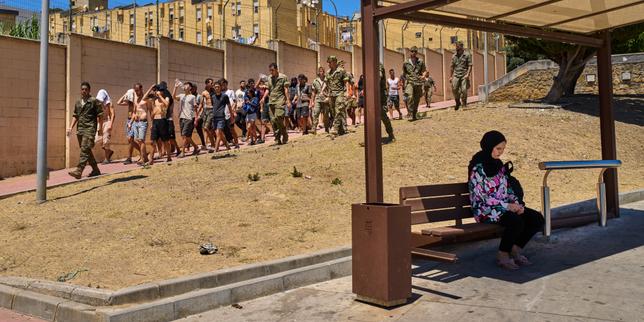
The numbers are staggering. Close to 60,000 people crossed from Morocco into this tiny Spanish patch of North Africa in a blinding rush. Within days, the Spanish government reported that around 48,000 had returned or been sent back, while a stubborn few thousand remained or tried to fade into the local fabric.
Stores shut their metal shutters. Shelves emptied out overnight. Local residents stood in empty grocery aisles wondering how they were going to feed their families, while young migrants slept on concrete without food or clean water.
You hear two very different things when you walk down the streets of Ceuta today.
Some locals are furious. Their daily routines were completely shattered. Small business owners watched their livelihoods stall during the chaos, and the sheer scale of the arrival overwhelmed municipal services.
Others feel a profound, aching compassion. They saw teenagers and young men swimming past breakwaters, freezing and exhausted, desperate for a ticket to a safer life. When human beings are literally washing up on your neighborhood beach, you don't just see statistics. You see faces.
Why the Standard Narratives Miss the Mark
Politicians love clean narratives. They want you to think this is purely a border security failure or an unmitigated humanitarian disaster. It’s both, and it’s neither.
Ceuta has always existed in a unique geopolitical pressure cooker. It's a European border stitched onto the African continent. Cultures mix here naturally every single day, long before the cameras arrive.
When a crisis hits, the local population doesn't have the luxury of ideological abstraction. They deal with the immediate fallout.
- Supermarkets run out of bread because of panic buying.
- Coast guard vessels comb local waters for the bodies of those who didn't survive the swim.
- Families split down the middle over whether the border should open wider or lock down completely.
At least 67 people lost their lives during these recent attempts, mostly through drowning or crushing incidents near the barriers. That grim tally hangs over the town like a heavy fog. Even as cafés reopen and tourists start trickling back to outdoor terraces, nobody is pretending things are normal.
The Reality Behind the Border Control Debate
Prime Minister Pedro Sánchez has blasted other European Union leaders for what he calls an egoistic response, demanding immediate interior minister summits. Meanwhile, surrounding nations watch nervously, tightening their own frontier checks to catch the spillover.
Yet, pointing fingers from capital cities doesn't fix a local economy trying to recover from gridlock.
If you want to understand what's actually happening in Ceuta, stop looking at the press conferences. Look at the local baker who spent his savings trying to hand out sandwiches, alongside his neighbor who just wants the streets cleared so life can resume. Both reactions are completely human. Both come from living right on the fault line of a global migration puzzle that nobody has solved.
The crisis in Ceuta isn't winding down cleanly, no matter what official statements claim. It's just shifting shapes, leaving a traumatized community to pick up the pieces while the rest of the world scrolls away to the next trending topic.