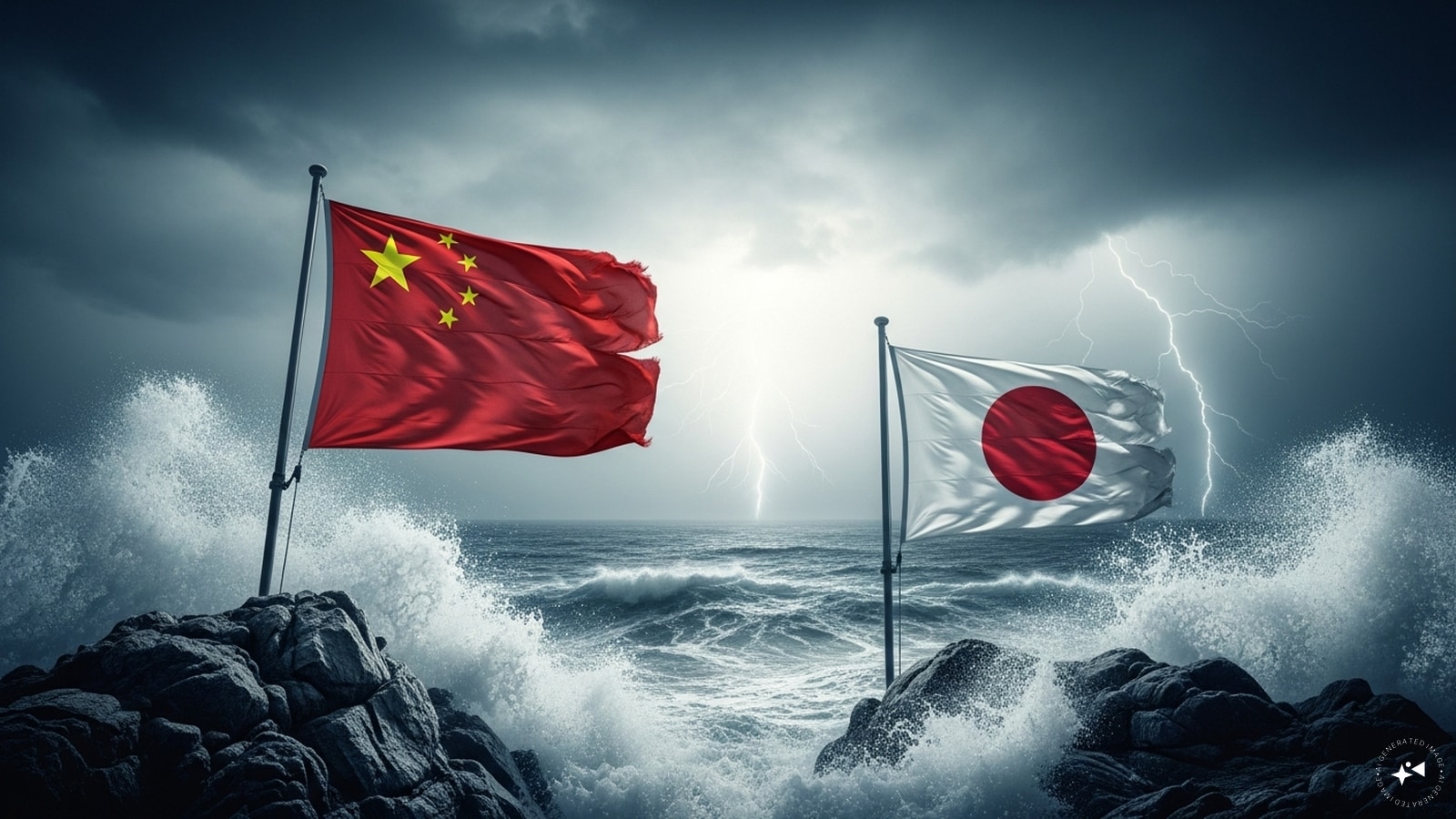
China just escalated its economic warfare against Japan, but the mainstream headlines are missing the real story. On Monday, China's Ministry of Commerce slapped new restrictions on 40 Japanese companies and research institutions. The official reason? Beijing claims these entities are actively feeding a new wave of Japanese militarism.
If you think this is just standard political posturing, you're looking at it the wrong way. This isn't a temporary diplomatic tiff. It's a calculated strike aimed directly at the supply chains of global tech and defense giants, and it marks the worst degradation of Tokyo-Beijing relations in over a decade. Meanwhile, you can find similar stories here: Why Chinas Fifty Million Dollar Debt Relief For Sudan Matters More Than The Numbers Suggest.
By blacklisting major industrial divisions of corporate titans like Mitsubishi, Fujitsu, and Komatsu, Beijing is sending a clear message. If Japan continues to align with Washington and signals support for Taiwan, its industrial base will pay a heavy price. This move weaponizes trade chokepoints, particularly in the critical sector of rare earth elements, to force Japan's corporate sector to lobby its own government for a rollback in defense spending.
The Mechanics of the Blacklist: Control vs Watch Lists
To understand how this impacts your business or investments, you have to look at how Beijing split these 40 entities. China didn't just throw everyone into a single bucket. They used a dual-tier system that creates distinct administrative headaches for exporters. To explore the complete picture, check out the detailed analysis by CNBC.
The Absolute Ban: The Control List
The Ministry of Commerce placed 20 Japanese entities directly onto its strict export control list. This group includes multiple key divisions of Mitsubishi Corporation, specifically focusing on subsidiaries of Mitsubishi Electric and Mitsubishi Heavy Industries. It also targets government-backed research bodies like the National Institute for Defense Studies.
What does this mean in practice?
- Total Embargo on Chinese Exporters: Chinese suppliers are flatly prohibited from selling any dual-use items—goods that can have both civilian and military applications—to these entities.
- Extra-Territorial Reach: The ban doesn't stop at China's borders. Foreign organizations and individuals anywhere in the world are legally banned from selling or transferring any Chinese-origin dual-use components or raw materials to these blacklisted Japanese companies.
If a factory in Southeast Asia uses Chinese components to build an assembly destined for a blacklisted Mitsubishi division, that factory risks getting cut off from Chinese materials entirely.
The Bureaucratic Choke: The Watch List
The other 20 entities went onto an export watch list. This list includes big industrial names like Mitsui E&S, which builds massive ship engines, alongside divisions of Fujitsu, Hitachi, Komatsu, and the drone developer Terra Drone.
Placement on the watch list doesn't mean an automatic ban, but it makes trade incredibly painful. Chinese companies wanting to export to these 40 firms must now navigate a mountain of red tape. They have to apply for specialized individual licenses for every shipment, submit comprehensive risk assessment reports details on the Japanese buyers, and secure formal written pledges stating the items won't serve military end-uses.
The Real Weapon: Rare Earth Chokepoints and Detentions
While the official announcements emphasize things like maritime shipping parts and electronic components, the underlying battleground is materials science. Specifically, rare earth elements and the high-strength magnets built from them.
Japan relies heavily on China for processed heavy rare earths. These elements are the lifeblood of modern electronics, electric vehicle motors, and missile guidance systems. China knows it holds a near-monopoly on the processing of these materials, and they are turning the screws.
The reality on the ground is already messy. Japanese procurement managers report that Chinese state authorities are dragging their feet on issuing export licenses, even for items that have zero connection to the defense sector. Shipments of rare-earth magnets to Japan have already seen notable drops.
This economic coercion isn't just happening on paper; it's happening to real people. Look at what happened in Dalian, a northeastern Chinese port city. In May, Chinese authorities quietly detained two Japanese workers employed by Fuji Electric Co. The accusation? They allegedly tried to ship processed rare-earth items out of the country in violation of China’s increasingly tight trade rules.
When Beijing starts arresting corporate employees over raw material exports, it signals that the compliance risks for international businesses are hitting critical levels.
The Geopolitical Triggers: Taiwan and the Takaichi Administration
Beijing's aggressive trade moves didn't happen in a vacuum. This economic retaliation is a direct response to a massive shift in Japan's national security policy led by Prime Minister Sanae Takaichi.
Takaichi infuriated Beijing when she suggested that Japan could get militarily involved if China used force against Taiwan. For China's ruling party, Taiwan is a red line. Seeing Japan—a historical adversary—openly discuss intervening in a Taiwan conflict is something Beijing refuses to ignore.
Instead of backing down under Chinese economic pressure, Tokyo doubled down. Takaichi's administration has been aggressively upgrading Japan's military capabilities:
- Lifting Export Bans: Japan modified its self-imposed restrictions on exporting lethal weapons, aiming to build a more capable domestic defense sector.
- Island Defenses: Tokyo is putting serious firepower on its remote islands. Just as China announced these new export curbs, Japan's Ground Self-Defense Force deployed a Type-12 anti-ship missile launcher to Minamitorishima, Japan’s easternmost remote island outpost.
- Budget Hikes: Japan is scheduled to revise its foundational defense and security documents by December, a move expected to push the national defense budget to historic highs.
China’s Commerce Ministry stated that Japan has "shown no signs of repentance" and is pursuing what Beijing labels "neo-militarism." Chief Cabinet Secretary Minoru Kihara hit back immediately from Tokyo, calling China’s export curbs "totally unacceptable and extremely regrettable," warning that Japan will weigh its options and take necessary countermeasures.
Supply Chain Survival: Actionable Steps for Procurement Teams
If your operations involve Japanese industrial electronics, heavy machinery, or advanced materials, you can't afford to sit on your hands and watch this play out. The diplomatic trajectory between Beijing and Tokyo is pointing straight down. Expect more companies to land on these lists before the end of the year.
Here is what you need to do right now to protect your business.
Map Your Sub-Tier Suppliers Immediately
Don't just look at your direct suppliers. You need to know if your primary Japanese partners rely on Chinese sub-components for the specific parts they sell to you. If a division of Fujitsu or Komatsu provides your manufacturing equipment, find out today if their product assembly involves Chinese-origin dual-use items. If they do, your supply line is exposed to sudden regulatory blocks.
Accelerate China-Plus-One Sourcing for Rare Earths
If your products require rare-earth magnets, start shifting your sourcing profile away from Chinese processing lines. Look toward emerging processing facilities in Australia, the United States, or Vietnam. While Chinese processing remains cheaper, the compliance risks and the threat of sudden export denials make relying solely on Chinese rare earths a structural liability.
Review Your Export Control Compliance Contracts
Ensure your legal teams update your supplier agreements to include specific clauses regarding third-party export control lists. If a partner company gets moved from China's watch list to the full control list, your contracts must have clear provisions for alternative sourcing, force majeure triggers, and liability for delayed shipments.
The friction between the world's second and third-largest economies is getting worse, and trade is the primary battleground. Companies that adapt their supply lines now will survive the fallout; those that treat this as a passing headline will get caught in the crossfire.