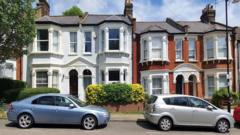
You come home after a brutal shift, ready to park, only to find a strange hatchback sitting right in front of your driveway. Your blood boils. You hit the horn. Nothing happens. You're completely blocked out of your own property.
But then you look down. There's no dropped kerb. It's just a standard, full-height concrete pavement.
Does that driver have the legal right to park there and ruin your evening? Or are they breaking the law?
The short answer is no, you cannot expect the council or the police to penalise someone for parking in front of an unofficial driveway. In fact, if you don't have a dropped kerb, you've been breaking the law just by parking your own car in your front garden.
The Brutal Reality of UK Parking Laws
Most homeowners assume that if they pave over their front lawn and park a vehicle on it, they've created a driveway. They haven't. They've just created a expensive patio.
Under the Highways Act 1980, it's a strict offence to drive a vehicle over a footway or pavement where a proper vehicle crossover—known as a dropped kerb—hasn't been installed by the local authority. Every single time you drive across a normal pavement to park on your property, you're technically committing an offence.
Because your driveway isn't legally recognised as a vehicle access point, other motorists are perfectly entitled to park on the road right outside your house.
The Highway Code says you shouldn't park in front of property entrances, but that rule relies heavily on the physical presence of a dropped kerb. Without that dipped concrete, the road outside your house is just a standard public highway. Anyone can leave their car there, and you have zero legal right to stop them.
The Crucial Twist That Catches People Out
There's a weird quirk in English law that often causes massive arguments between neighbours. It comes down to whether your car is currently trapped inside your property or if you're just being blocked from getting into it.
- If your car is parked on your patio-driveway and someone blocks you in: They might actually be committing an offence. The law treats blocking a vehicle from accessing the public highway as an obstruction. Even though you shouldn't have driven across the pavement to get there, a driver still can't physically trap your property.
- If you're arriving home and someone is parked in front of your house: You're completely out of luck. They aren't blocking a legal driveway, and they aren't trapping your vehicle. You can't call the council, and you can't demand a ticket.
If you find yourself trapped, you can try calling the police on 101 to report an obstruction, but honestly, don't hold your breath. Parking disputes between neighbours are rarely high on their priority list.
Why You Can't Just Create Your Own Driveway
People often skip getting a dropped kerb because the process is tedious and expensive. Applying to your local council for a vehicle crossover usually costs a couple of hundred pounds just for the administration and assessment. If they approve it, you then have to pay for the actual groundwork, which must be done by council-approved contractors. The total bill easily climbs to £1,500 or £3,000.
Why is it so strictly regulated? Pavements aren't built to handle the weight of a two-ton SUV rolling over them twice a day. Standard pavements hide fragile utility pipes, water mains, and internet cables just beneath the surface. Dropped kerbs are heavily reinforced with deeper foundations to protect that vital infrastructure.
If you choose to ignore the rules and keep driving over a high kerb, the council can hit you with an enforcement notice forcing you to stop. If you've damaged the pavement or the pipes underneath, they'll happily send you the bill for the repairs.
How to Handle a Petrolhead Standoff
If a neighbour persistently parks across your un-dropped kerb, your options are limited. Taking matters into your own hands is the worst thing you can do. Getting angry or trying to physically move the car can land you with a criminal damage charge, turning you from the victim into the criminal.
Instead, start by leaving a polite, civil note on the windscreen. Many drivers honestly don't notice that they're blocking a makeshift driveway, especially if the kerb looks uniform.
If that fails, your only real, long-term solution is to make your driveway official. Get on your local council's website, look up "vehicle crossovers," and start the application process. Once that concrete is lowered and the crossover is registered, the legal power shifts completely to you. From that moment on, anyone blocking your path can be slapped with a hefty Penalty Charge Notice by local traffic wardens. Until then, you're just fighting a losing battle over a piece of public road.