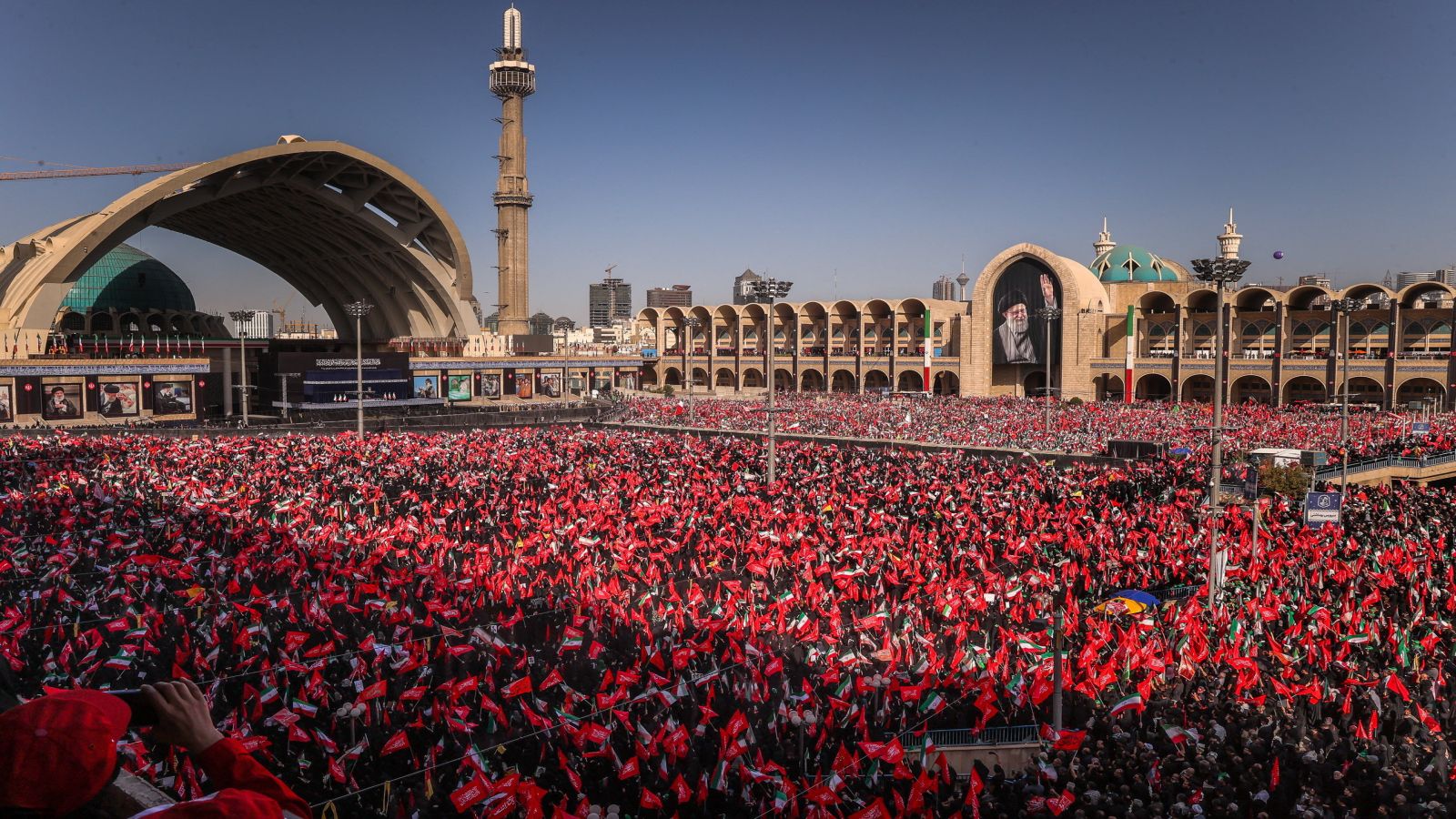
Thousands of people packed into Tehran's Imam Khomeini Grand Mosalla, weeping openly and beating their chests. The state-run media cameras captured every tear, every red flag of revenge, and every standard-issue poster of the late Supreme Leader. To the casual observer watching international news feeds, it looked like a monolithic nation united in grief. But it wasn't.
If you want to understand what's actually happening in Iran right now, you have to look past the carefully staged imagery of Ayatollah Ali Khamenei's funeral. The massive six-day, five-city spectacle is less about honoring a dead leader and more about a fragile regime trying to project strength during a brutal war. If you found value in this post, you might want to look at: this related article.
The state funeral started on July 4, exactly four months after Khamenei was killed in a joint US-Israeli airstrike on February 28. The long delay itself tells you everything you need to know about the chaos behind the scenes.
The Choreographed Chaos of a Delayed Farewell
The regime didn't wait four months to bury Khamenei out of respect. They waited because the country was in total shock and running for cover. When the airstrikes hit his Tehran residence, it marked the beginning of a devastating conflict that threw the country's command structure into disarray. For another perspective on this development, see the latest coverage from NBC News.
Holding a massive public gathering in the middle of an active conflict was a logistical nightmare. Airspace had to be locked down. Entire city blocks in Tehran were shuttered. The government essentially paused daily life to pull this off.
The choice of July 4 to kick off the ceremonies wasn't an accident. While state officials haven't explicitly said it, launching a massive anti-Western rally on the 250th anniversary of American independence is peak psychological warfare. The streets surrounding the Mosalla mosque blared revolutionary anthems before dawn. Food stations handed out free kebabs, watermelon, and soup to the crowds who slept in tents and cars just to secure a spot. It's a classic authoritarian playbook. If you provide free food and transport, people will show up.
The Foreign Guest List is Telling
State media boasted about hosting foreign delegations to prove Iran isn't isolated. When you look at the actual roster of attendees, the reality is far more modest. The global heavyweights didn't show up. Instead, we saw a specific circle of allies and regional proxies.
Dmitry Medvedev, the former Russian president, made an appearance to show Moscow's continued alignment with Tehran. Pakistan sent Prime Minister Shehbaz Sharif. There were delegations from Hamas, the Taliban-led Afghan government, and Iraq. Even Saudi Arabia sent a quiet delegation, a fascinating move considering the intense regional rivalry and the fact that Iran targeted a US base there just months ago.
The crowd waved yellow Hezbollah flags alongside red banners demanding the assassination of Donald Trump. This wasn't a gathering of world statesmen. It was a coalition of the isolated and the defiant.
Who Wasn't There Matters More
The most striking detail of the entire funeral didn't involve who attended. It was about who stayed away. Mojtaba Khamenei, the late leader's 56-year-old son who was quietly chosen as the new Supreme Leader on March 8, was completely invisible.
Think about that for a second. The new leader of the Islamic Republic didn't show his face at his own father's massive state funeral. Why? Security fears are the obvious answer. When your predecessor was taken out by a precision airstrike in his own home, standing on an open-air stage in front of thousands of people is a massive gamble. Mojtaba is already ruling from the shadows, terrified of meeting the same fate as his father. His absence signals profound vulnerability, not stability.
A Deeply Divided Nation Behind the Cameras
Don't let the sea of black chadors fool you. The citizens filling the Grand Mosalla represent only a fraction of the Iranian population. While thousands chanted for revenge, millions of others chose to stay home.
In fact, when news of Khamenei's assassination first broke in late February, quiet celebrations erupted in several neighborhoods across Iran. Videos smuggled out of the country showed people setting off fireworks and toppling statues of the dictator. The regime responded the only way it knows how. They deployed security forces to open fire on anyone celebrating in the streets.
There's a massive generational and cultural divide that the state cameras refuse to broadcast. Step away from the funeral route, and you'll see a population exhausted by economic collapse, brutal internet blackouts, and the constant threat of violence from the morality police. For many Iranians, the death of the man who ruled them for nearly 37 years brought a sense of relief, not sorrow.
The Real Strategy Moving Forward
This funeral is a transition mechanism disguised as a religious ritual. The regime needs to solidify Mojtaba's legitimacy while maintaining the illusion that the "Axis of Resistance" is fully intact.
If you are analyzing the situation from the outside, ignore the state media optics and focus on these next steps:
- Watch the Strait of Hormuz: The temporary de-escalation agreement reached for the funeral week won't last. Watch for renewed naval provocations once the mourning period ends.
- Monitor Internal Purges: Mojtaba's survival depends on consolidating power within the Islamic Revolutionary Guard Corps (IRGC). Expect internal arrests as he attempts to weed out informants who leaked his father's location.
- Track the Succession Backlash: The decision to hand power from father to son destroys the regime's old anti-monarchy revolutionary rhetoric. This hypocrisy will likely spark a new wave of domestic protests once the current security lockdown eases.
The regime wants the world to believe that Iran's internal power structure is unshakable. The massive crowds are real, but the unity is a mirage. Underneath the grief and the smoke of burning flags lies a government fighting for its life.