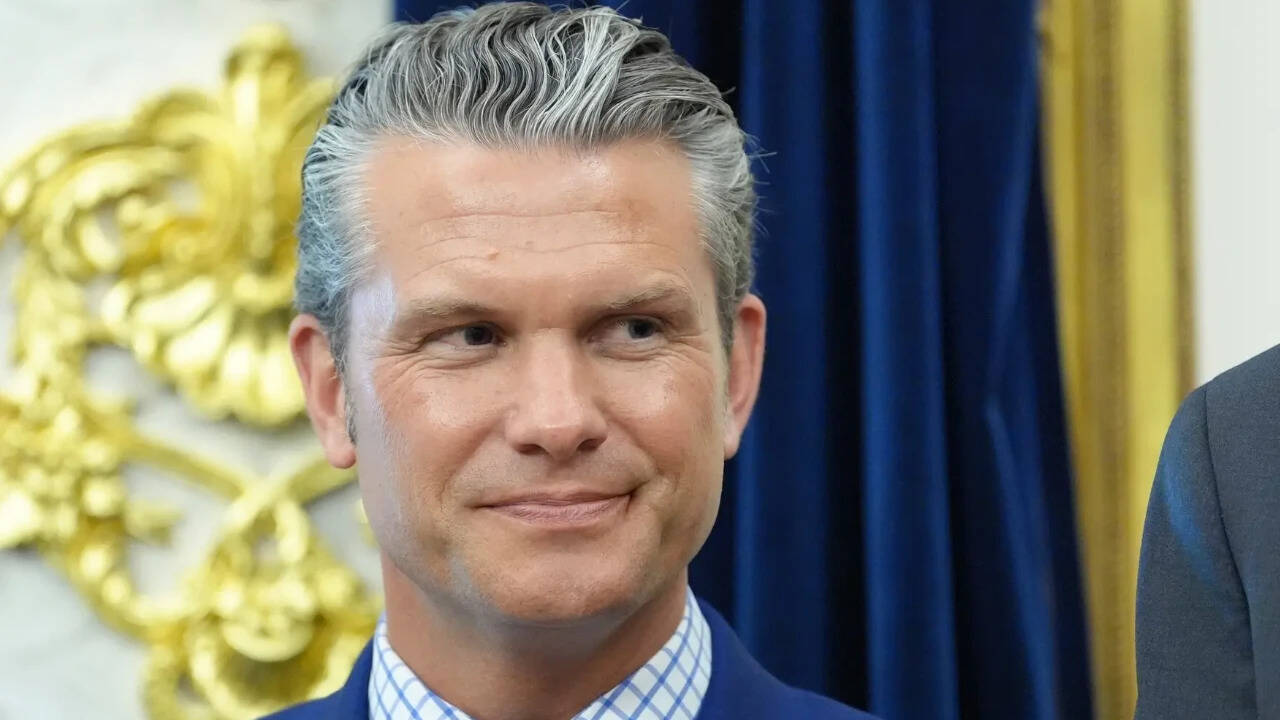
Defense Secretary Pete Hegseth went to a Navy ship last month and left furious. It wasn't because of a tactical error or a missed deployment deadline. He saw sailors with beards. For Hegseth, that was a blatant sign of a military losing its grip on discipline.
The Pentagon is aggressively pushing a major tightening of military grooming standards. We're seeing a full-scale crackdown on everything from facial hair to body weight. Hegseth explicitly warned top commanders at Quantico that the era of unprofessional appearance is over, using the phrase "no more beardos" to make his point.
But this isn't just about a neat corporate look. It's a fundamental shift in how the military defines its culture, and it's running straight into fierce resistance from the ranks.
The New Shaving Mandate and the One Year Clock
The Pentagon has a message for troops who can't shave due to medical reasons: heal up fast or pack your bags.
Under the direct guidance issued by the Department of Defense, the military is overhauling the way it handles shaving waivers, historically known as "shaving profiles." For decades, these profiles gave service members a free pass from razor blades if they suffered from severe skin irritation. No more.
- The 90-Day Limit: Shaving waivers are now restricted to strict 90-day increments.
- The Treatment Requirement: Troops must undergo continuous medical evaluation and active treatment during this time.
- The Deadline: If a service member cannot return to a clean-shaven status after one full year of treatment, commanders are directed to initiate administrative separation proceedings.
Basically, the military is prepared to discharge active-duty and reserve personnel simply because their skin can't handle a razor. It's a massive policy shift that flips a medical protection into a potential career-ender.
Medical Reality vs Military Order
The biggest problem with the "no more beardos" policy is that it treats a legitimate, genetic medical condition like a lack of discipline.
The condition is called pseudofolliculitis barbae (PFB), commonly known as severe razor bumps. When tightly curled facial hair is shaved close, it curves back and grows directly into the skin. The result is painful inflammation, bleeding, and permanent scarring.
The Demographic Impact
This isn't a minor cosmetic issue. Medical studies show that PFB affects anywhere from 45% to 83% of Black men. By forcing a one-year ultimatum on a condition that is often chronic and incurable, critics argue the Pentagon is creating a policy that disproportionately forces out experienced Black service members.
Leaders are pitching this as an issue of combat readiness, claiming facial hair prevents a proper seal on a gas mask. But many in the ranks point out that Special Forces units have worn beards in combat environments for decades without a sudden wave of chemical weapon casualties.
Why This Goes Way Beyond Facial Hair
Focusing only on the beards misses the broader agenda. Hegseth views relaxed grooming and physical fitness standards as a symptom of a larger, soft military culture that has drifted away from what he calls the "warrior ethos."
Along with the shaving crackdown, the Pentagon is completely overhauling how the services measure body composition. Command teams are under immense pressure to strictly enforce height and weight metrics and to address troops who fail to meet physical fitness bars.
It is a "broken windows" theory of military management. The idea is that if you let the small things slide, like a sloppy haircut or a few days of stubble, the big things like tactical competence and combat discipline will eventually collapse too.
But many veteran leaders think the Pentagon is hyper-focusing on the wrong details while managing active operations and high-stakes international tensions. Drumming out highly trained tech technicians, analysts, and mechanics over manageable medical skin conditions might hurt readiness far more than a couple of millimeters of facial hair ever could.
What Happens Next for Troops with Waivers
If you are currently serving and holding a medical shaving profile, the clock is effectively ticking. You need to take specific steps to protect your military career under these new directives.
- Document Everything: Ensure every medical visit, prescription cream, and dermatologist evaluation is thoroughly documented in your electronic health record.
- Request Specialized Care: Don't just rely on a general practitioner. Ask for a referral to a dermatologist who can explicitly state whether your PFB responds to treatments or if further shaving will cause permanent tissue damage.
- Explore Religious Accommodations: Note that the strict one-year rule targets medical waivers. The military still maintains separate pathways for religious accommodations, which protect the facial hair of Sikh, Muslim, and Jewish service members.
The Pentagon is moving incredibly fast on these enforcement rules, and commanders are being held directly accountable for the appearance of their units. The luxury of a permanent medical pass is gone.